
Gutter Service
Spring Gutter Inspection Checklist After a NH Winter
A spring gutter inspection takes about 20 minutes, needs no ladder, and should happen after the last ice has left the roof edge, usually in April. Walk the house, look at the gutters from the yard, and check the ceilings inside. You are looking for ice damage, loose hangers and leaks before the spring rains start.
- ★ 5.0 on Google · 29 reviews
- Serving since 2024
- Based in Hampstead, NH
Published and updated November 2, 2026 · By the Lanes Gutters crew, Hampstead, NH
On this page
Winter leaves marks you can read. Hampstead averages about 53.8 inches of snow a year, with 17.1 inches in January alone (BestPlaces), and every inch of it pushes on a gutter as it slides, melts and refreezes. A spring gutter inspection works best as a short walk, done in the same order every year, so you can compare this April with the last one.
What to bring and when to go
Pick a dry morning after the snow has left the roof edge. The gutters are easiest to read before leaf buds and pollen cover the roofline, so April beats May. Bring a notepad, a phone for photos, and binoculars if you own a pair. Photograph anything odd, because a picture lets you compare it with the next storm.
Stay off the roof and off icy ground. Where snow or ice still hangs at the eave, wait. Falling ice can seriously hurt someone.
The walk-around, station by station
Go clockwise from the front door. At each corner stop and look up for about a minute.
Station one: the line of the gutter
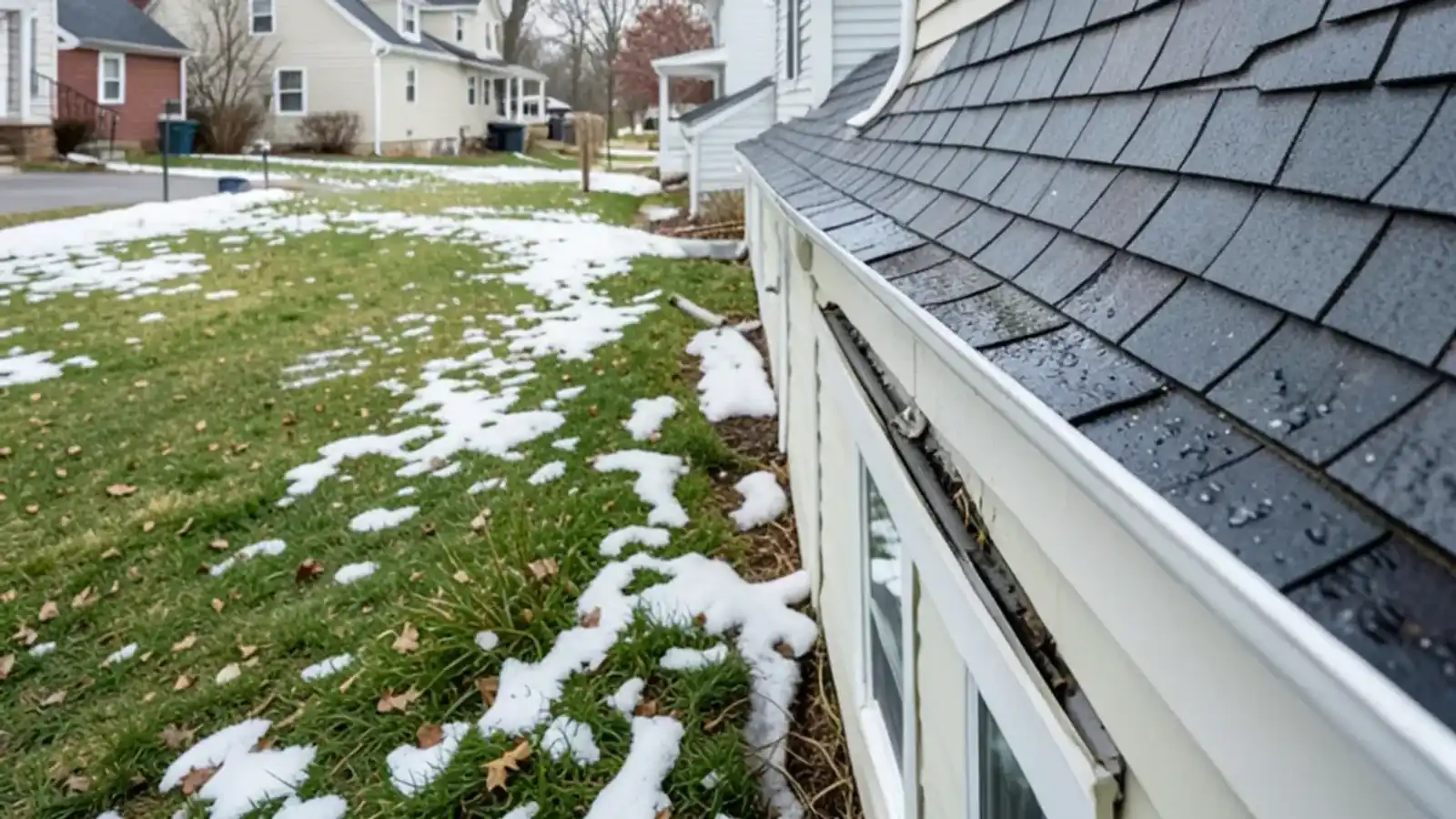
Sight along each run from the end. It should hold one steady line. A dip between hangers means a hanger let go under the weight of snow or ice, and a belly in the middle can hold water for months.
Station two: the front lip and corners
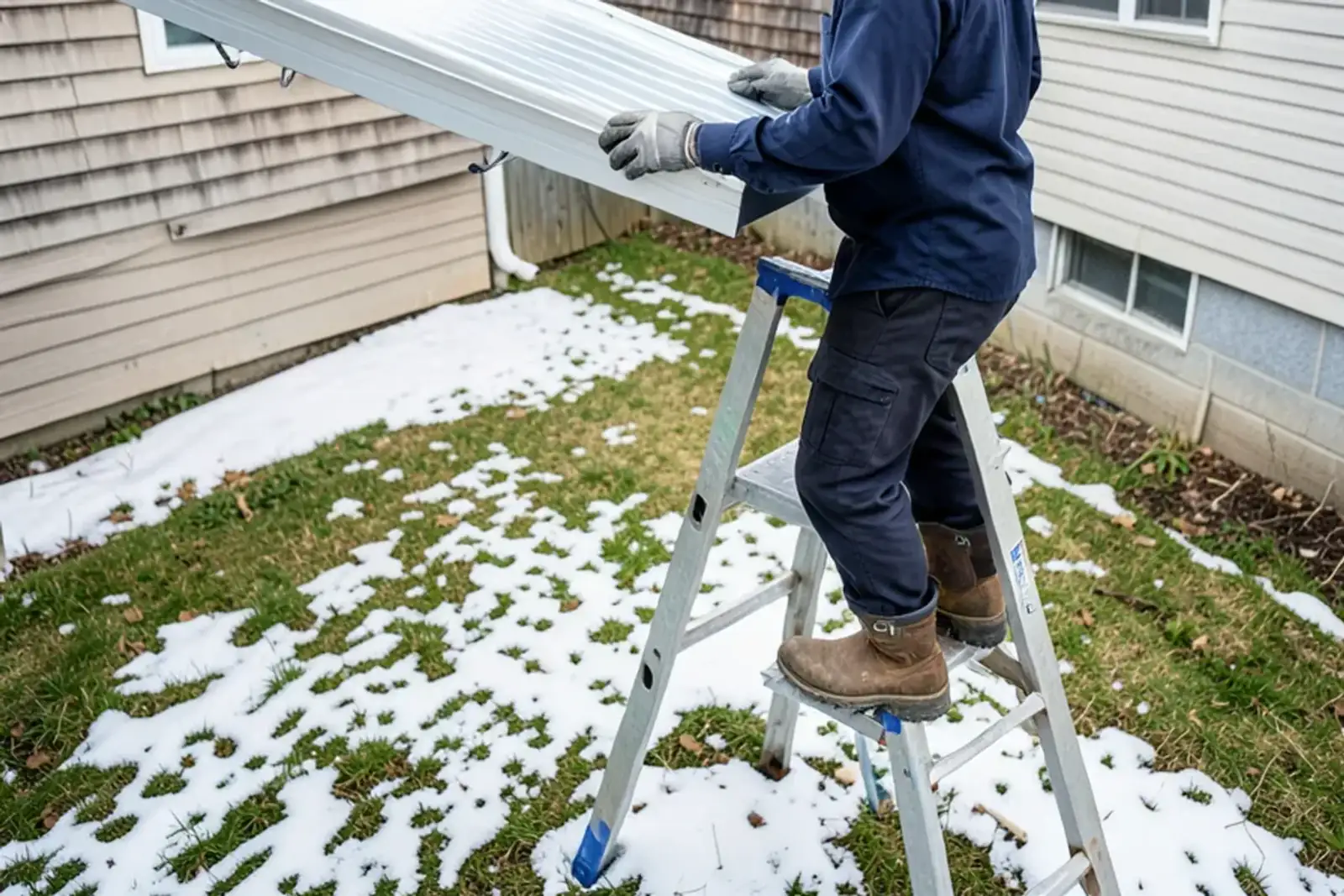
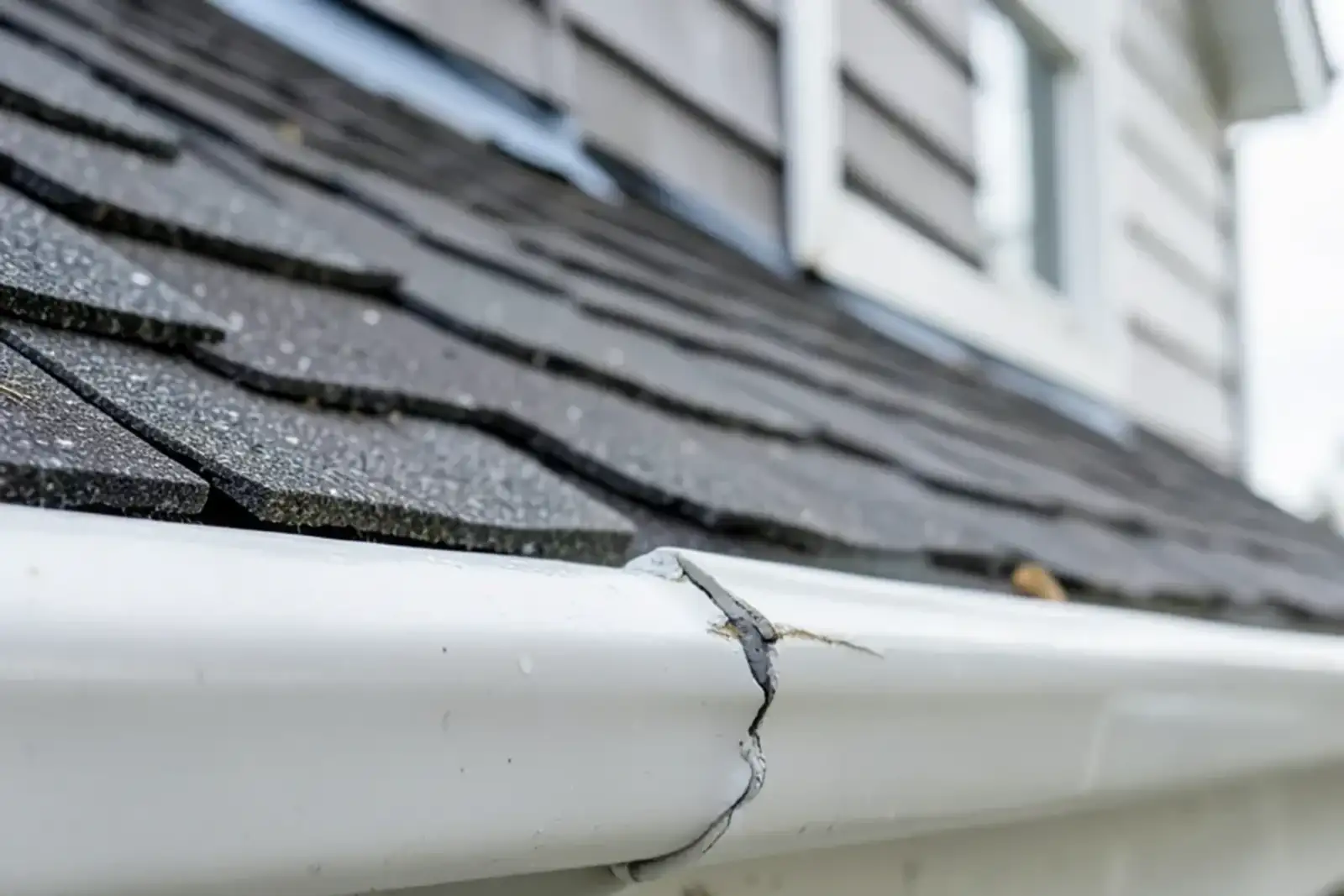
Look for dents or bowing in the front edge. Sliding snow and ice hit this lip first. Corners and end caps deserve a second look, because they take the push from all the water behind them.
Station three: the gap at the fascia
Look at the line where the gutter meets the board behind it. A gap that was not there last fall means the fasteners have pulled out or the board has moved. Press gently on the fascia from below with a long stick. Soft or spongy wood is a sign it has been wet for a long time.
Station four: downspouts
Check every downspout for splits along the seam, crushed sections and gaps at the elbows. Water that froze inside can split a seam. A pale stain trail below an elbow tells you where water has been leaking.
Station five: the ground
Look at where each downspout empties. A washed-out patch, a tilted splash block, or a downspout that dropped its extension over winter will push water toward the foundation.
Spring gutter inspection by symptom
| What you see | What it usually means | Next step |
|---|---|---|
| Dip between hangers | Hanger pulled out under snow load | Refasten or add hangers |
| Gap at the fascia | Fasteners backed out or board moved | Refasten and check the board |
| Dented front lip | Sliding snow or ice | Reshape or replace that section |
| Dark streaks below a joint | Failed sealant, leaking | Clean and reseal |
| Split downspout seam | Water froze inside | Replace the section |
| Stain on a ceiling below an eave | Water getting behind the gutter or ice dam | Find the source, then dry out |
A worked example: one page of notes
Here is what a useful set of notes looks like for an illustrative house with a front run, a back run and four downspouts. Nothing here is a record of a real job.
- Front run: straight line, two small dents in the lip at the porch corner. Cosmetic, recheck in fall.
- Back run, north side: dip of about an inch midway along, 3-foot gap at the fascia near the corner. This side stays frozen longest. Priority one.
- Back downspout: seam split at the lower elbow, pale stain trail on the siding below. Replace the section.
- Left corner: dark streak under the miter. Likely failed sealant. Priority two.
- Inside: faint brown ring on the bedroom ceiling below the north eave. Check the attic for stained decking, and think insulation before blaming the gutter.
That is five findings from about 25 minutes. Two need a crew soon, one is a section swap, one is cosmetic, and one points at the attic. Without notes, all five blur into "something is wrong with the gutters."
Check inside too
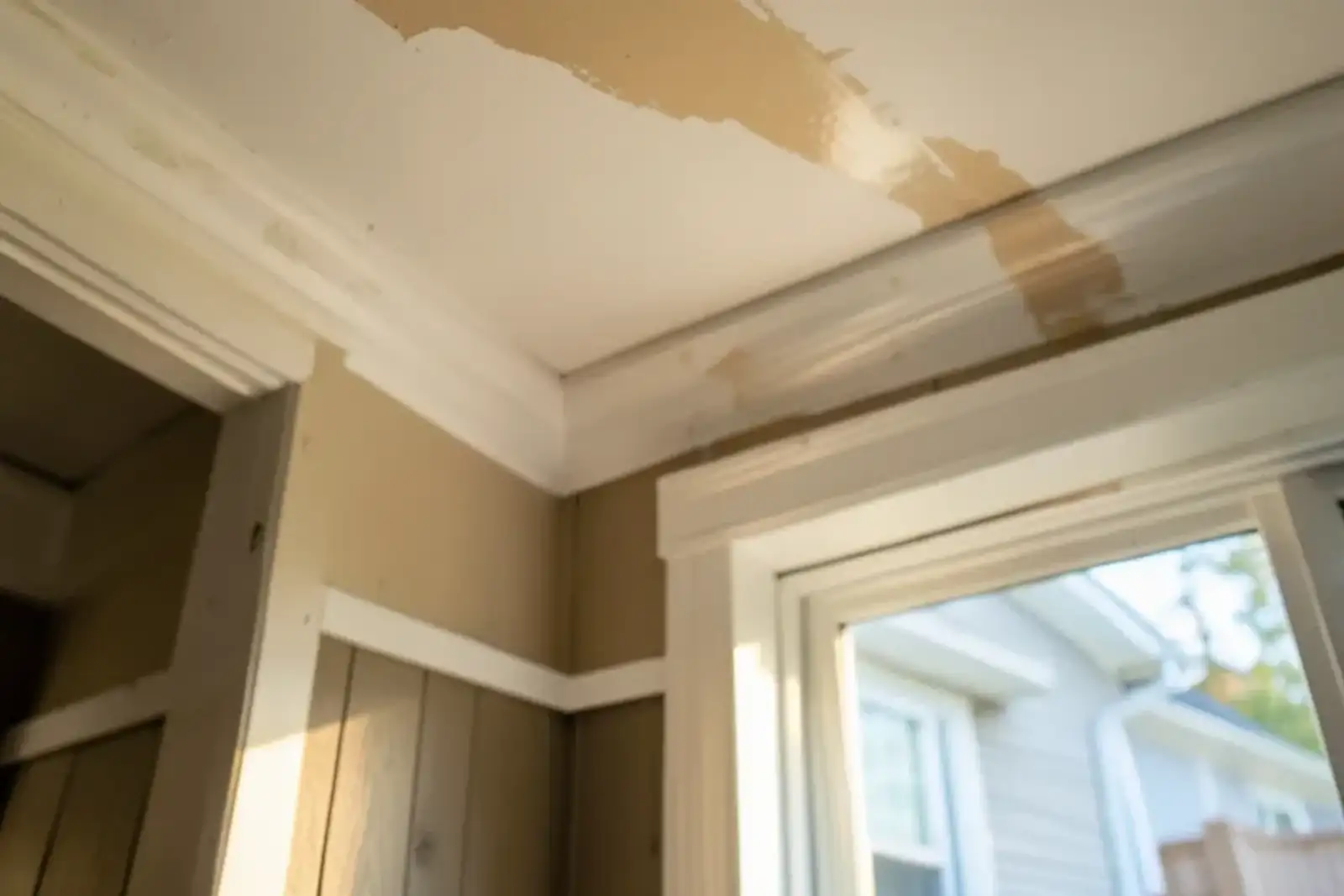
Water that gets past the gutter ends up in the house. Look at ceilings and the tops of walls on every side. Pale brown rings, peeling paint or a musty smell near an exterior wall are all worth chasing. If you can reach the attic safely, look at the insulation and the underside of the roof deck at the eaves for dark stains.
Ice dams are the usual cause. They form when attic heat melts snow that refreezes at the cold eave, with or without gutters. Insulation and ventilation are the real fix, and a gutter alone cannot cure them.
Roof edge, flashing and the first-rain test
The gutter is only half of the system, so look at what feeds it. Spend a few minutes at the roof edge, from the ground.
- Shingle grit. Dark granules in the trough or at a downspout outlet mean the shingles are wearing. A little is normal on a new roof. Heavy grit on an older roof is worth showing a roofer.
- The drip edge gap. Water that runs down the fascia behind the gutter, instead of into it, points to a missing or bent drip edge or apron. Tightening the gutter will not fix it.
- Flashing at walls. Where a roof meets a wall, a kickout flashing should direct water into the gutter. If water has stained the siding beside that spot, the flashing is missing or has shifted.
- Valleys. A roof valley pours a lot of water into one corner. If that corner shows streaks or an overflow stain, it may need a larger gutter, an added downspout or a splash guard.
Then run a test. On the first moderate spring rain, stand under an umbrella and watch the gutters work for ten minutes. Water should travel to the outlets, not sit, and none should pour over the front lip or drip from seams. Where it fails, mark the spot. The test beats any checklist, because it shows how the system behaves under real flow, which a dry walk-around cannot. Gutter size matters here too. A 5-inch gutter is rated for about 5,520 square feet of roof and a 6-inch for about 7,960, at one inch of rain per hour, and harder rain or a steep roof lowers both numbers.
How a crew reads ice damage
This is general trade knowledge, not a story about a job.
Ice damage has a direction. If the gutter is pulled away from the house at the top and bowed outward, ice or sliding snow pushed it. If it sags in the middle but is still tight at the ends, water and debris sat in the trough and the hangers gave way. If a seam is split and the metal is bright on the inside, water froze in the joint. Telling these apart matters, because each has a different fix and the wrong repair will fail by next winter.
A crew also compares both sides of the house. The north side stays frozen longer and tends to show the worst damage. If one side looks fine and the other does not, start your list there.
Another honest limit of a ground inspection: you cannot see the inside of the trough or the top of the fascia from the yard. A dip you can see is real. A clean-looking run might still hold a seam that weeps only under flow. That is what the rain test is for, and what a crew's hands-on check adds. We would rather you call about something doubtful than assume a ground check cleared everything.
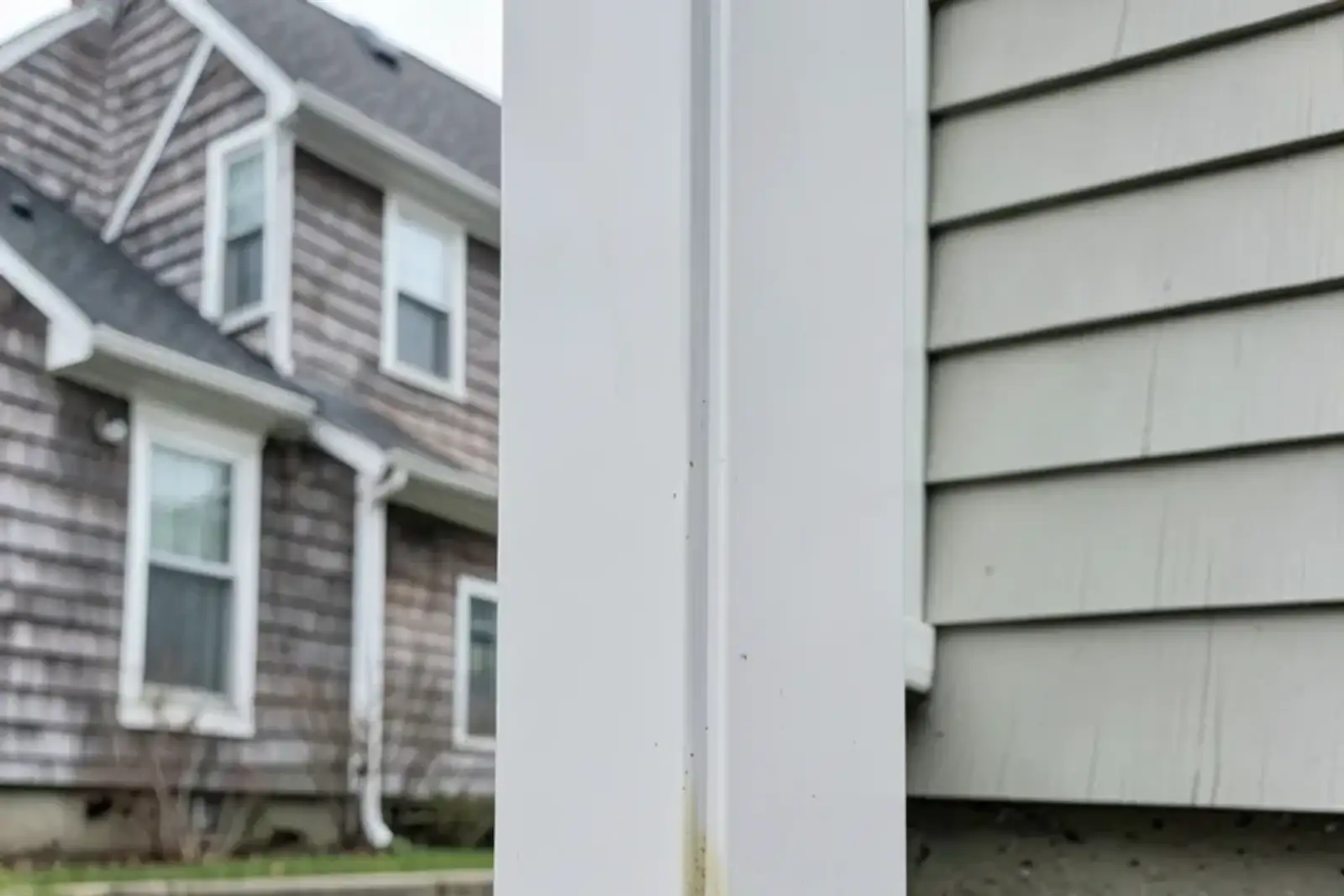
Derry homes and what to expect
Derry mixes older East Derry houses with 1980s subdivisions off Route 28, and the median home was built in 1983 (ACS 2020-24). Gutters on a house that age are often well past the 20 to 30 years listed for aluminum, so winter damage lands on tired hardware. About 70% of Derry homes are owner-occupied, so most of those repairs are the homeowner's call.
Derry is roughly 5 minutes from our Hampstead base by our estimate. If your walk-around turns up more than you want to handle, our gutter inspection page explains what a visit covers, and our Derry service area page covers the town. Our gutter service in Hampstead overview lists the rest of what we do.
Booking a spring look at your gutters
If your notes show a sag, a gap at the fascia or a split downspout, treat it as a repair before the spring rains, not after. Our gutter inspection page explains what a visit covers. Two guides go deeper on what you may find: why New Hampshire winters are hard on gutters and what to do when a gutter is pulling away from the fascia. If the walk turns up nothing, write down the date and do it again next April.
Call Lanes Gutters at (208) 464-4195, tell us what the photos show, and we will set the earliest visit we can.
Quick answers
What is the best time for a spring gutter inspection?
Mid to late April in most of southern New Hampshire, once the roof edge has shed its last ice. Inspect earlier if a thaw has cleared the snow, and again after the first heavy spring rain. Do it before oak tassels and maple seeds fall, which hide damage under a layer of debris.
Can I inspect my Derry gutters without a ladder?
Yes. Most damage shows from the ground as dips, gaps and stains, and binoculars help with the roofline. Derry's older East Derry houses can have tall, steep rooflines, so stay on the ground and call if something looks wrong. A ladder is for fixing, not for looking.
How long does a spring gutter inspection take in Derry, NH?
About 20 minutes for the walk-around on a typical Derry house, plus a few minutes inside to check ceilings. Allow longer for a large home with several roof levels or an attached garage. The time goes to looking, not climbing. Take photos at each station so you can compare them with next April, and with the notes from your fall pass.
Should I clean the gutters before or after a spring inspection in Derry, NH?
Inspect first, then clean. Leftover leaves and winter grit hide dips, seams and stains, but they also show you where water sat all winter. Note those spots from the ground, then clean and flush the run and look again. A seam that weeps only once the trough is clear is easier to see after cleaning than before.
What should I photograph during a gutter inspection in Derry, NH?
Photograph each dip, gap, dented lip, split seam and stain, plus a wide shot of the whole side of the house for context. Date them. Photos help a contractor quote without guessing, and they support a homeowner's insurance claim if winter damage is large. Keep them from the ground, and stay off icy steps and roofs.
Sources
- BestPlaces, Hampstead NH climate
- ACS 2020-24, Derry median year built
Questions about your gutters?
25 Glenwood North Rd #16, Hampstead, NH 03841
(208) 464-4195
Mon–Sat 8am–6pm · Sunday closed