
Gutter Repair
Why Gutters Pull Away From the Fascia
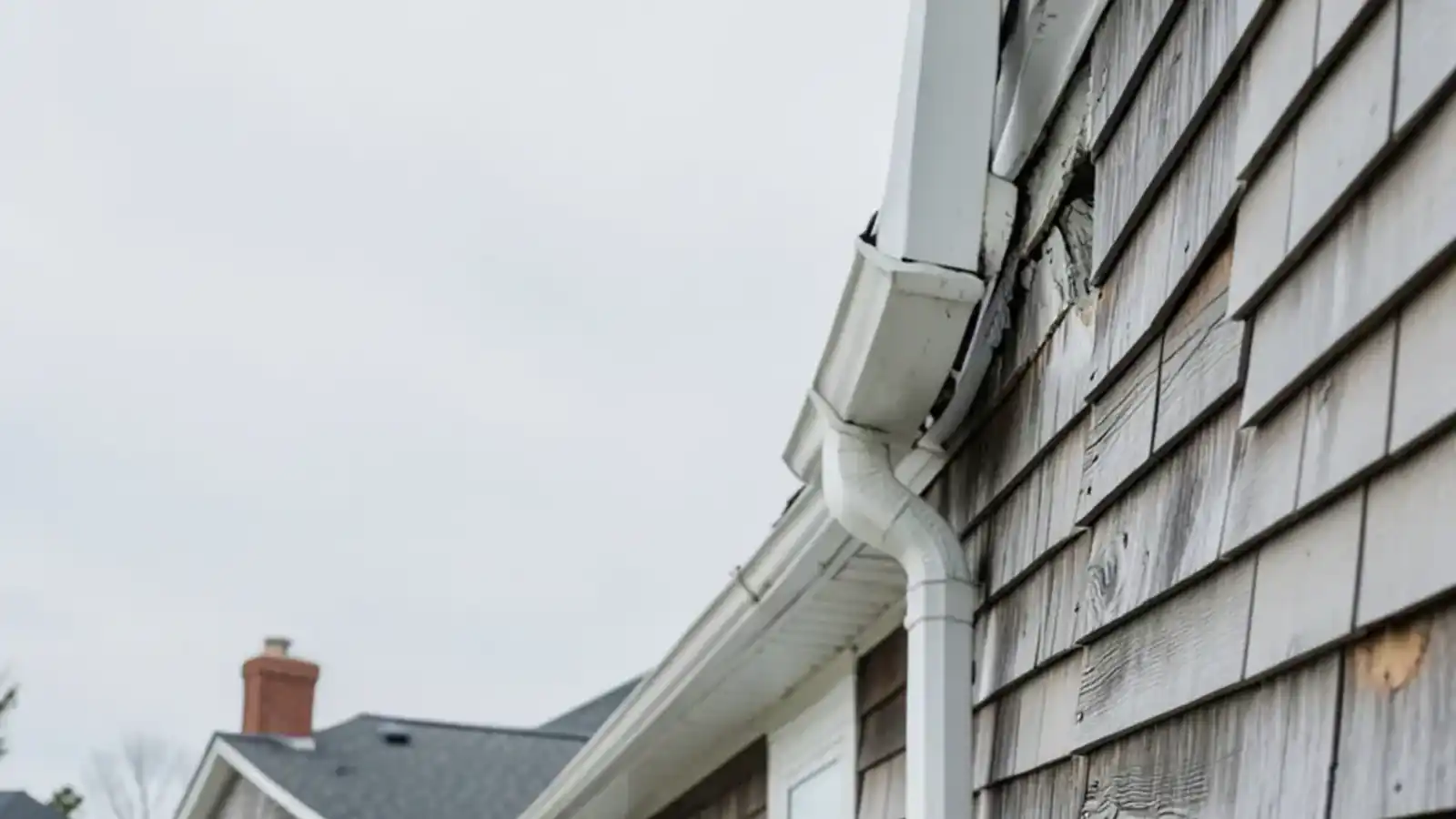
Gutters pull away from the house when whatever holds them has lost its grip. The usual causes are spikes that have backed out, hangers set too far apart, a fascia board gone soft, or the weight of ice and snow. Check the board behind the gutter before the fasteners, because a good fastener cannot hold in bad wood.
- ★ 5.0 on Google · 29 reviews
- Serving since 2024
- Based in Hampstead, NH
Published and updated November 2, 2026 · By the Lanes Gutters crew, Hampstead, NH
On this page
- Why do gutters pull away from the house?
- How do you tell which cause you have?
- Can you just hammer the spikes back in?
- Reading a fascia board from the ladder
- What does the load really add up to?
- What does a repair that lasts involve?
- What should you do this week?
- Chester roofs and long fascia runs
- When a loose run needs a crew
- Common questions
Most gutters that pull away were fastened well once. The wood changed, or the load grew, or both. A gap at the top edge is the first sign, and it only widens.
Why do gutters pull away from the house?
Four causes account for nearly all of it:
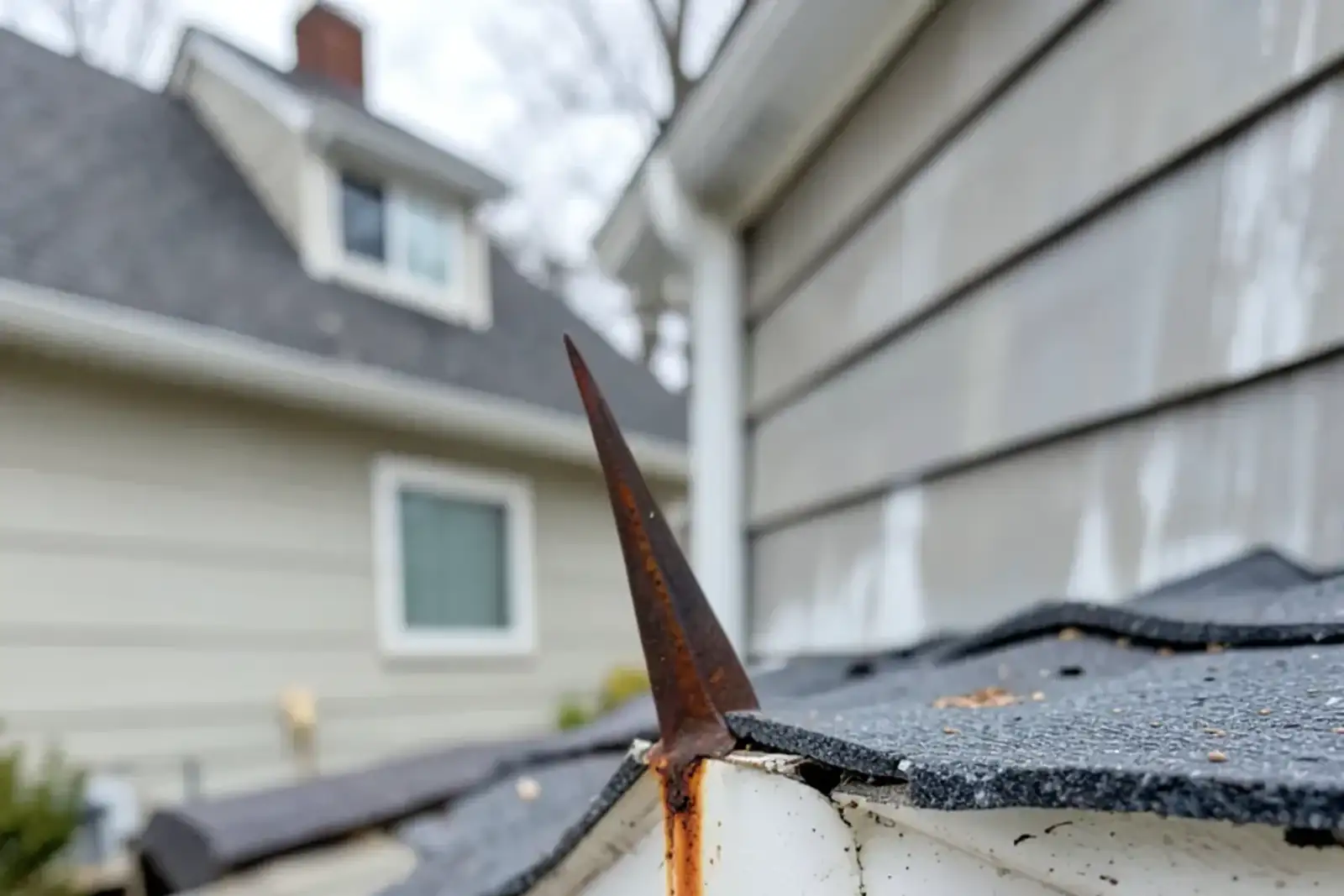
- Spikes backed out. The old method is a long spike and a ferrule, a sleeve inside the gutter, driven through the face into the board. Heat and cold swell and shrink the metal and the wood, and the spike works loose a little more each season.
- Hangers too far apart. A gutter that is hung at wide spacing flexes between supports. Flexing pulls the fasteners outward one at a time.
- Rotted fascia. Fascia is the board the gutter hangs from. Water that runs behind the gutter, or a leak that has sat there for years, softens it until it will not hold a fastener.
- Ice and snow load. Ice weighs about 57-60 pounds per cubic foot. A run packed with it carries hundreds of pounds, and sliding snow off the roof adds a hard blow on top.
How do you tell which cause you have?
Look at the gap, then look at the board. This table matches what you see with the likely cause.
| What you see | Likely cause | Where the repair starts |
|---|---|---|
| Spike heads standing out, rust streaks below | Fasteners backed out | New hangers into solid wood |
| Gap at the top, board looks sound | Spacing too wide or load | Add hangers, check the downspouts |
| Paint peeling, dark or crumbling wood | Rotted fascia | Replace the board first |
| One end low, ice in the gutter | Overloaded section | Clear the ice, re-hang |
| Dented or creased metal near a gap | Ladder or falling ice damage | Section repair or replacement |
Can you just hammer the spikes back in?
For a few weeks, yes. The hole in the wood has been enlarged, and the spike will back out again. A longer spike into the same hole bites no better. It also leaves the gutter dependent on a thread of wood that has already failed once.
Two questions come up every time. The first is why a longer spike does not fix it. A spike's grip comes from friction in the wood fibers around it, and once those fibers are crushed or wet, a longer spike only finds more of the same wood. The second is why a hanger with a screw holds better. A screw has threads that bite and it can be driven into the rafter tail, the solid end of the roof framing that sits behind the fascia, instead of relying on the board alone.
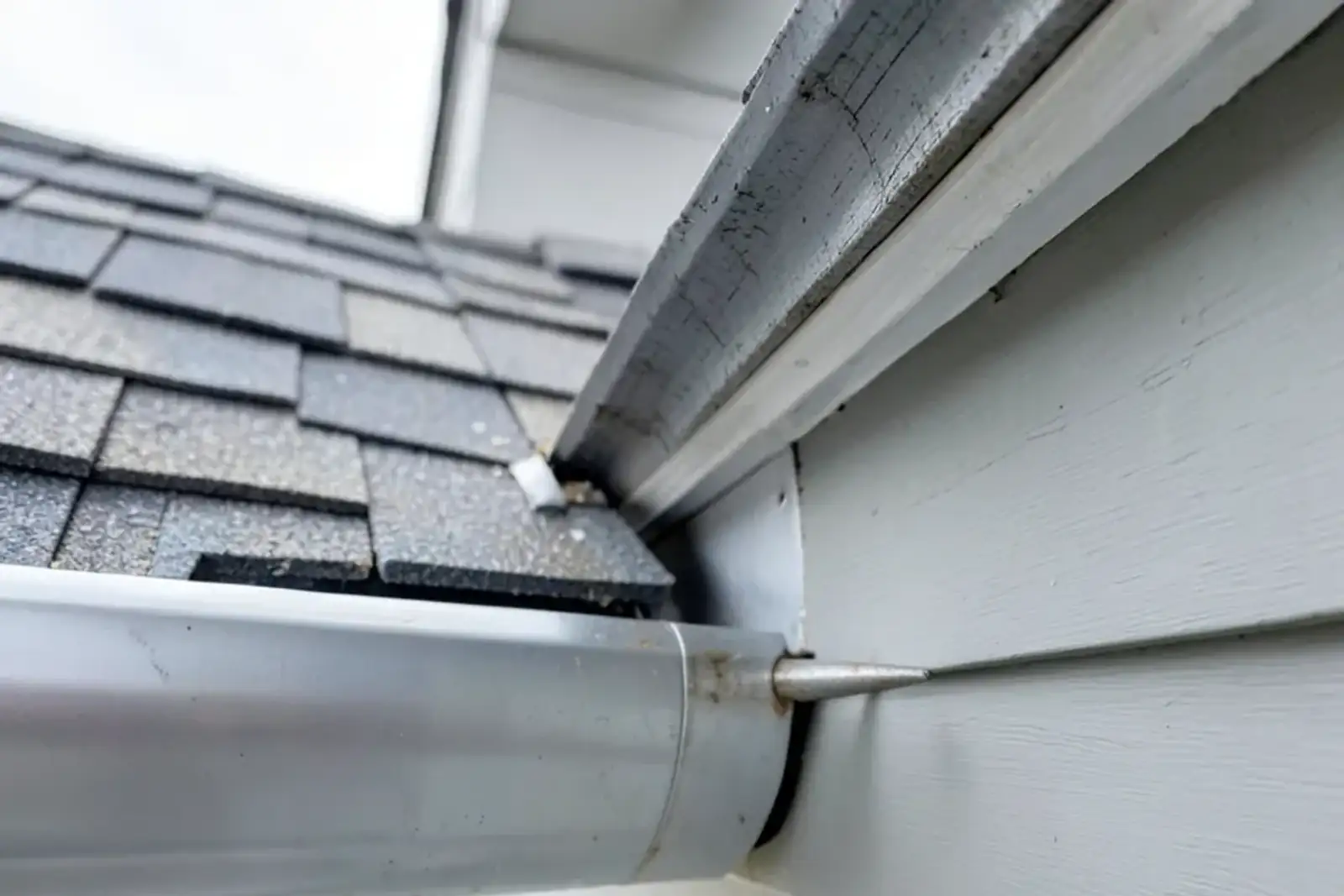
A lasting fix sets a hanger with a screw into sound wood, ideally reaching the rafter tail behind the fascia. Hidden hangers clip inside the gutter and hold better than spike and ferrule setups, though they cost more to fit.
Reading a fascia board from the ladder
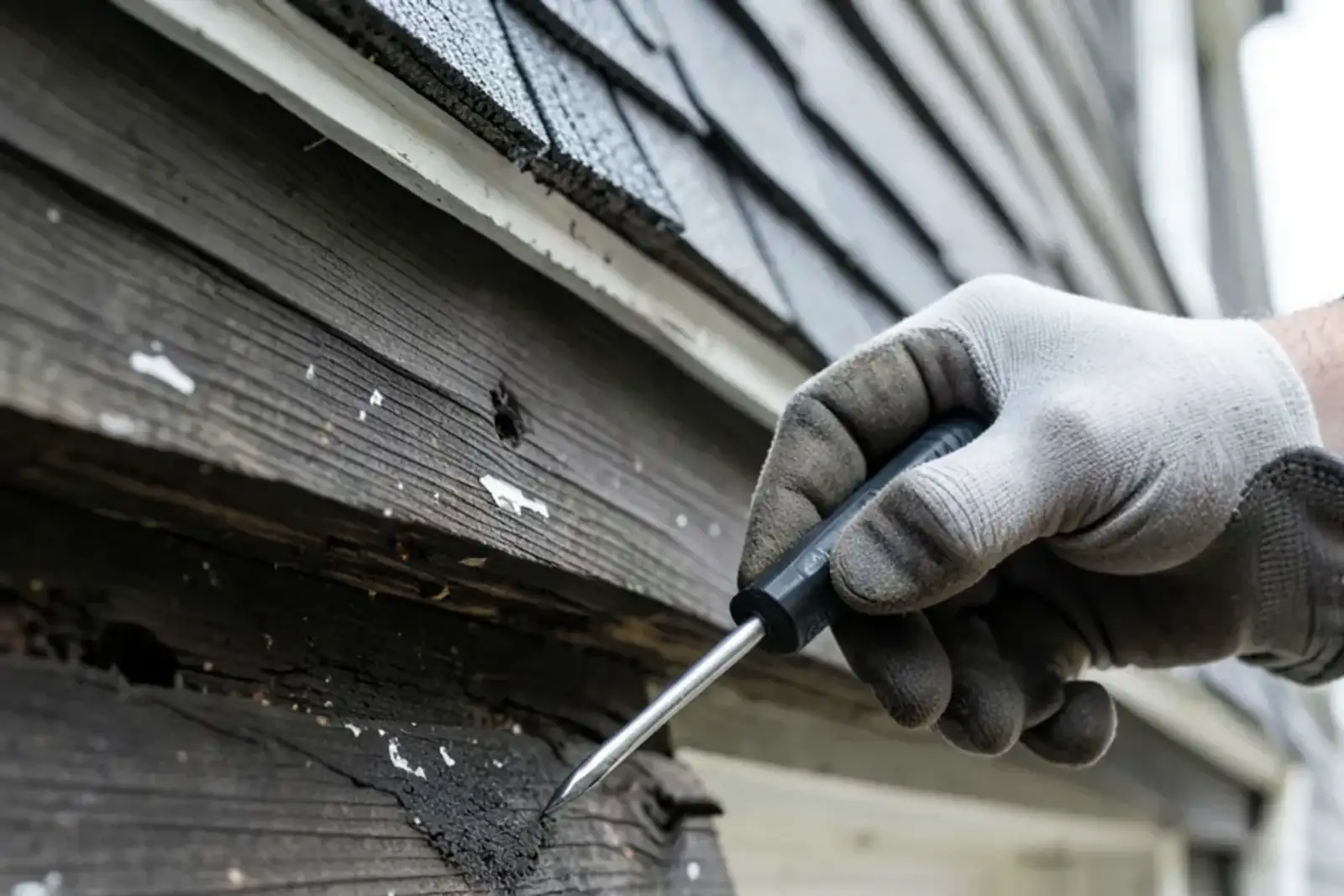
Here is what we would do before pricing a loose run: probe the board. A screwdriver tip pressed into the underside should meet resistance. If it sinks, the wood is soft, and a new hanger would only sink with it.
Dark stains behind the gutter mean water has been running there. The cause is often a missing drip edge, the metal strip at the roof edge that should send water into the gutter and not behind it. Fasteners rust in the same wet wood, which is why old spikes show orange streaks. Replacing the board without finding that source just starts the rot again.
Repair the board, cover it, or replace it?
There are three ways to deal with soft fascia, and each has a trade-off.
- Cut out the bad section and splice in new wood. This is the cheapest option when the rot is local. It only lasts if the source of the water is fixed.
- Replace the full board. This costs more and is the honest answer when the wood is soft along most of the run or the rot reaches the rafter tails.
- Wrap the board in aluminum or PVC trim. A wrap gives a clean finish and protects sound wood. Over soft wood it only hides the problem, so the board has to be solid first.
Whichever you choose, the board should be primed on every face and end before the gutter goes back up, because bare cut ends drink water.
What does the load really add up to?
Numbers help here. Ice weighs about 57-60 pounds per cubic foot. A 10-foot stretch of gutter with ice packed four inches wide and four inches deep holds about 1.1 cubic feet, which is roughly 65 pounds. A 40-foot run frozen that way carries over 250 pounds, before a roof slide drops more onto it.
Now spread that over the hangers. At 24-inch spacing a 40-foot run has about 20 hangers, so each takes around 13 pounds of ice alone, plus the gutter, plus any leaf load. At 36-inch spacing it is about 13 hangers and about 20 pounds each. That is why spacing matters, and why a hanger that holds in October can let go in January. Hampstead gets about 53.8 inches of snow a year (BestPlaces), so the load comes every winter.
Ice in the trough is the clue that ties it all together. A gutter that cannot drain, whether from a clog or from a bad slope as we describe in how to tell if gutters are pitched wrong, holds water that freezes and adds weight.
What does a repair that lasts involve?
The order matters:
- Take the load off. Clear the debris and ice from the run.
- Release the gutter from its fasteners and set it aside.
- Cut out and replace any soft fascia, and fix the drip edge or flashing that fed the rot.
- Re-hang the gutter on hangers at a spacing suited to snow country, often about 24 inches or closer.
- Run water through it to check pitch and look for new gaps.
If it is a clean sag on sound wood, this is our sagging gutter repair. Rotten boards fall under fascia and trim replacement, and both belong to the broader gutter repair work we do. A solid fix costs less than letting the board go, since an old gutter hanging from rotted wood eventually comes off.
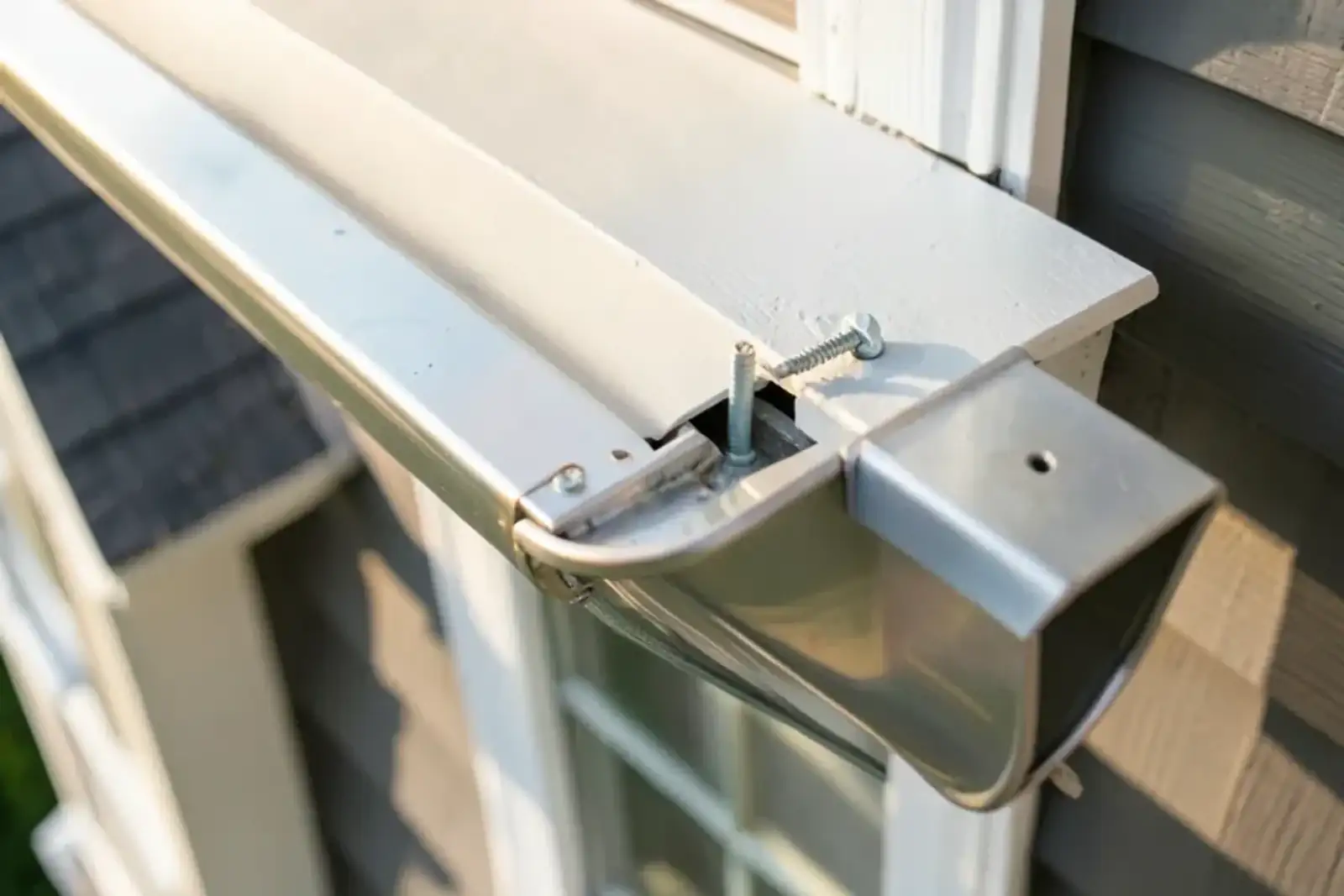
A ladder leaned on the gutter is a cause too
Leaning a ladder against the gutter edge bends the front lip and loosens fasteners. A gutter that pulls away on one side near where the ladder sits every fall was probably moved by the ladder. Use a stand-off or a ladder rest that spans the gutter and rests on the wall.
What should you do this week?
Small steps help while you wait for a repair:
- Photograph the gap from the ground, then compare after the next storm to see if it is growing.
- Never lean a ladder against the gutter itself. The weight bends the metal and loosens more fasteners.
- Keep cars, walkways and entry doors clear of the stretch that is moving.
- Do not hammer the spikes back in, since that hides the problem for a few weeks.
Chester roofs and long fascia runs
Chester is about 9 miles from Hampstead, roughly 10 minutes by our estimate. Many homes there sit on large rural lots with long fascia runs, and tall pines overhead drop needles that keep the board wet. The median home in town was built in 1991 (ACS 2020-24). A long run needs more hangers than a short one, because the line only holds if every stretch is supported. We cover Chester and can look at a run before anything gets taken down.
When a loose run needs a crew
If the board probes soft, the gap keeps growing or one end hangs low, stop guessing and have it looked at before the first snow. A gutter that comes down in January takes fascia and sometimes a downspout with it. Stay off the ladder if the run is on a second story or has ice in it. Call (208) 464-4195, tell us where the gap is, and we will set the earliest visit we can.
Quick answers
Why is my gutter pulling away from the house only in winter?
Ice and snow add weight, and frozen water in the board can swell it. A hanger that was barely holding in October lets go once the load builds. The drip you see in spring is the gutter telling you it moved in January. Check the fascia where the gutter pulled loose, because moisture there is often the root cause.
Is a gutter pulling away from the fascia an emergency?
Not if it is only a gap and the run is still level. It becomes urgent when one end hangs low, when ice is packed in it or when it could drop onto a walkway. Falling ice and metal can seriously hurt someone. Keep people clear of the area until a crew has looked at it.
Can a sagging gutter be reattached without replacing it?
Often yes, if the metal is not bent or creased and the board holds a screw. The gutter is released, the wood is repaired, and the run is re-hung on hangers fastened into solid wood. Chester homes with long fascia runs may need extra hangers along the full length to keep the line straight.
How many hangers does a long gutter run need in Chester, NH?
Many installers set hangers about 24 inches apart in snow country, and some go tighter on exposed runs. A 40-foot run at that spacing takes about 20 hangers, where a 36-inch spacing takes about 13. Chester's long fascia runs and snow load favor the closer spacing. Ask any installer what spacing the quote assumes.
Does rotted fascia always mean replacing the whole board?
No. If the rot is local, a crew can cut out the bad section and splice in new wood. If the board is soft along most of the run, or the rot reaches the rafter tails, full replacement is the honest fix. Probe the wood along its full length before anyone sets a price.
Sources
- American Community Survey 2020-24, Chester NH
- Angi, why gutters pull away and how re-hanging on rotted fascia fails
Questions about your gutters?
25 Glenwood North Rd #16, Hampstead, NH 03841
(208) 464-4195
Mon–Sat 8am–6pm · Sunday closed