
Winter Gutter Protection
Why New Hampshire Winters Are Hard on Gutters
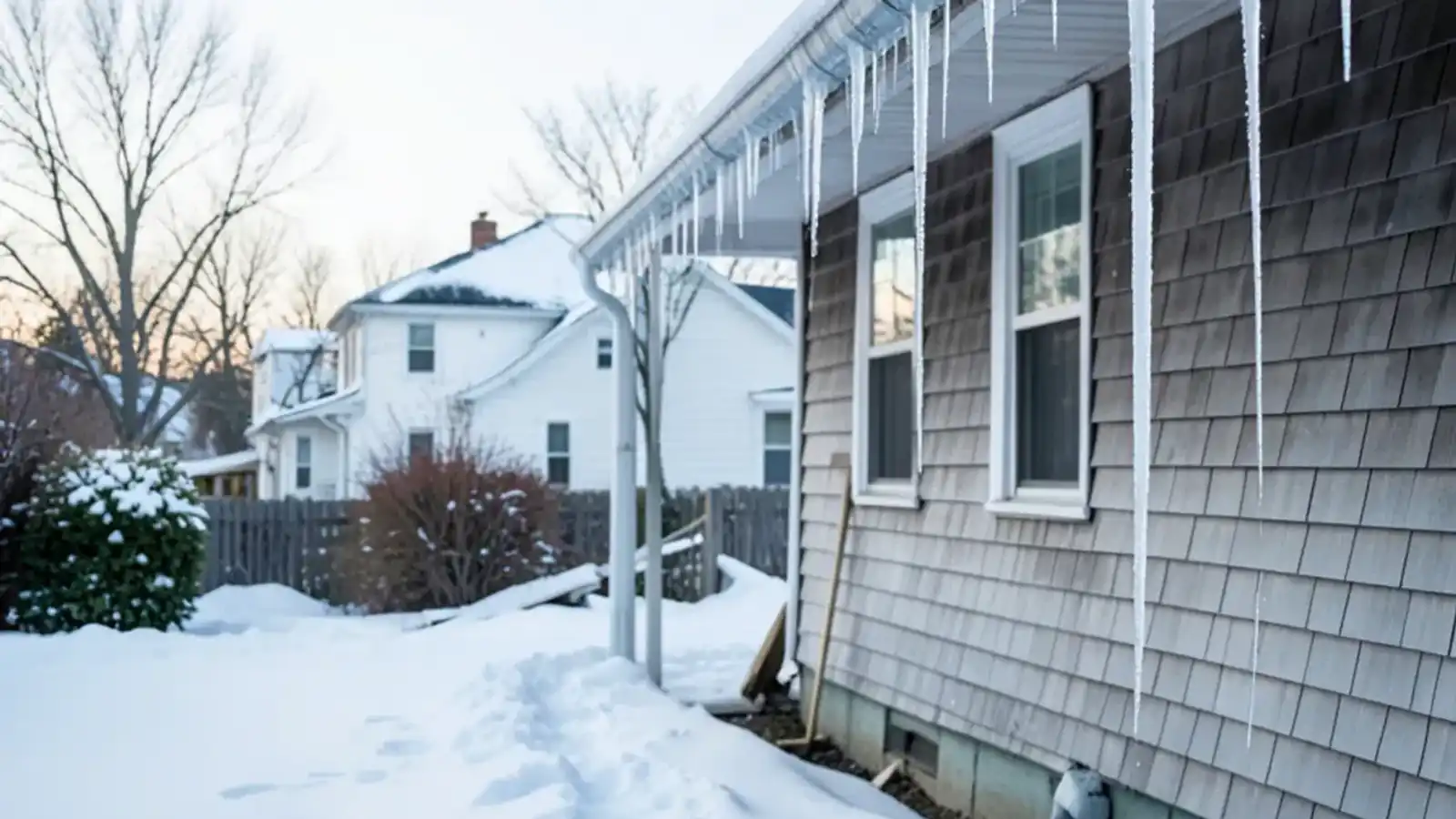
New Hampshire winter gutter damage comes from three forces. Freeze-thaw cycles pry joints open, ice adds heavy weight to hangers, and snow slides off the roof and takes the gutter with it. Most of it can be reduced in fall.
- ★ 5.0 on Google · 29 reviews
- Serving since 2024
- Based in Hampstead, NH
Published and updated November 2, 2026 · By the Lanes Gutters crew, Hampstead, NH
On this page
- What does freeze-thaw do to a gutter?
- Why is a mild week harder on gutters than a cold one?
- How heavy does ice get?
- Why does sliding snow take gutters down?
- Which damage points to which winter force?
- A crew's list of what to check after a hard winter
- What can you do before the first storm?
- Does the county you live in change any of this?
- Common questions
The winter numbers for one inland New Hampshire town show why gutters wear out. Hampstead logs around 53.8 inches of snow a year, 17.1 in January alone, plus about 195 days under 50°F and about 62 days with snow on the ground (BestPlaces and Dwellics). Those are Hampstead figures, and other towns differ, but the pattern holds across southern New Hampshire.
What does freeze-thaw do to a gutter?
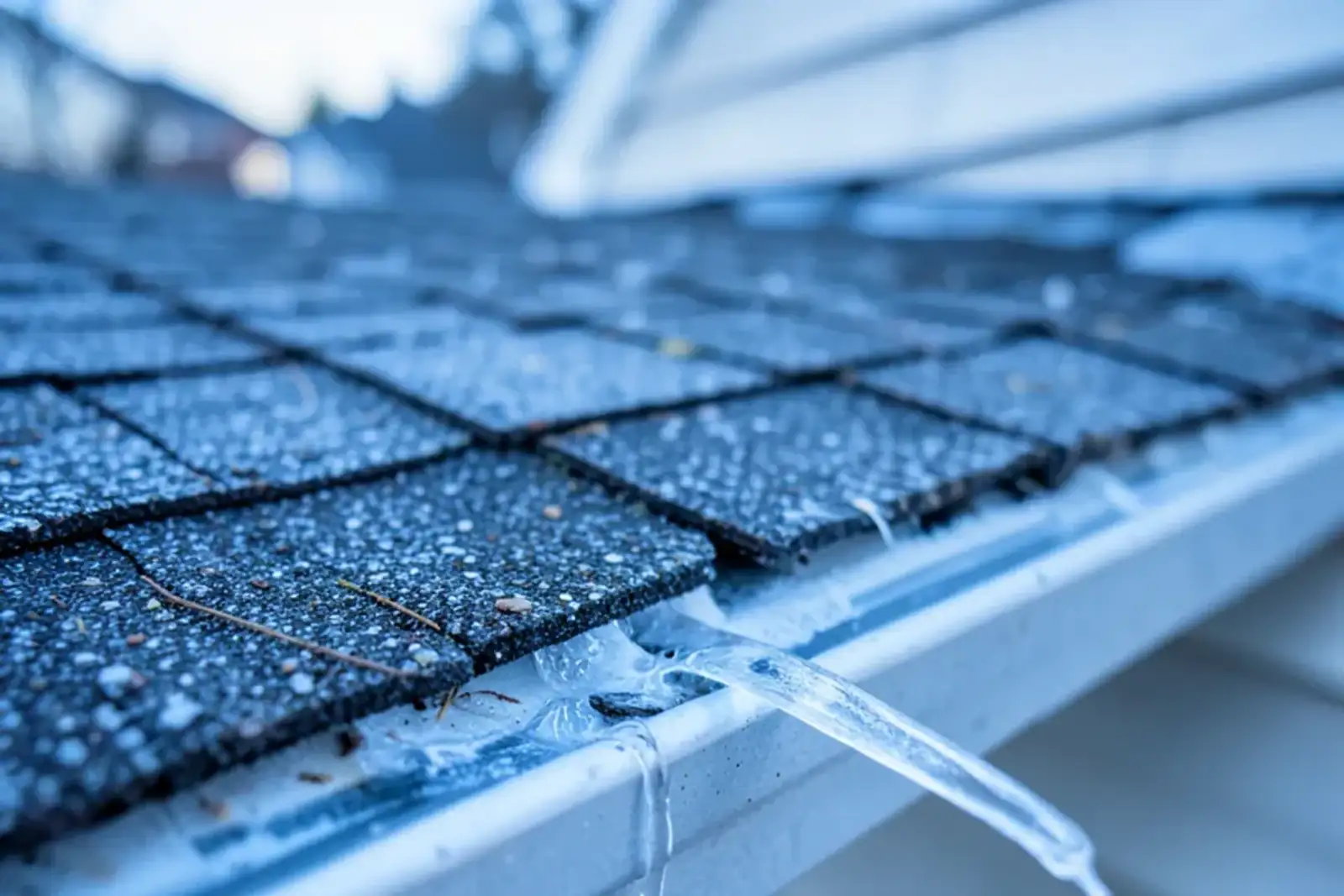
Water gets into a joint, freezes, expands and widens the gap a little. It thaws, runs in a little farther, then freezes again. Each cycle works the seam apart, and the repeat happens dozens of times a winter.
Metal moves too. Aluminum shrinks in the cold and expands in the sun, and the movement concentrates at corners, end caps and outlets. That is why a leak often shows up in spring, though the damage came in the dead of winter.
NOAA's engineering weather summary for Manchester, which sits in Hillsborough County, lists an average of 70 freeze-thaw cycles a year for 1988 to 2017. NOAA's table does not define a cycle in the summary, so read that as a scale and not a count of your own seams. It still means a gutter joint in southern New Hampshire is asked to survive dozens of small prying events every winter.
Why is a mild week harder on gutters than a cold one?
A steady deep freeze is easy on gutters, because nothing moves. The damage comes when daytime sun melts roof snow, the water runs into the gutter, and the temperature falls again that night. Southern New Hampshire gets many of those swings between December and March.
The melt also arrives at a gutter that may still hold ice at the outlet. Water backs up behind the plug, spills over the edge or works into joints, and freezes in the next dip. A gutter cleared in fall has a much better chance of draining before the temperature drops.
How heavy does ice get?
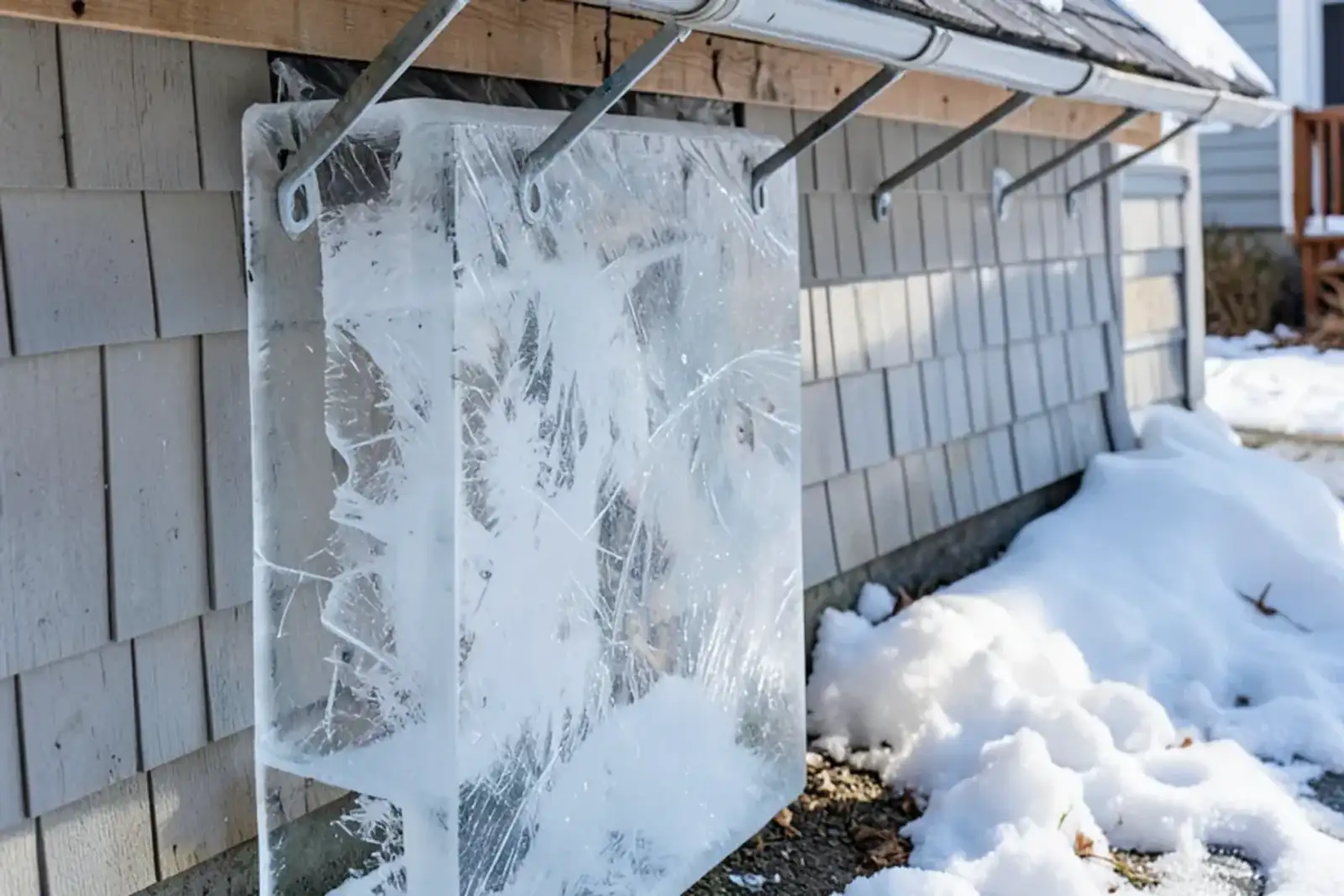
A cubic foot of ice weighs roughly 57 to 60 pounds. Here is a rough example. Say a 10-foot run holds ice 3 inches deep and 4 inches wide. That is 3 x 4 x 120 inches, about 1,440 cubic inches, or 0.83 cubic foot. At 58 pounds per cubic foot, the ice weighs close to 50 pounds on every 10 feet.
Hangers carry that weight, and wet snow adds more. If hangers sit far apart or are screwed into soft fascia, the run starts to bow. A bowed run holds water, and water in a bowed run freezes into a heavier block.
Three choices decide how a run handles that load. Hanger spacing is the first: closer hangers share the weight across more fasteners. Fascia condition is the second, because a hanger is only as good as the wood holding the screw. Metal thickness is the third. Common residential aluminum is .027 inch, with .032 inch used for heavy or snow-load work. Ask any installer which hanger spacing and thickness the quote uses, and get both in writing.
Why does sliding snow take gutters down?
Snow and ice slip off a warm roof all at once. A pitched, smooth roof sends it down in a sheet, and the gutter sits in the path. A thaw after a heavy snowfall is the usual trigger.
Falling ice can seriously hurt someone, so never stand or park under a loaded roof edge. If a roof sheds snow onto an entry, a deck or a gutter, snow guards hold it back in place until it melts. One of our reviewers, Genevieve P., came to us for "snow guards installed and gutters lowered and replaced", a pairing that suits roofs that drop snow onto the gutter line.
What snow guards do, and what they do not
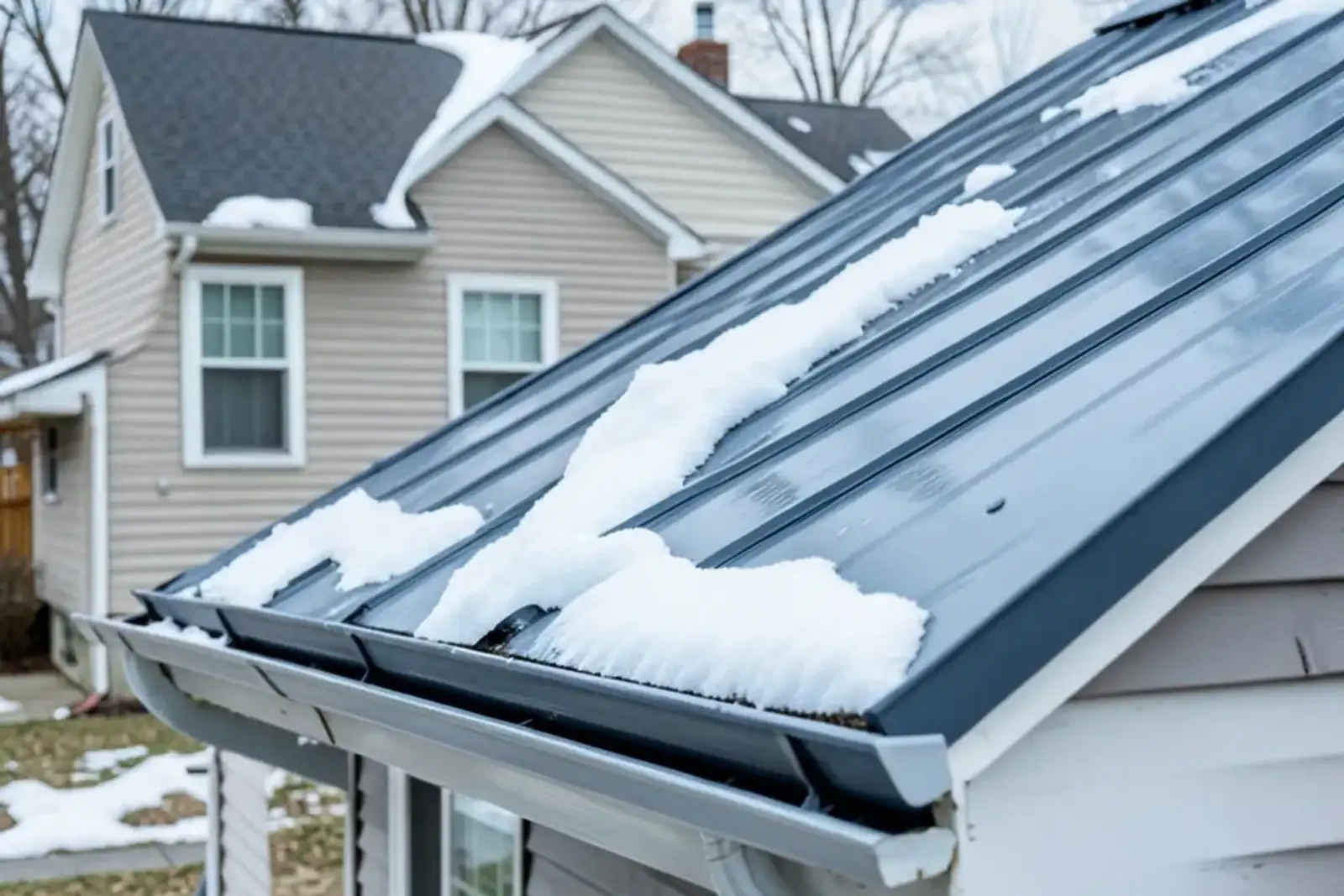
A snow guard is a small stop fixed to the roof surface. It breaks a sheet of snow into smaller pieces that melt in place or slide off in a trickle. The trade-off is that the roof now holds that snow, so the roof structure has to be able to carry it. Guards also do nothing for an ice dam, because the problem there is heat leaking into the attic. Where they help most is above a door, a walkway or a gutter run that has been torn off before. Our page on snow guards covers the service, and ask for the placement in writing, since a guard in the wrong row does little.
Which damage points to which winter force?
| What you see in spring | Likely force | Common fix |
|---|---|---|
| Drips at seams and corners | Freeze-thaw | Clean and reseal, or replace the joint |
| Bowed or sagging run | Ice weight | Add or tighten hangers, re-pitch |
| Gutter bent downward or torn off | Sliding snow | Rehang, add snow guards |
| Overflow over the front edge in a thaw | Frozen outlet or clog | Clear the downspout, clean in fall |
A crew's list of what to check after a hard winter
From our crew: the gutter tells you what the roof did. A run that dips in the middle was carrying a load. A corner that opened up was pried by ice. A downspout that is flattened or split at the bottom froze with water in it.
Check the lowest point first, because water settles and freezes there first. Then check the outlet and the downspout, since a plug of ice at the outlet backs everything up. Take photos before the snow melts, so you have a record of what January did.
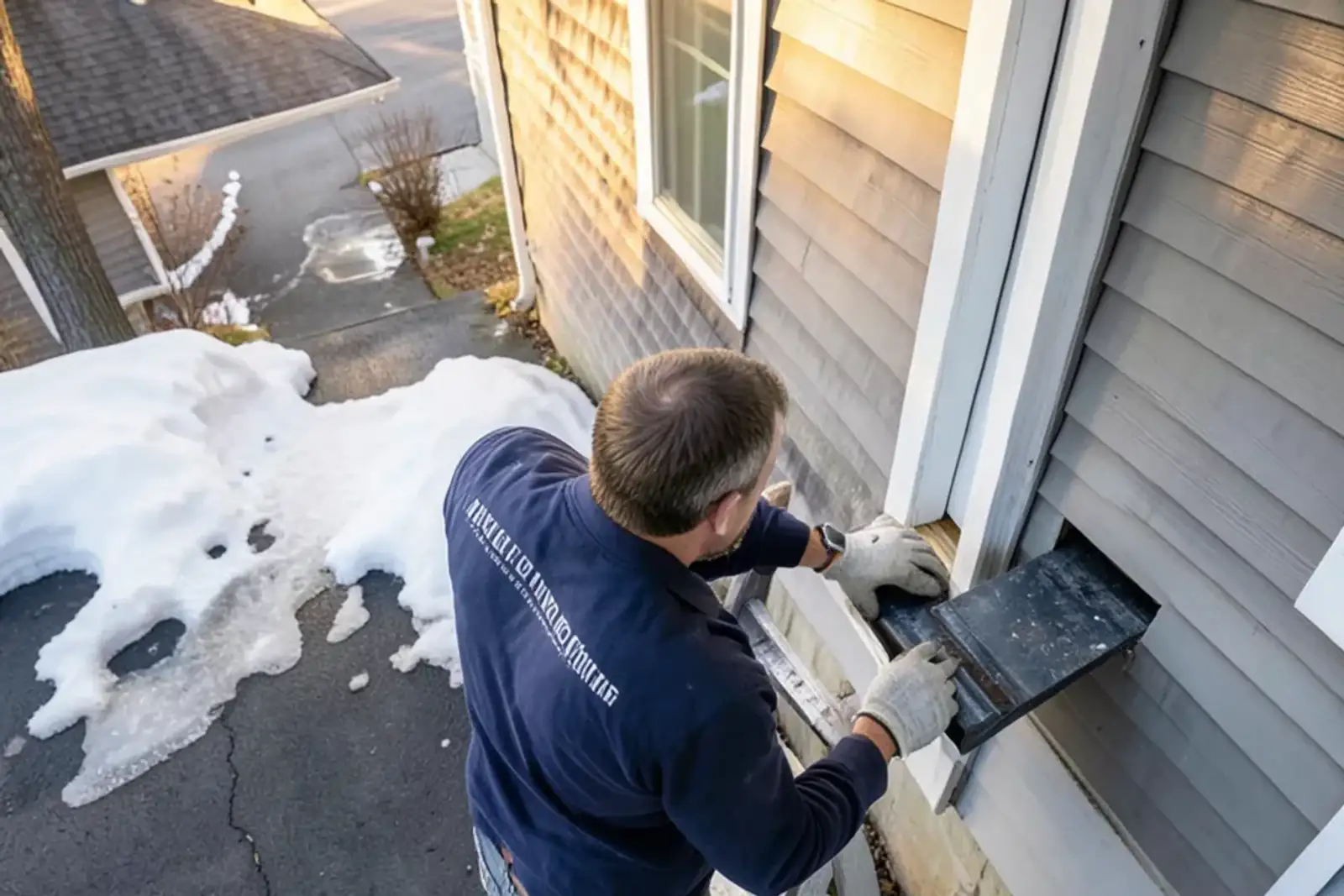
What to do on a thaw day
A thaw is the one time you can see what the gutters are doing under load. Look from the ground, and do not climb.
- Watch each downspout. Water should run steadily, not spill over the front edge.
- Note any run where the water stops short of the outlet. That is ice at the outlet.
- Look for a new drip at a seam or a corner that has been fine before.
- Keep people and cars away from a loaded roof edge.
- Clear snow from the base of each downspout so the melt has somewhere to go.
Do not chip ice out with a hammer or a shovel. You can dent the gutter, break a seam or hurt yourself.
What can you do before the first storm?
Most of the work is in fall. A short list:
- Clear the gutters once the leaves are down, so no wet debris is left inside.
- Flush the downspouts and extend them so melt leaves the house.
- Tighten loose hangers and reseal any joint that dripped over the summer.
- Fix pitch so water does not stand in the run.
- Ask about snow guards if the roof drops snow on a door or walkway.
An ice dam is a different problem from a clogged gutter. In an ice dam, warmth leaking from the attic melts snow, and the water freezes again along the cold eave. Fixing that takes insulation and attic ventilation, which a gutter cannot supply.
The order of an ice dam fix
The Building America guidance from Pacific Northwest National Laboratory puts the fix in a clear order. First, air seal the ceiling plane, meaning the gaps around wiring, recessed lights, plumbing stacks, flues, attic hatches and exhaust fans, so warm indoor air stays out of the attic. Second, insulate the attic well. Third, ventilate the roof, with baffles that keep insulation from blocking the soffit vents. A self-adhered membrane along the eaves is a backup that limits leaks if a dam forms anyway. Without the air sealing, the guidance says, the other steps do much less. Our page on ice dam prevention walks through what a gutter can and cannot do.
New Hampshire's NHSaves and Department of Energy programs may help with attic work, and we could not confirm current offers, so ask them directly.
Does the county you live in change any of this?
The forces are the same, but the buildings differ. Hillsborough County is New Hampshire's most populous, home to Manchester and Nashua, and its median home was built in 1978 (American Community Survey, 2020-24). The county holds a deep stock of older multifamily and commercial roofs, and a large roof area can drop a lot of snow on one gutter run.
Hampstead is in Rockingham County, so the Manchester figure from NOAA above is a guide to the region and not a measurement of your roof.
The closest Hillsborough County town is roughly a 20-minute drive from Hampstead, by our estimate. Our prices are written after a look at the job. For the full picture of what we handle in cold weather, see our winter gutter protection overview. If your gutters came out of this winter bowed, bent or dripping, call (208) 464-4195 and we will set the earliest visit we can.
Quick answers
Do gutters cause ice dams in New Hampshire?
No. Ice dams start when attic heat melts roof snow and the water refreezes at the cold eave, whether or not gutters are there. Better insulation and ventilation are the lasting fix. A gutter packed with ice adds weight and blocks melt from draining, so a clean one is still worth having.
What are the first signs of winter damage to gutters in Hillsborough County?
Look for runs that dip, hangers pulled from the fascia, ice-bent corners, and seams dripping on thaw days. In older Hillsborough County buildings, check the lowest point of each run first, since water sits there and freezes first. Look from the ground, and do not climb a ladder on icy ground.
How many freeze-thaw cycles does southern New Hampshire get in a winter?
NOAA's engineering weather data for Manchester, in Hillsborough County, lists an average of about 70 freeze-thaw cycles a year for 1988 to 2017. The summary does not define a cycle, so treat it as a scale. Each swing across freezing works water into joints and corners, which is why seams and outlets are where winter damage begins.
Do snow guards stop a gutter from being torn off in New Hampshire?
They help, but only when the damage comes from sliding snow. Guards break up a sheet of snow so it releases in smaller pieces, and they do nothing for an ice dam. Placement and roof strength matter, so ask for the layout in writing. Call us and we will look at the roof edge before suggesting anything.
Should I knock icicles or ice out of my gutters?
No. Hitting a gutter with a hammer or shovel can dent the metal, split a seam or bring ice down on you. Falling ice can seriously hurt someone, so stay clear of the drip line. Watch from the ground, photograph the problem, and have it dealt with in a thaw. A clean gutter in fall is the real prevention.
Sources
- Engineering Weather Data, Manchester NH (Manchester-Boston Regional Airport, 1988-2017), NOAA NCEI
- Attic Air Sealing, Insulating and Ventilating for Ice Dam Prevention, Pacific Northwest National Laboratory, Building America Solution Center
- BestPlaces, Hampstead NH climate
- Dwellics, Hampstead NH climate data
- American Community Survey 2020-24, Hillsborough County housing
Questions about your gutters?
25 Glenwood North Rd #16, Hampstead, NH 03841
(208) 464-4195
Mon–Sat 8am–6pm · Sunday closed