
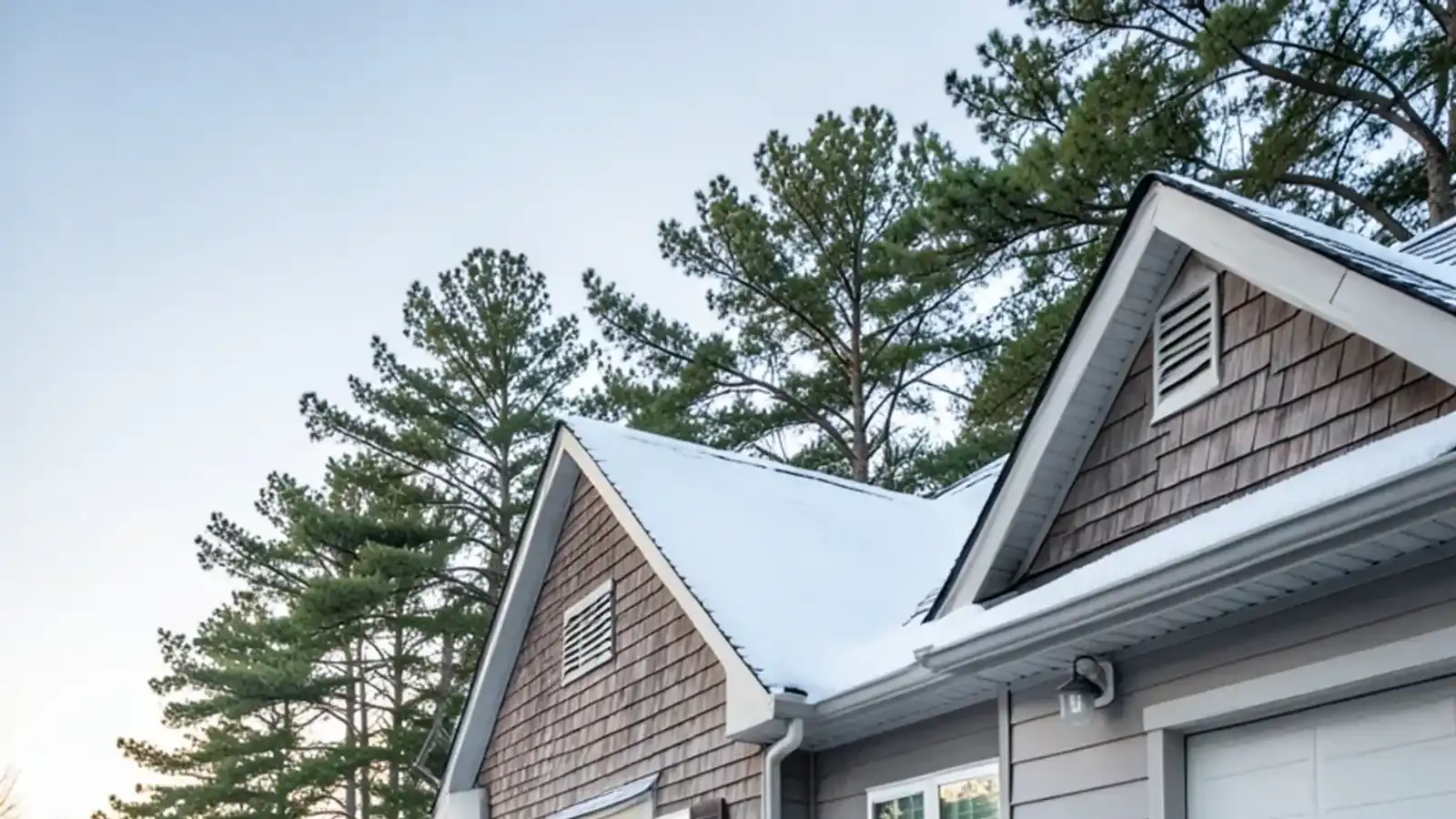
Winter Gutter Protection
Roof Raking Safely: A New Hampshire Homeowner Guide
How to rake a roof safely comes down to three rules. Stay on the ground, keep yourself and the rake well clear of power lines, and never stand under the snow you are pulling down. Rake only the first few feet above the eave, leave a thin layer on the shingles, and stop if the job calls for a ladder.
- ★ 5.0 on Google · 29 reviews
- Serving since 2024
- Based in Hampstead, NH
Published and updated November 2, 2026 · By the Lanes Gutters crew, Hampstead, NH
On this page
- How to rake a roof: the rules before the rake
- Do you need to rake at all?
- Step by step, from level ground
- Which roof rake suits your house?
- Mistakes that damage gutters and shingles
- What snow does to a gutter
- Raking on a wooded Weare lot
- When to hand it to someone else
- Before the next storm: a short plan
- Common questions
Snow on a roof is heavy, and the weight sits right where the gutter hangs. Pulling the load off the first few feet of the roof can reduce strain on the eave. It is also a job that hurts people every winter, so the safety rules come before the technique.
How to rake a roof: the rules before the rake
Read these before you pick the rake up.
- Stay on the ground. Never climb a ladder or the roof to rake. Snow hides slick shingles and the edge.
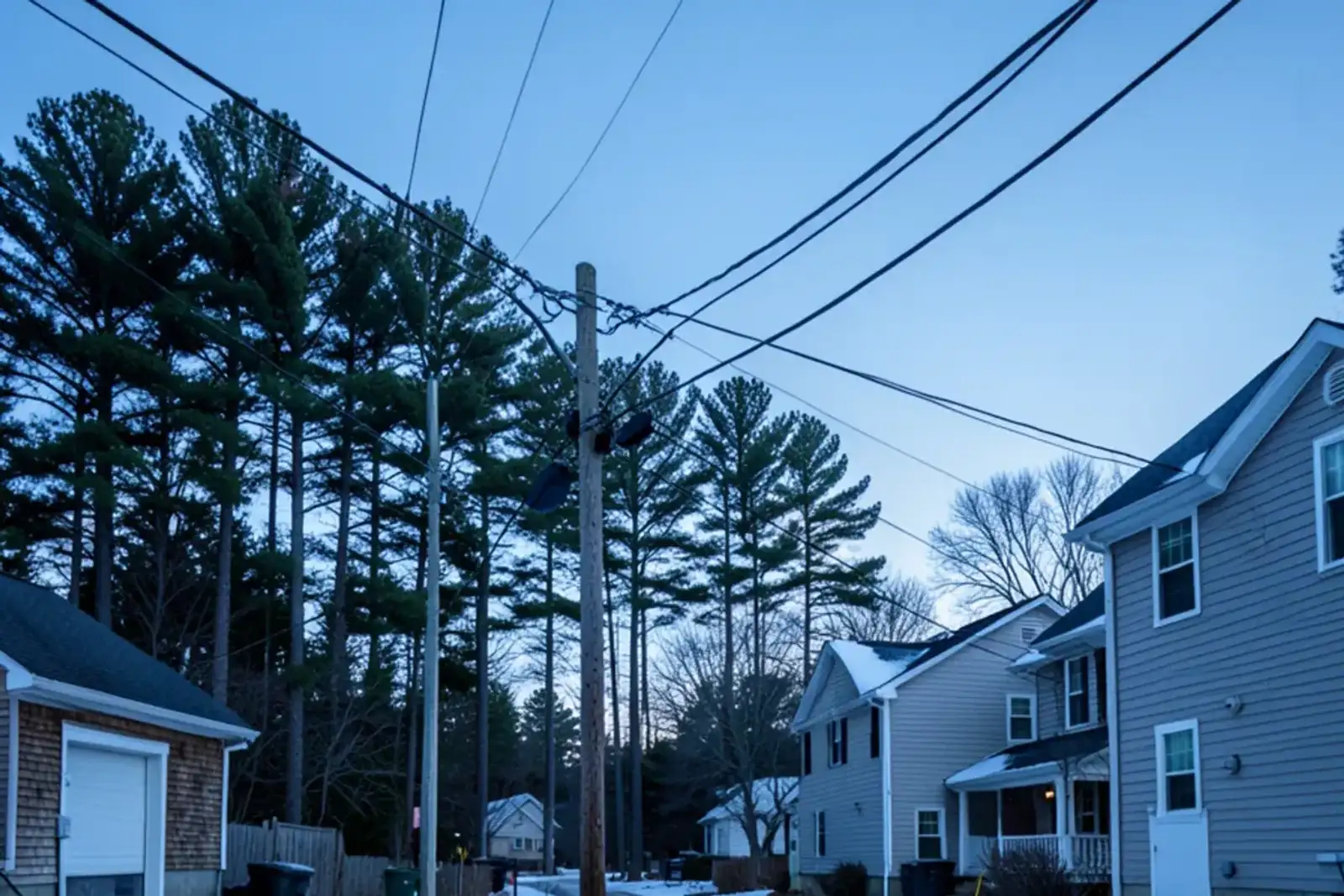
- Look up for wires. Keep yourself and the rake at least 10 feet from any power line, and treat every overhead wire as live. Aluminum and wet poles conduct electricity.
- Never stand under the slab. Snow and ice come down fast and in one piece. Stand to one side, with a clear way out.
- Wear a helmet and eye protection. Falling ice can seriously hurt someone.
- Do not rake in the dark or in a storm. If you cannot see the roofline, wait.
- Stop if it needs a ladder. If the rake cannot reach from level ground, the job is for someone with the right equipment.
This guide is for raking you do yourself from the ground. Our roof raking page covers the topic further. For anything beyond a ground-level rake, call and ask what we could assess and quote, or hire a roofing or snow-removal contractor.
Do you need to rake at all?
Not every roof needs it. Rake when snow is deep or wet, when ice is building at the eave, or when the house gives you warning signs. Those include sticking doors and windows, new cracks in drywall, or a roof that creaks under load. Hampstead averages about 53.8 inches of snow a year, with 17.1 inches in January (BestPlaces), and a heavy wet storm on top of an old base is the one that counts.
Steep roofs shed snow on their own. Low-slope and shallow roofs keep it, and a roof with a lower section under a higher one collects drift. Snow that slides from the upper roof lands on the lower one, so check those spots first.
Which roofs shed snow, and which hold it?
Roof type changes the answer more than the snow depth does. Here is how the usual New England roofs behave:
- Steep asphalt-shingle gable. Sheds on its own in a thaw, often all at once, so keep people and cars out of the fall zone.
- Low-slope or shallow-pitch roof. Holds snow and meltwater. Raking the first few feet is most useful here.
- Metal roof. Snow can let go suddenly and in sheets. If your gutters run under a metal roof, snow guards are the usual answer. Do not stand beneath it.
- Roof with a lower section under an upper one. Collects the slide from above. This is where drifts and ice build, and where most gutter damage starts.
If you are not sure what your roof does, watch it after the next thaw from a safe distance. Where snow stays and where it falls tells you more than any chart.
Step by step, from level ground
- Walk the edge of the house and pick a side with clear footing and no wires overhead.
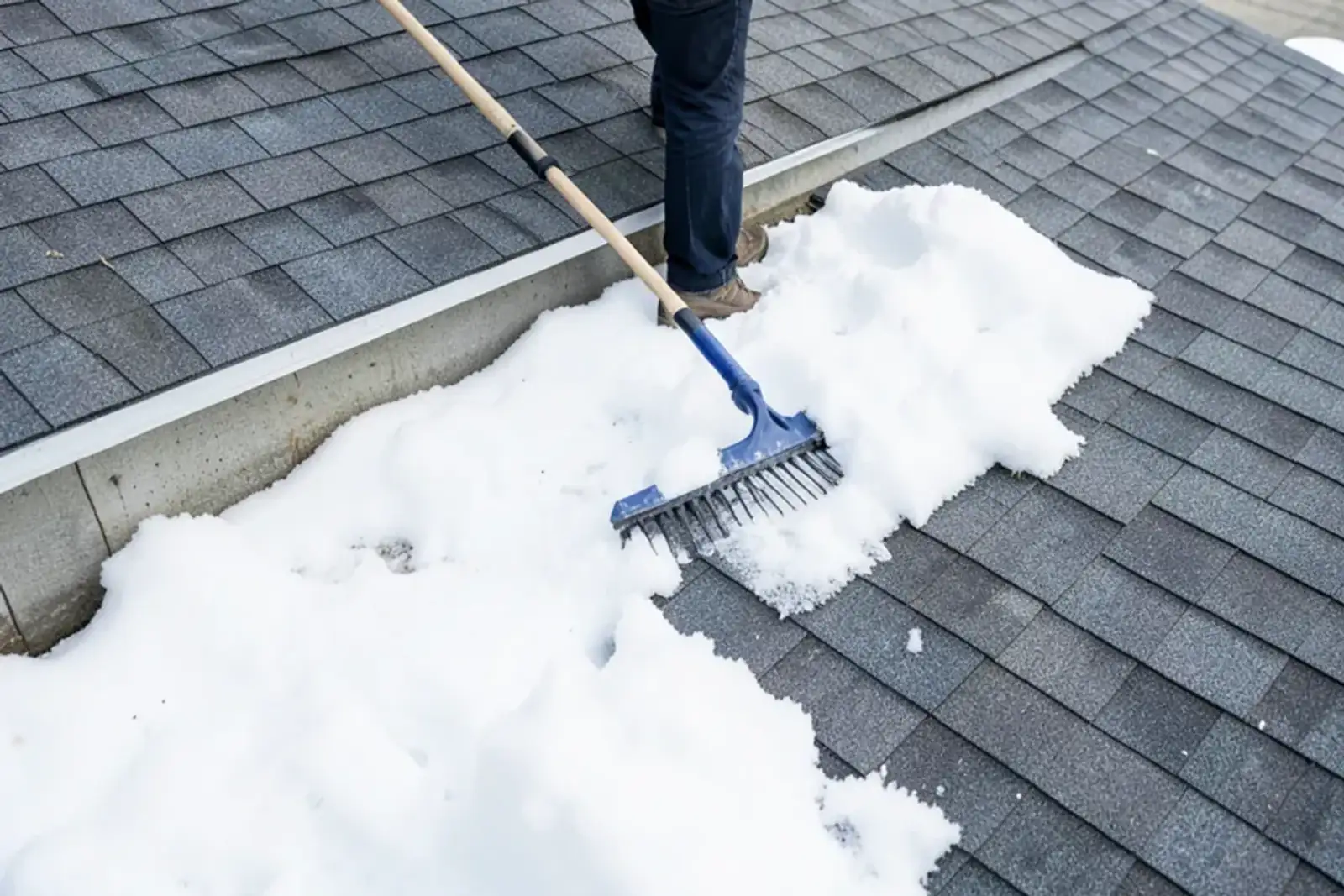
- Set the rake's blade against the snow at the eave and pull down in short, gentle strokes.
- Take the snow in layers a few inches at a time, rather than one deep bite.
- Work from the side so the slab falls past you, not onto you.
- Clear the first 3 to 4 feet above the eave, or as far as the rake reaches without leaning.
- Leave about an inch of snow on the shingles so the rake does not scrape them.
- Clear the fall zone below the eave, so the next slide has a place to land.
Short sessions help. Cold, wet snow is heavy to pull, and tired arms slip. Heavy snow work strains the back and heart, so take breaks, warm up first, and stop if you feel pain or breathlessness.
Which roof rake suits your house?
Rakes are cheap, and the wrong one costs more than the right one. The trade-offs:
- Plastic or rubber blade with wheels. Rides above the shingles, so it leaves a thin layer of snow and spares the granules. This is the safer choice for most asphalt roofs.
- Plain metal blade. Scrapes the roof surface and catches on shingle edges. Skip it on shingles.
- Telescoping aluminum handle. Light and reaches far, but aluminum conducts electricity. Treat any overhead line as live and stay at least 10 feet away, which also limits how far you can reach on lots with a service drop.
Pick the longest handle you can control without leaning. A rake that reaches the first 3 or 4 feet from the ground is enough for the job described here. If it cannot, the answer is a contractor, not a ladder.
Mistakes that damage gutters and shingles
- Metal blades. They strip granules from asphalt shingles.
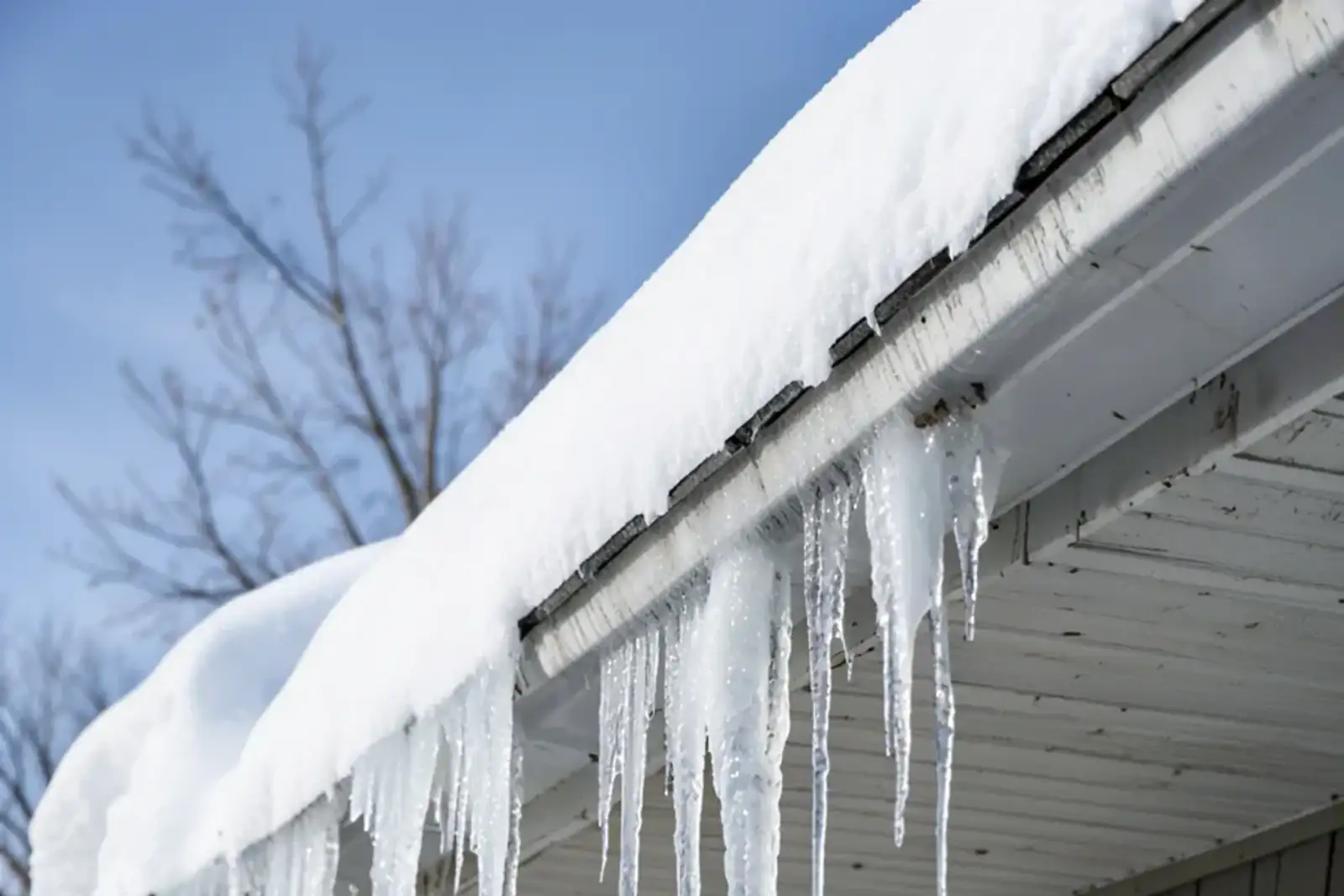
- Hacking at ice. Chipping an ice dam damages shingles and bends the gutter. Leave ice alone.
- Pulling sideways along the gutter. The rake catches the lip and bends it.
- Pushing up the roof. You work against the slope and lift shingle edges.
- Using a rake on a skylight, vent or solar panel. These crack or tear easily.
What snow does to a gutter
This is trade knowledge and does not describe any one job.
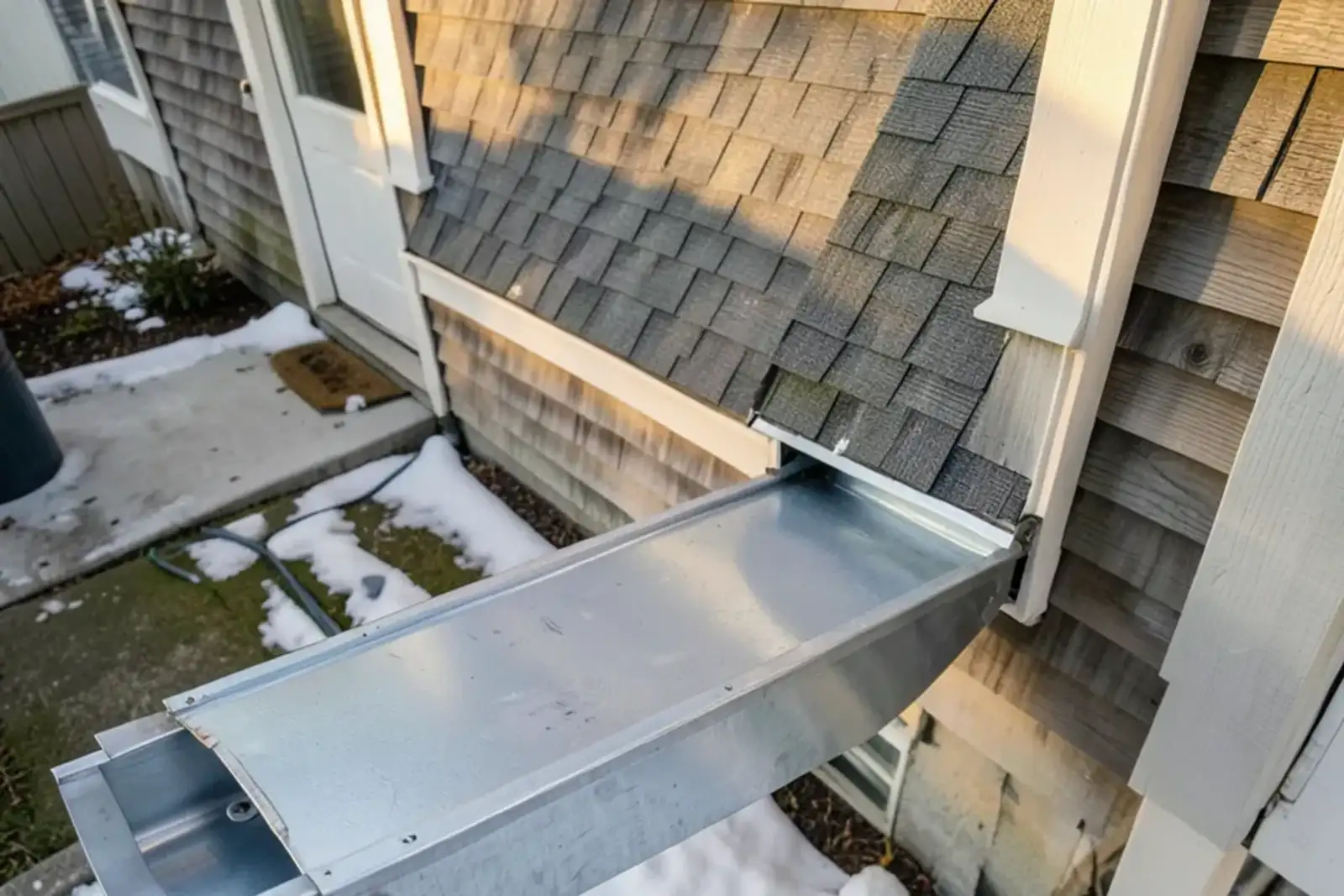
A gutter is hung to carry water, not a slab of snow. When snow slides off a warming roof, it can take the gutter with it, and an ice-filled trough weighs far more than an empty one. Ice weighs about 57 to 60 pounds per cubic foot, so a few feet of packed ice is a heavy load for hangers set into the fascia.
Raking helps the eave by removing weight and giving meltwater a path. It does not fix an ice dam. Those come from attic heat melting snow that refreezes at the cold eave, and the real fix is insulation and ventilation. If the same eave builds ice every winter, look at the attic before you buy a longer rake.
A worked example: the load on one 40-foot eave
The math is general, not from a job. Take a 40-foot eave with a band of ice 3 feet wide and 4 inches thick along it, which is a common ice dam. That is 40 x 3 x (4 / 12), or 40 cubic feet of ice. At about 57 to 60 pounds per cubic foot, that is roughly 2,300 to 2,400 pounds sitting on and above one gutter run, before any snow is added on top.
A raking pass over the lowest 3 feet of snow does not remove ice that has already formed. It does remove the snow that would have melted and refrozen into more of it. That is why raking early in a storm helps more than raking late. Once the ice is there, the aim changes to keeping people out from under it and getting the attic fixed.
Raking on a wooded Weare lot
Weare is a town of woods, hills and long private drives, with a colder climate than the Massachusetts border, and the median home was built in 1986 (ACS 2020-24). Pines and maples keep snow on a roof longer and drop it in clumps when you disturb it. Many lots also have a long service line running from a pole to the house, so look up before every pull.
We cover Weare from Hampstead, roughly 50 minutes away by our estimate, and visits are booked ahead. More about the town is on our Weare service page. If a slide has bent a gutter, the broader winter gutter protection guide covers what ice and snow do to a gutter system.
When to hand it to someone else
Call a roofing or snow-removal contractor if the roof is a low slope, if the snow is deep and the rake cannot reach, if there are wires near the eave, or if the roof looks stressed from inside. Ask any contractor for a certificate of insurance before they get on your roof, and get the price in writing.
Before the next storm: a short plan
Do three things this week, while the ground is clear. Look up and note where the service line runs from the pole to the house. Find the eaves that collect drift, usually where an upper roof drops onto a lower one. And check that your rake reaches the first few feet from level ground without a ladder. Then, after the next heavy storm, rake only the lowest few feet, from the side, in short sessions.
For what ice does once it forms, see our guide to first steps for an ice dam and our note on why New Hampshire winters are hard on gutters. If a slide has bent or pulled a gutter, call Lanes Gutters at (208) 464-4195. Roof raking itself is not a service we have confirmed, so ask what we could assess and quote, and we will tell you plainly what fits.
Quick answers
How much snow on a roof is too much?
There is no single depth, because wet snow weighs far more than dry snow. Rake when the snow is deep enough to worry you, or when you notice warning signs inside, such as sticking doors, new ceiling cracks or creaking. If you are unsure about the roof's load, call a roofer or structural professional.
Can roof raking damage shingles or gutters?
Yes. Metal blades scrape granules off asphalt shingles, and a rake dragged hard against the eave can bend the gutter. Use a plastic or wheeled blade, leave about an inch of snow on the roof, and pull gently. Cold shingles are brittle, so do not force a stuck slab.
Is roof raking harder on a wooded lot in Weare?
It can be. Trees hold snow on the roof longer, branches overhead can drop loads when you pull, and long private drives often have an overhead service line running to the house. Look up before you start, and plan your path so you are never under a branch or a slab.
Should I rake my roof after every storm in Weare, NH?
No. Rake when the snow is deep or wet, when ice is building at the eave, or when the house shows strain. A few inches of dry powder on a steep roof will blow or slide off. After a heavy, wet storm on an old base, a short ground-level pass over the lowest few feet is worth doing. Skip it in a storm or after dark.
Can I knock ice off the eaves with a roof rake in Weare?
No. A rake is for snow, not ice. Chipping at an ice dam tears shingles, bends the gutter and can send heavy chunks down on you. If ice is already built up, leave it, stay out from under it, and look at the attic insulation and ventilation that caused it. Call a professional if water is coming inside.
Sources
- BestPlaces, Hampstead NH climate
- ACS 2020-24, Weare median year built
Questions about your gutters?
25 Glenwood North Rd #16, Hampstead, NH 03841
(208) 464-4195
Mon–Sat 8am–6pm · Sunday closed