
Gutter Repair
How to Make Your Gutters Last Longer
To make gutters last longer, keep them clear, keep them pitched, and fix small leaks early. A well-kept aluminum system is commonly listed at 20 to 30 years, and neglect is what cuts that short. Most gutters that fail early were not defective. They were left full of wet debris for a few winters.
- ★ 5.0 on Google · 29 reviews
- Serving since 2024
- Based in Hampstead, NH
Published and updated November 2, 2026 · By the Lanes Gutters crew, Hampstead, NH
On this page
- How long should gutters last?
- What actually wears a gutter out?
- How to make gutters last longer: the habits that count
- Mistakes that shorten gutter life
- Is the upkeep worth what the gutter costs?
- What a crew does before it reaches for replacement
- When is repair no longer worth it?
- Hudson homes and gutter age
- A short plan to get the full 20 to 30 years
- Common questions
Gutters rarely wear out from rain. They wear out from standing water, snow load and ice, and each of those is something you can control.
How long should gutters last?
Aluminum gutters at the common .027-inch thickness are listed at 20 to 30 years, with .032 inch used for heavy or snow-load work. Get the thickness written into any quote you compare. The thickness matters less than how the system is kept, because a clean, tight gutter outlives a thick one that sits full of wet leaves.
Hampstead spends about 195 days a year below 50°F (Dwellics), so a New Hampshire gutter goes through hundreds of freeze and thaw swings in a lifetime. That is the wear you are fighting.
What actually wears a gutter out?
Ranked roughly by damage, from the worst:
- Standing water. A trough that holds a puddle rots seams and rusts steel fasteners.
- Ice and snow load. A full, frozen trough pulls hangers loose.
- Failed sealant. A weeping joint wets the fascia behind it.
- Ladder damage. Leaning a ladder on the front lip dents it and loosens the hangers.
- Wrong fasteners. Mixing metals can corrode them, so use fasteners made for aluminum gutters.
- Tree growth. Branches scrape the finish and drop debris.
How to make gutters last longer: the habits that count
Clear the trough after leaf drop. This one habit does more than any other. Debris holds water against the metal, and the same debris freezes into a block. Our guide to why gutters leak at seams shows what that does to the joints.
Keep the pitch. Gutters are hung with a slight slope toward the downspout, commonly at least 1/4 inch per 10 feet. A run that has lost its pitch holds a puddle, and the cure is rehanging it, not caulk.
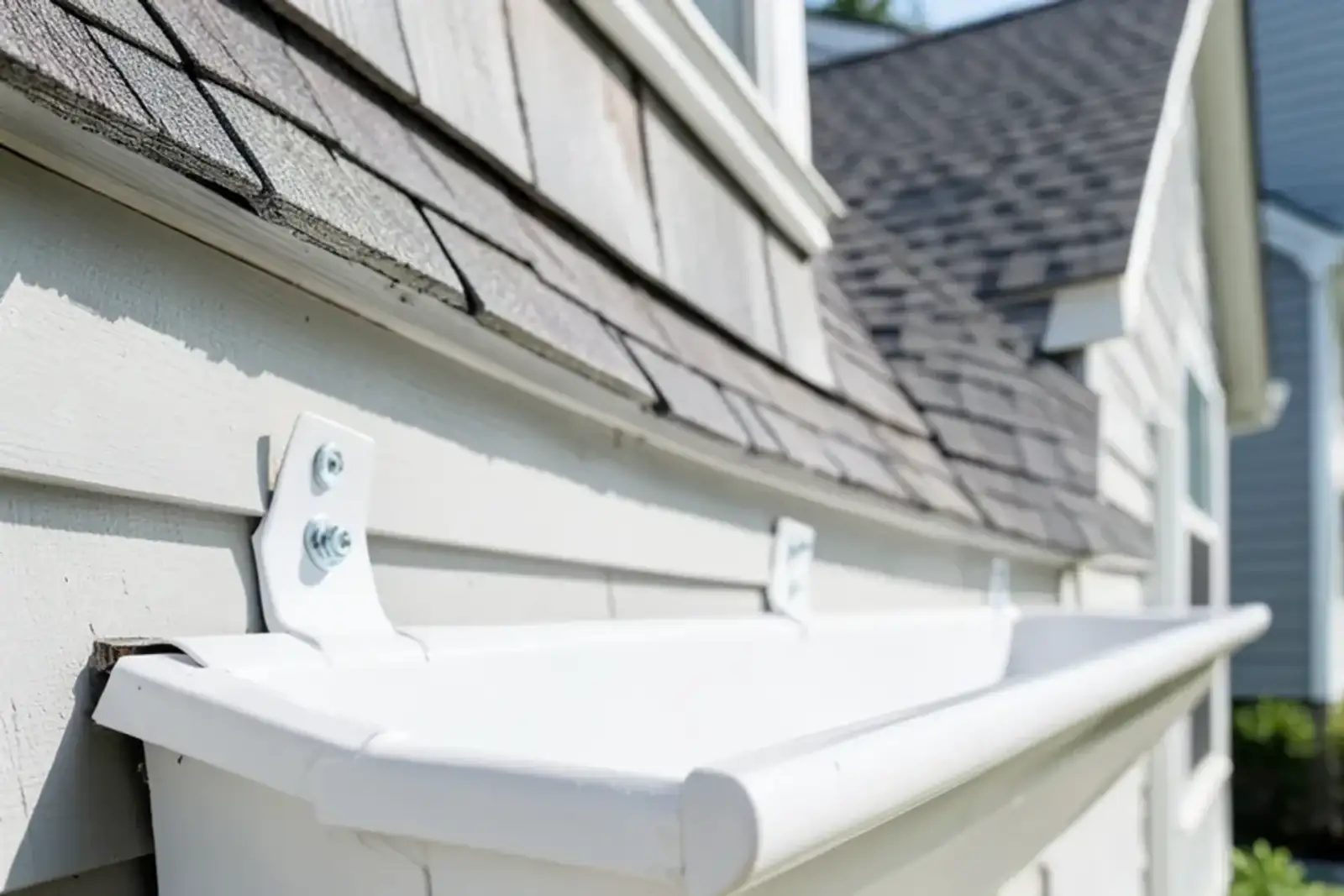
Keep hangers tight and close. Hangers are commonly spaced about every 2 to 3 feet. Screws that back out leave the run free to flex, and flexing opens the seams.
Reseal early. A hairline gap in sealant takes a few minutes to fix. Once water has soaked the fascia behind it, the repair is bigger.
Use a standoff on the ladder. A bar that spans the gutter puts the ladder's weight on the wall, not on the lip.
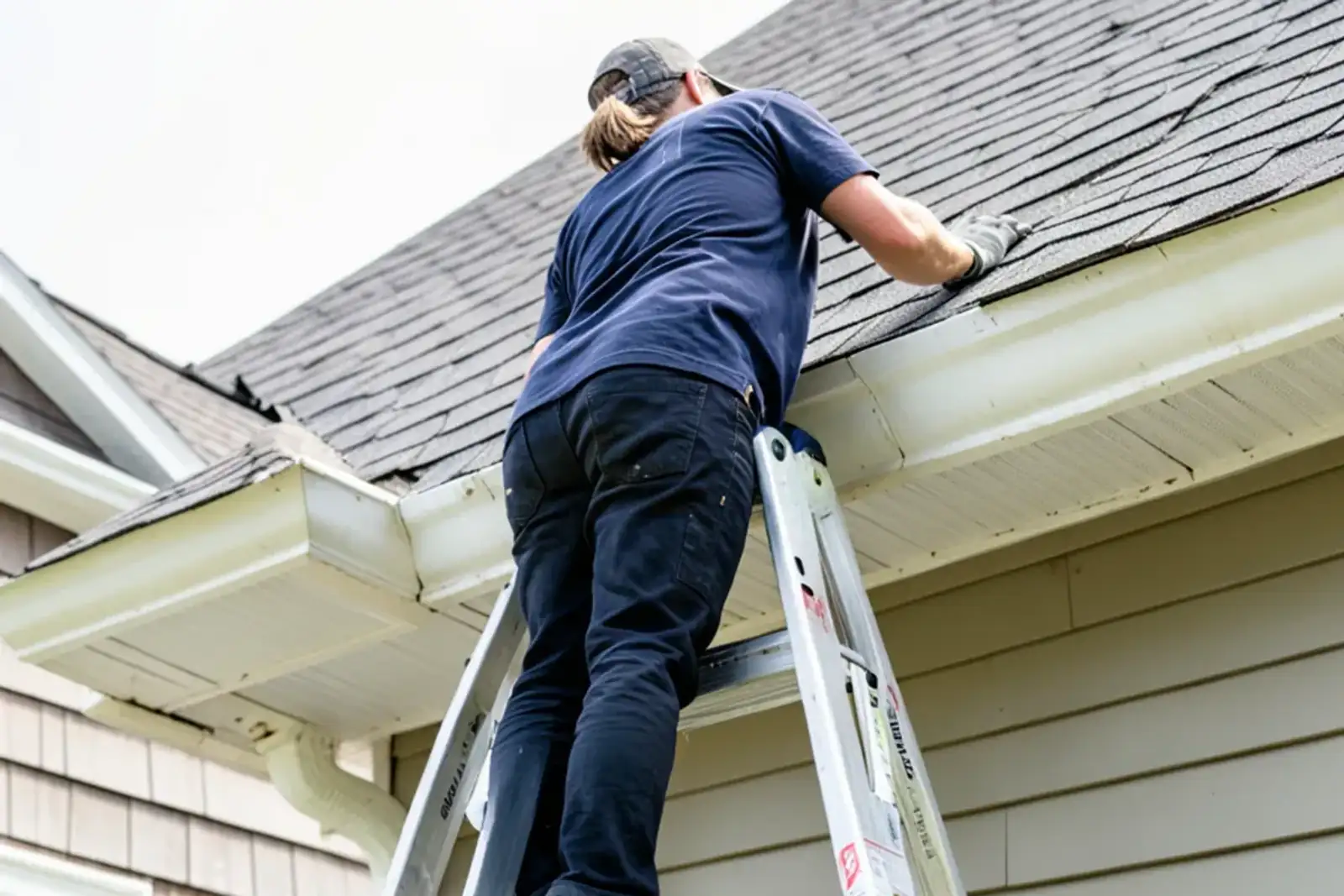
Flush the downspouts. A clog low in the pipe backs water up into the trough and the corners.
The details that decide whether a repair holds
Sealant needs clean metal. When a corner weeps, the fix is to scrape back to bare metal, wipe it dry and lay a fresh bead along the whole seam. A smear over old sealant peels by the next freeze. Sealants cure best on a dry day with mild air, so a cold, wet morning is the wrong time.
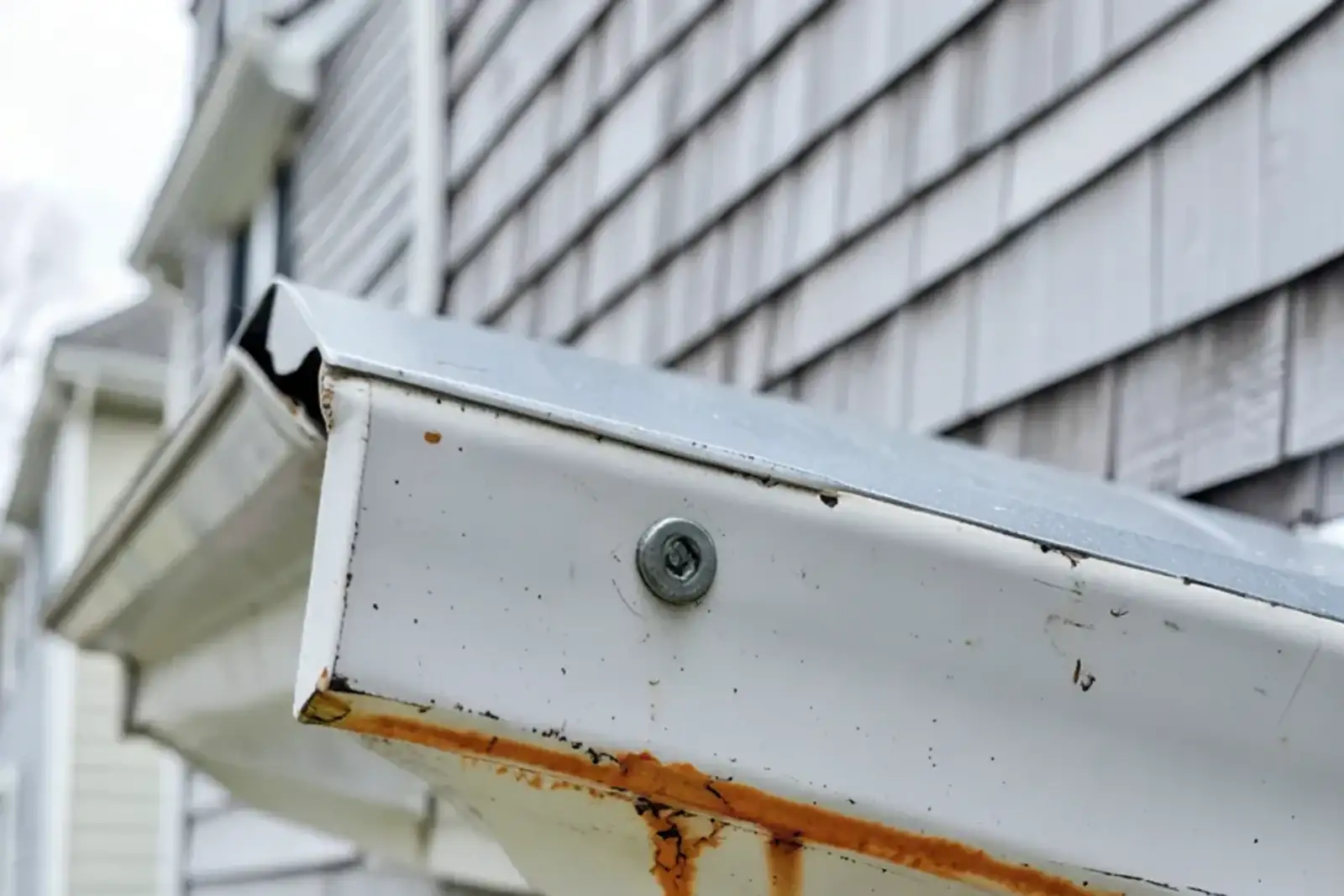
Fastener metal matters. Hangers and screws should be made for aluminum gutters. An unmatched steel fastener can set up corrosion where it meets aluminum, and the rust trail down the fascia is how you find it. Replace a rusting fastener rather than painting over it.
Scratches and the finish. A scratch through the paint is where corrosion starts on a painted gutter. Small ones can be touched up with a matching paint made for metal. Large ones suggest the section will fail sooner than the rest of the run.
Trees and branches. Branches that rub the gutter scrape the finish, and overhanging limbs load it with debris. Cutting them back a few feet from the roof does more for a gutter than any product.
Do guards and extra hangers add life?
Both can, with limits. Guards cut the wet debris that wears a trough, and they reduce ladder trips, but they hide the trough and a light guard can bend under snow. Extra hangers help most where snow slides off a steep roof onto the gutter. Where a roof dumps snow every winter, snow guards on the roof, rather than a stronger hanger alone, are the usual answer, and we can talk through what fits.
Mistakes that shorten gutter life
- Pressure washing the inside of the trough, which can force water behind the gutter and strip the finish
- Scraping with metal tools, which scratches the paint and invites corrosion
- Walking on a gutter or tying a ladder to it
- Letting a downspout empty against the foundation or onto a walkway
- Hanging heavy decorations or planters from the front lip
- Ignoring a drip because it only happens in big storms
Each of these is easy to avoid and costs nothing. Most of them add up to the same problem, which is a gutter asked to carry a load it was not hung for.
Is the upkeep worth what the gutter costs?
Here is an honest look at the numbers, using third-party estimates. These are not Lanes prices, and the example is an illustration.
Today's Homeowner lists new gutters at about $4.01 per linear foot. On a 200-foot house, that comes to about $800 for the gutter. Spread over a 20 to 30 year listed life, that is roughly $27 to $40 a year. Professional cleaning of 200 feet runs about $220 a visit (Today's Homeowner). Two visits a year would cost more per year than the gutter does.
So the upkeep does not pay for the gutters. It pays for what the gutters protect: the fascia, the siding, the foundation edge and the basement. A rotted fascia board and a wet basement cost far more than a gutter run. That is the real reason to keep water moving.
It also means the cheapest sensible plan is not always a cleaning contract. On a one-story house you can safely reach, doing the fall clean yourself, flushing the downspouts and calling a crew when you see a sag or a leak may be enough. On a tall roof, the ladder risk makes hiring out cheaper than a fall. Whichever way you go, a gutter that is cleared once a year, holds its pitch and has sound hangers will usually outlast one that is cleaned twice a year and never checked.
What a crew does before it reaches for replacement
This is general trade knowledge about the order of options.
A crew starts with the cheapest fix that addresses the cause. A sagging stretch gets new hangers or a re-pitch. A weeping joint is cleaned back to bare metal and resealed, since new sealant on dirty metal peels. A bent section can sometimes be cut out and replaced, which keeps the rest of the run. Replacement comes when the problems are everywhere, not when one thing breaks.
The other thing a crew looks for is what caused the failure. A gutter that keeps pulling away from the house may be fighting a roof that dumps snow on it, and no hanger fixes that on its own. Repairing the symptom without the cause buys one more winter.
When is repair no longer worth it?
Compare a repair price to a replacement price when you see these:
- Several joints leak at once
- The same joint fails again after repair
- The metal is bent, torn or corroded through
- Sections have lost their pitch and the fascia behind them is soft
- The system is sectional and past 20 years old
For a sagging run on its own, our sagging gutter repair page explains how we would assess it, and gutter pitch correction covers a run that holds water. In both cases we price each job in writing after seeing it. If a leak is the main issue, our leaking gutter repair page and the guide to pulling away from the fascia cover the next step.
Hudson homes and gutter age
Hudson is a Merrimack River town of 1970s and 1980s ranches and colonials, and the median home was built in 1983, with about 83% owner-occupied (ACS 2020-24). A house of that age is likely on its original gutters or its second set, and the first set is long past its listed lifespan. That is the moment to check hangers, seams and pitch together.
We cover Hudson from Hampstead, roughly 25 minutes away by our estimate. Details on the town are on our Hudson service page, and our main gutter repair page describes how we look over a run.
A short plan to get the full 20 to 30 years
Write these five tasks on a calendar. Clear the trough in November and again in late May if trees overhang. Flush every downspout each time. Walk the house in April and note any dip, gap or stain. Reseal weeping joints on a dry, mild day. Keep the ladder's weight off the front lip. That is the plan, and it fits in a few hours a year. For the fall tasks in order, see our fall gutter checklist.
Call Lanes Gutters at (208) 464-4195 if your walk-around turns up a sag, a weeping seam or a run that holds water, and we will price the repair in writing after seeing it.
Quick answers
How long do aluminum gutters last in New Hampshire?
Aluminum gutters at the common .027-inch thickness are listed at 20 to 30 years, and .032 inch is used for heavy or snow-load work. Snow and ice shorten that, as do clogs and loose hangers. Ask any installer which thickness the quote uses, since it affects how the gutter holds up under winter load.
Do Hudson homes from the 1980s need new gutters?
Not automatically, but many are due for a hard look. The median Hudson home was built in 1983, so original gutters are well past the usual 20 to 30 year range. If they hold a straight line, drain fully and have sound hangers, repairs may be enough. Sagging or leaking at several joints points to replacement.
Do gutter guards help gutters last longer in Hudson, NH?
Somewhat. A guard that keeps leaves out means less wet debris sitting against seams and fasteners, which is the main wear. But a guard hides the trough, so a slow leak or a lost pitch goes unseen, and a light guard can bend under heavy snow. Hudson homes under pines still need a yearly look from the ground.
Is it worth repairing a 25-year-old gutter in Hudson, NH?
Yes if the run holds its line, drains fully and the fascia behind it is sound. A few new hangers and a reseal can add years. No if several joints leak, the metal is bent or corroded, or the fascia is soft. Many Hudson houses from the 1980s are at this decision point now, so a hands-on look beats guessing.
What shortens gutter life most in southern New Hampshire?
Standing water and frozen debris. Wet leaves held against the metal rot seams and rust fasteners all summer, then freeze into a block that pulls on the hangers. In Hampstead, with about 195 days a year below 50°F (Dwellics), that freeze and thaw cycle is hard on every joint. Clearing the trough after leaf drop breaks the cycle.
Sources
- ACS 2020-24, Hudson median year built
- Dwellics, Hampstead NH climate data
Questions about your gutters?
25 Glenwood North Rd #16, Hampstead, NH 03841
(208) 464-4195
Mon–Sat 8am–6pm · Sunday closed