
Gutter Installation
In-Ground vs. Above-Ground Downspout Drainage
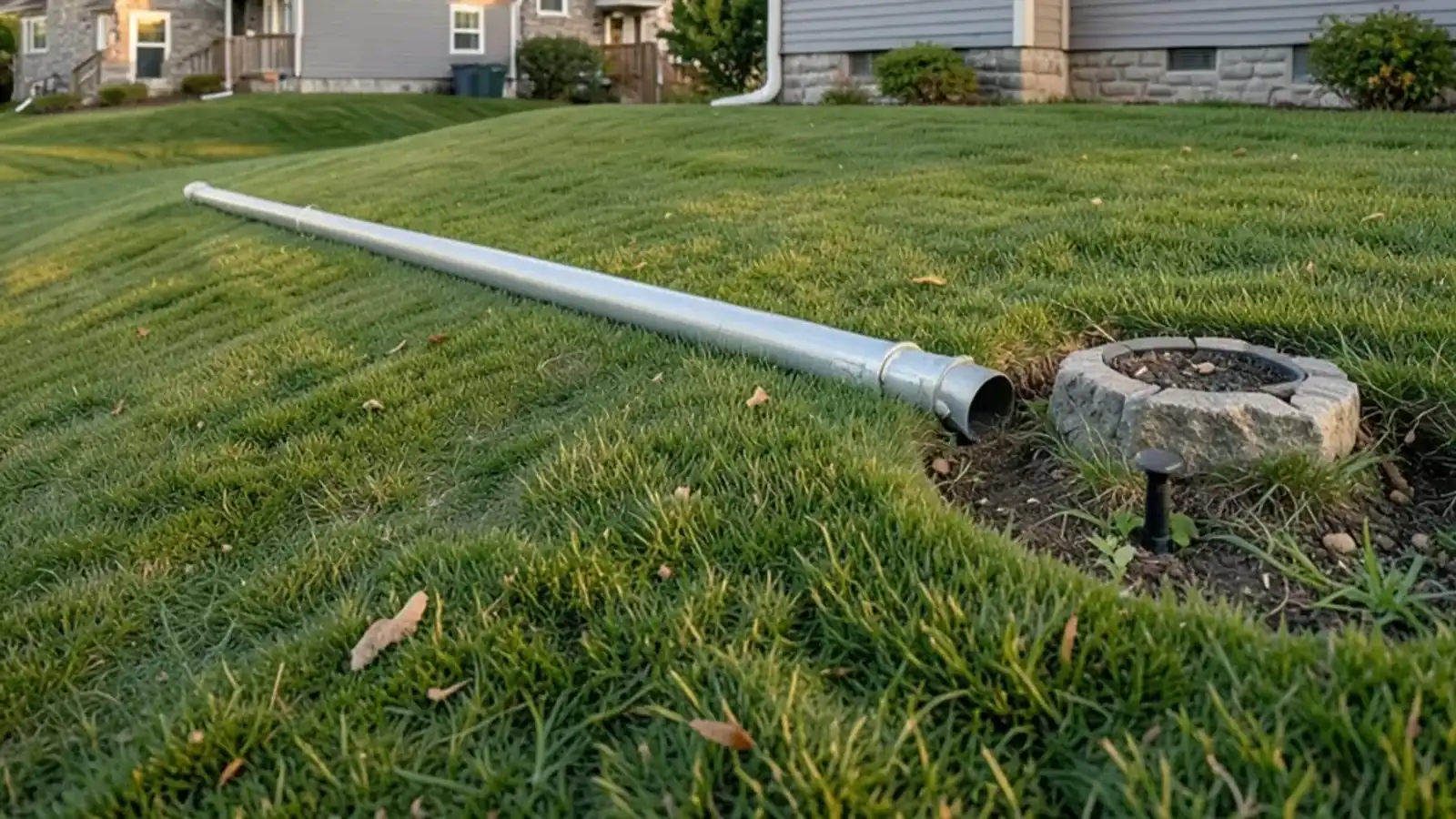
Above-ground extensions are simpler, cheaper and easy to see when something goes wrong. In-ground drainage clears the lawn and hides the pipe, but it has to be built for frost, clogs and a lower exit point. Most New Hampshire lots do fine above ground, and a sloped or tight lot is where burying a line earns its cost.
- ★ 5.0 on Google · 29 reviews
- Serving since 2024
- Based in Hampstead, NH
Published and updated November 2, 2026 · By the Lanes Gutters crew, Hampstead, NH
On this page
The short answer is that above-ground is the default, and in-ground is a tool for specific lots. If the water can run on top of the ground to a safe spot, let it. If a walkway, a mower or a tight lot stops that, a buried line is worth looking at.
In-ground vs above-ground gutters: the quick comparison
| Above-ground | In-ground | |
|---|---|---|
| What it is | Extension, splash block or hinged elbow on top of the ground | Solid pipe buried in a trench, leading to a lower exit |
| Typical cost | Low | Higher, because of digging and pipe |
| Visibility | Easy to see and fix | Hidden, so a clog can go unnoticed |
| Frost | Ice can form on top of the ground | Ice can block the pipe or its exit |
| Lawn and walks | Gets in the way of mowing and foot traffic | Clears the surface |
| Best on | Gently sloped lots with room to spare | Tight lots, walkways, or water that must cross a path |
Why frost decides this in New Hampshire
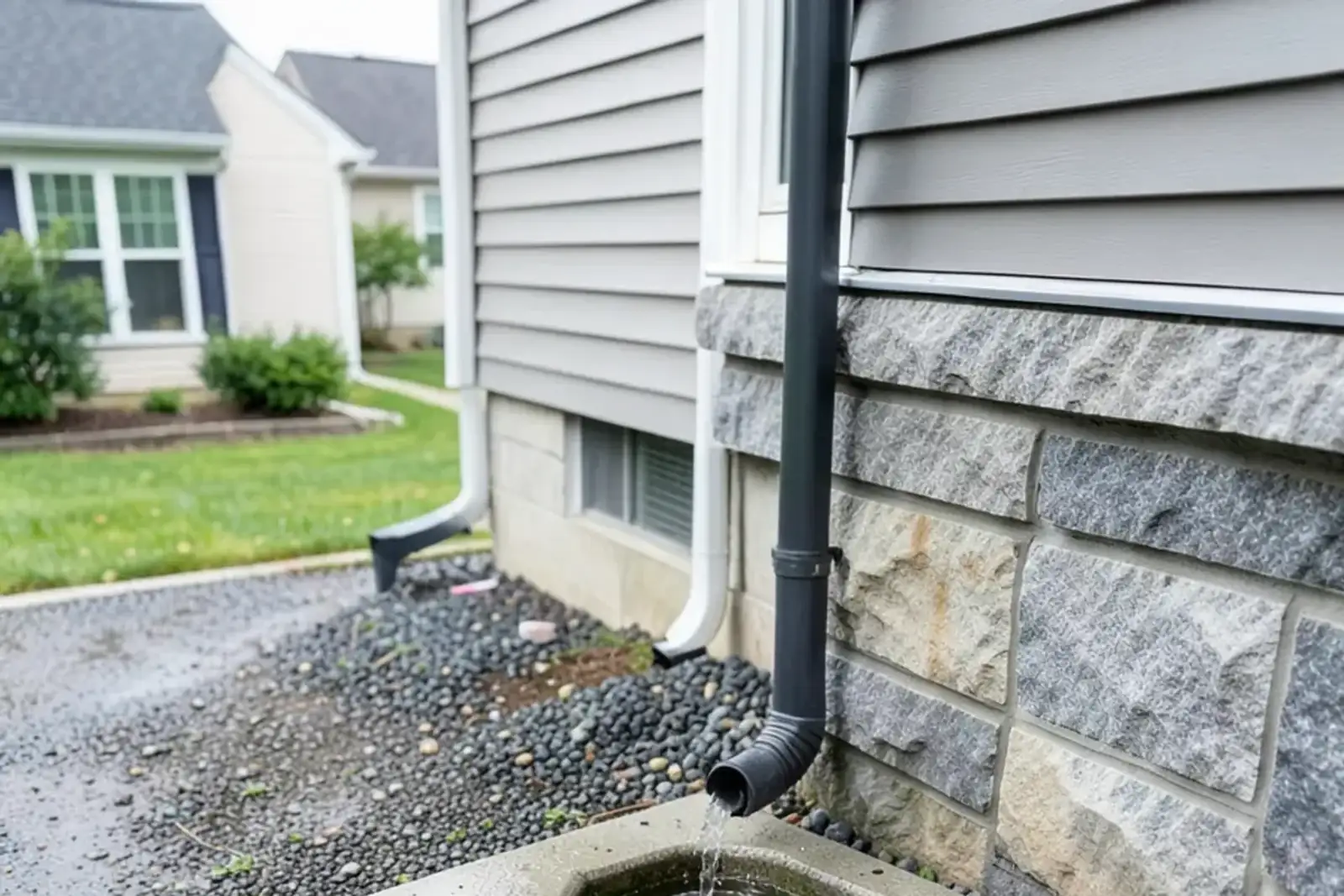
Frost runs deep here, and footings are commonly set about 4 feet down for that reason. Hampstead sits below 50°F about 195 days a year (Dwellics), so ground and pipe spend much of the year cold.
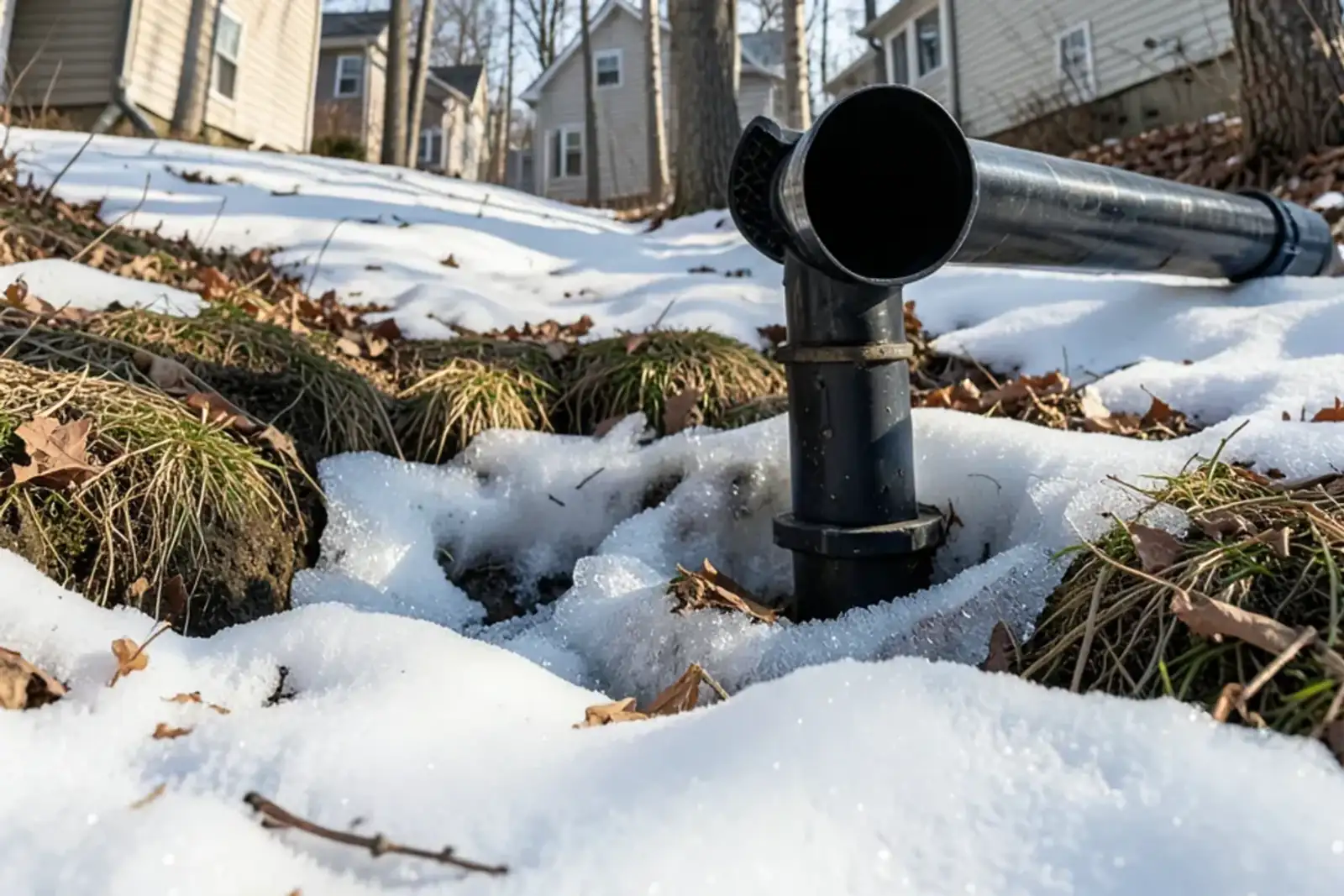
A buried line that holds water at any low point can freeze solid. Ice at the exit can back water up into the gutter. A line that slopes steadily to an open exit drains empty between storms and gives frost nothing to hold.
Where a buried line has to end
A buried line needs somewhere to go. The options are a pop-up emitter on lower ground, a daylight exit on a slope, a drywell, or a storm connection where the town allows one. The exit must sit below the point where water enters.
Without a lower exit, you have a trench full of standing water. That is the situation to avoid on flat lots, and it is why many lots are better off above ground.
Daylight exits and winter bypasses
Sources on buried drains agree that a line which comes out into daylight on a slope is the most dependable design, because it drains empty and you can see when it is running. A pop-up emitter on flat ground is the weak spot, since it can freeze shut and back water up the pipe.
Some systems add a seasonal bypass. A diverter or an extension clipped on at the downspout sends water across the surface in winter, and the buried line goes back into use in spring. It adds a chore twice a year, and it avoids the worst failure, a pipe full of ice with water still coming in.
A worked example: how much fall does the line need?
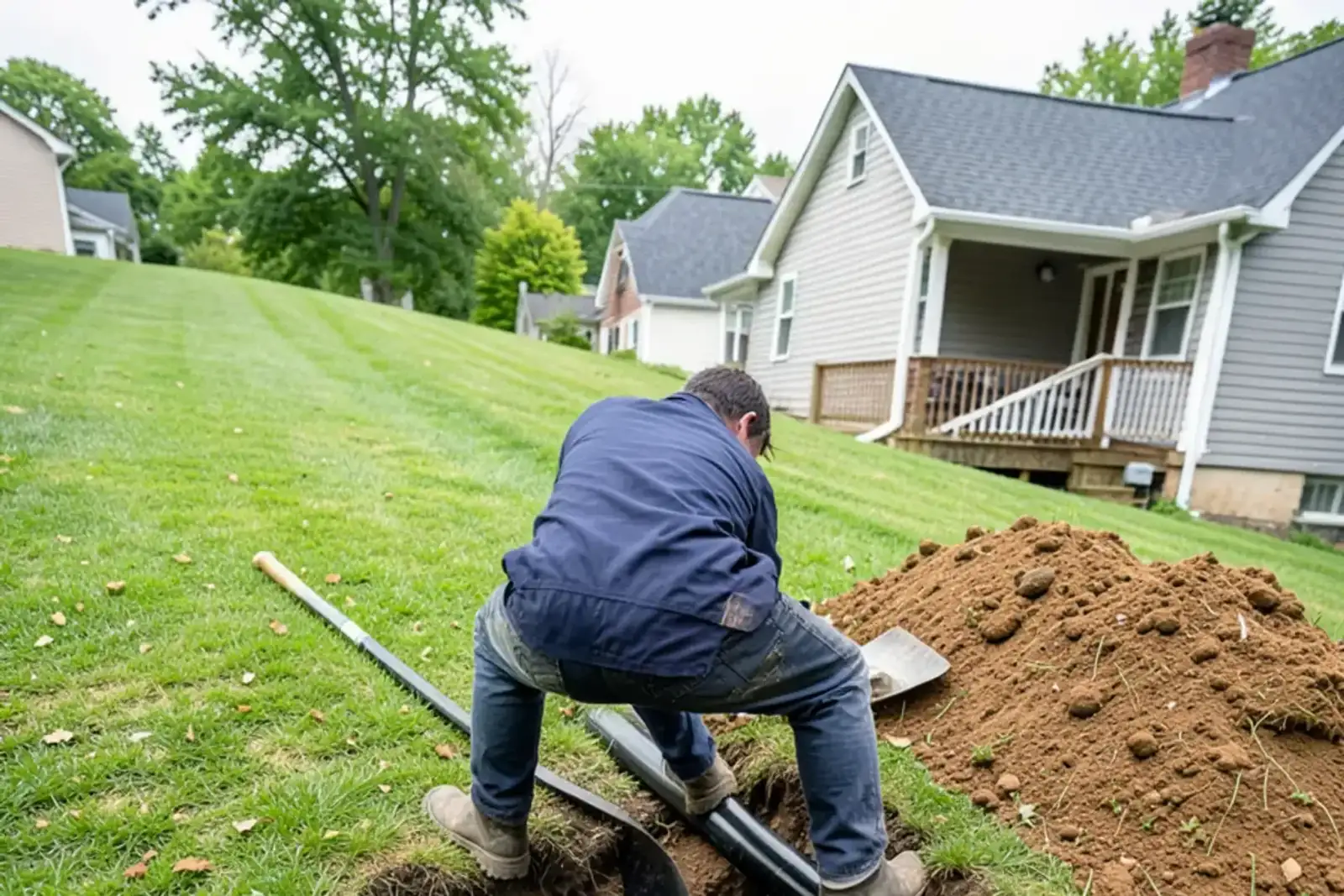
A buried line has to fall steadily from the downspout to its exit. Sources give a minimum of about 1/8 inch per foot, and many drain installers go closer to 1/4 inch per foot for margin. Take a downspout 60 feet from a daylight exit on a lot that drops gently. At 1/8 inch per foot the exit must sit at least 7.5 inches below the inlet, and at 1/4 inch it must sit 15 inches below.
On a hillside lot with a 4-foot drop over that distance, there is plenty of room, and a buried line is a good tool. On a flat lot with a 3-inch drop, the line cannot be built to drain, and the pipe would hold water that freezes. That lot should keep an above-ground extension, or look at a drywell, which a drainage specialist should size.
Pipe size matters as well. A 3x4 downspout outlet has about 12 square inches of opening, and a 4-inch round pipe is close to that. A line serving more than one downspout needs a larger pipe or a separate run, which is another reason to get the layout drawn first.
What a crew checks before anyone digs
From the trade side, the first step is to find out what is under the ground. Dig Safe has to be called before any digging, because buried utility lines are close to the surface on many lots.
After that, three checks matter. Ledge near the surface can make a deep trench impossible in parts of southern New Hampshire. A septic field must stay well away from the discharge. And tree roots can crush or clog pipe within a few years.
Use solid pipe, not perforated, from gutter to exit. Add a cleanout near the downspout and a strainer at each inlet to keep gutter debris out of the line.
What goes wrong underground
The failures are quiet. Silt from the gutter settles in the pipe, roots find the joints, and a pipe can crush under a driveway or settle and form a low spot that holds water. You will not see any of it until the gutter overflows or the yard stays wet.
That is why a buried line needs a cleanout near the downspout and a strainer at each inlet. It is also why you should know where it runs. Mark the route on a sketch, so nobody digs through it later.
When the ground is already full
A buried line moves water only if the soil around its exit can take it. In a saturated spring, the exit runs slowly or backs up. Rockingham County had federally declared flood disasters in May 2006 and April 2007, and the Lamprey River flooded Raymond, Epping and Newmarket, so wet springs are part of the local record. A lot with a high water table or ledge needs a drainage specialist before anyone buries anything.
What above-ground drainage needs to work
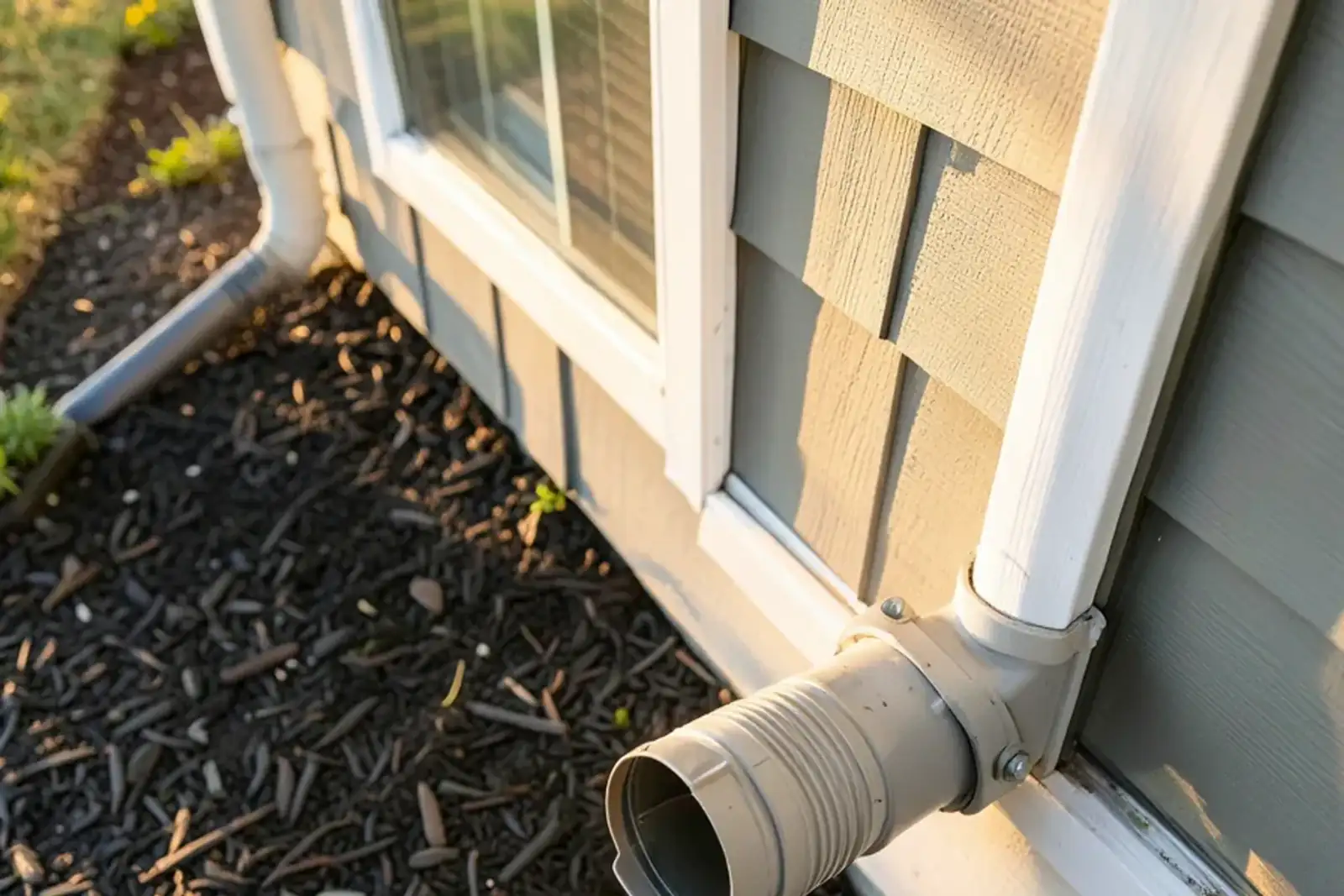
Above-ground only works if it moves the water far enough. A common target is 4 to 6 feet from the foundation, and more where the lot slopes toward the house.
- Hinged or flip-up extensions swing out of the mower's way.
- Splash blocks protect soil but move water only a short way.
- Long extensions need a downhill path and a clear route over the lawn.
- Winter ice can form on a walk, so point the exit away from steps.
Which lots lean which way
- Flat lot, plenty of yard. Above-ground with a long extension.
- Lot that slopes away from the house. Above-ground is simple and cheap.
- Lot that slopes toward the house. A buried line that exits downhill may be worth it.
- Narrow side yard or a walk the water must cross. In-ground keeps the surface clear.
- High water table or ledge. Talk to a drainage specialist before burying anything.
Wherever the pipe exits, check where the water goes next. Running it onto a neighbor's lot, a road or toward a septic field can cause trouble, and town rules differ, so ask the town if you are unsure. Keep the exit clear of brush and leaves so it does not clog in autumn.
Choosing for your own lot
Walk the lot after a hard rain and watch where the water goes. If it runs off on top of the ground to a safe spot, an extension is enough. If the surface is blocked and the lot drops away, a buried line may be worth drawing up.
We cover Goffstown, about 35 minutes from Hampstead by our estimate (25 miles). Hillside lots there, below the Uncanoonuc Mountains, send fast runoff toward foundations, which is why the question comes up. The median home was built in 1982 (ACS 2020-24).
Our gutter installation page lists the downspout work we take on. In-ground drainage is not on our confirmed list, so see the underground drainage page for how we would assess it. Our look at downspouts versus rain chains covers the surface side of the same question. Call (208) 464-4195 and describe the slope and the trouble spot, and we will talk through what would work.
Quick answers
Do buried downspout drains freeze in New Hampshire?
They can. Water that sits in a flat or low pipe freezes, and ice at the exit can block the line. A buried drain needs a steady downhill slope, solid pipe and an outlet that stays open in winter. Even then, silt and roots can slow it, so most lines need a cleanout.
Is in-ground or above-ground downspout drainage better on a Goffstown hillside lot?
It depends on which way the ground falls. Goffstown has hillside lots where fast runoff heads toward foundations, and a buried line that exits downhill can move that water well. An above-ground extension is easier on a lot with little slope. We can talk through your lot if you call.
How far should a downspout drain from the foundation in southern NH?
A common target is 4 to 6 feet, and more when the lot slopes toward the house. In-ground lines can move water much farther, to a lower exit on the lot. Whichever you choose, the water has to end somewhere that slopes away from the foundation and from a neighbor's yard.
Can a buried downspout line be bypassed for winter in New Hampshire?
Yes, on some systems. A diverter or a clip-on extension at the downspout can send water across the surface from December to March, then switch back to the buried line in spring. That avoids ice in a pipe that cannot drain. Ask any installer whether the line can be built with a bypass, and whether its exit sits on a slope where it stays open.
Do I need to call Dig Safe before burying a downspout drain in Goffstown?
Yes, before any digging, whatever the depth. In New Hampshire Dig Safe marks buried utilities, and you reach it by calling 811. A trench for a downspout line can cross gas, water, electric or communication lines. Ask Goffstown's town offices too, since permits are handled town by town.
Sources
- SMACNA gutter and downspout sizing guidance
- BestPlaces, Hampstead NH weather and snowfall
Questions about your gutters?
25 Glenwood North Rd #16, Hampstead, NH 03841
(208) 464-4195
Mon–Sat 8am–6pm · Sunday closed