

Gutter Cleaning
Clogged Downspout? How to Find and Clear the Blockage
A clogged downspout shows up as overflow at the corner above it, a gutter that stays full after rain or water spilling from the pipe's joints. A hose and your knuckles will find the blockage, and most clogs clear from the top or the bottom. A downspout that clogs again and again is rarely the real problem.
- ★ 5.0 on Google · 29 reviews
- Serving since 2024
- Based in Hampstead, NH
Published and updated November 2, 2026 · By the Lanes Gutters crew, Hampstead, NH
On this page
- How do you know a downspout is clogged?
- How do you find the blockage?
- Clearing it from the top or the bottom
- Why downspouts clog where they do
- What about a frozen downspout?
- When a repeat clog points to something bigger
- How to stop the next clog
- Danville wooded lots and downspout clogs
- When a downspout needs a crew
- Common questions
Most clogged downspouts can be cleared with a hose and a steady ladder. The harder part is finding where the plug sits, and the next section shows how.
How do you know a downspout is clogged?
Look for these signs during or just after rain:
- Water spills over the gutter at one corner while the rest of the run is fine
- The gutter is still full a day after the storm
- Water leaks out of the downspout seams or sprays from a joint
- The ground at the bottom stays dry even though it is pouring above
- A gurgle or a glug from inside the pipe
If only one downspout does this, the clog is in that pipe or its outlet. If every downspout is slow, look at the gutters first. They may be full of leaves.
How do you find the blockage?
Do this from the ground first, then from a ladder only if you must.
- Tap down the pipe. Knock with your knuckle from the top to the bottom. A hollow sound is clear. A dull, solid thud is packed debris.
- Run a hose into the top. If water backs up at once, the plug is near the top. If it fills slowly, the plug is lower.
- Check the bottom. Take off any extension and look into the elbow. Wet muck or needles at the opening mean the plug is there.
- Look at the connection to the ground. Some downspouts tie into a buried pipe. If water backs out of the bottom and the pipe above is clear, the blockage may be underground.
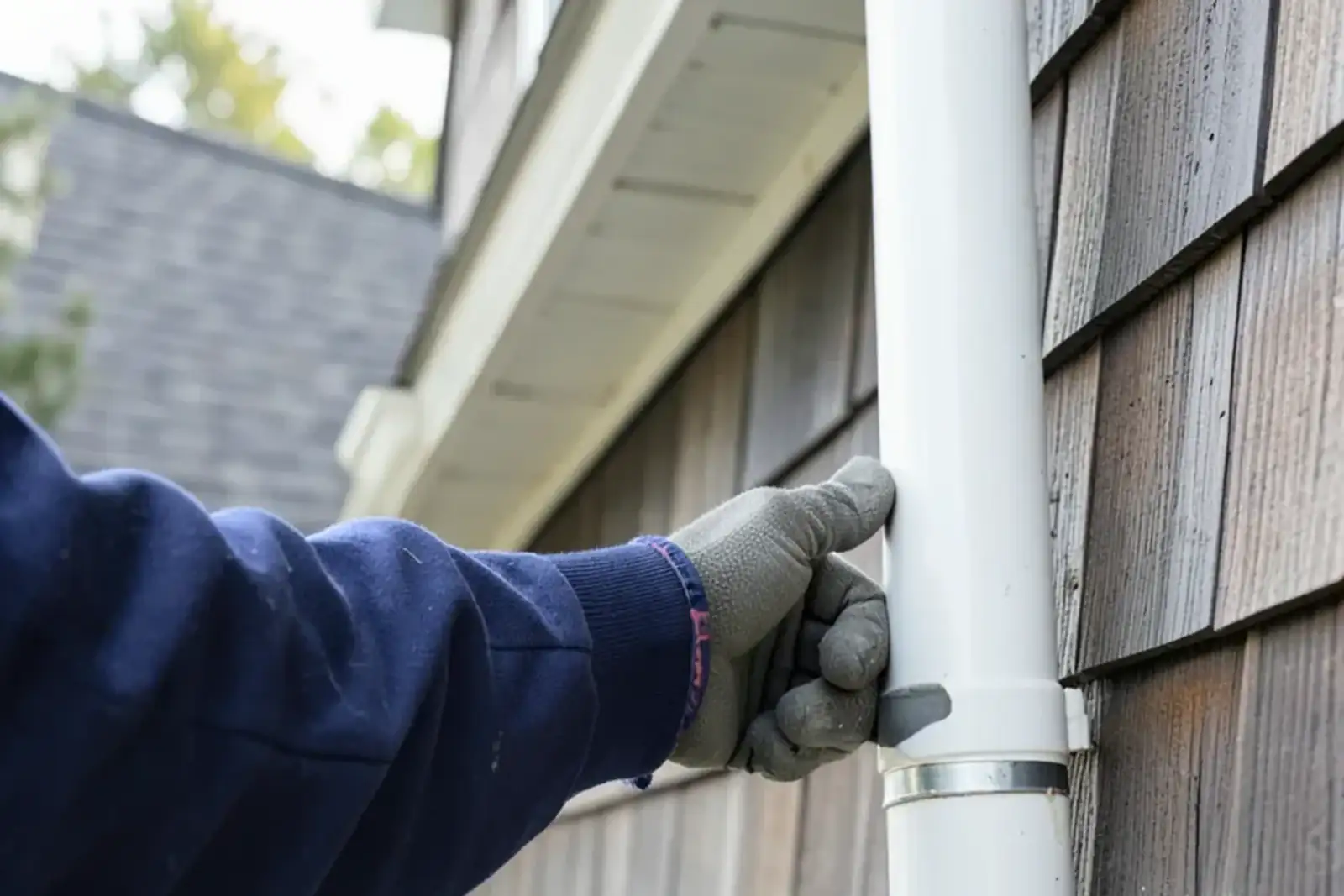
A worked example of the hose test
Say the gutter above one corner overflows in every storm, and the other three corners drain fine. Start the hose at the top of that downspout, with the extension off the bottom. Two things can happen.
If water backs up in the gutter within seconds, the plug is in the outlet or the first few feet. If water rushes down the pipe and out the bottom at a steady flow, the downspout is clear, and the problem is up in the gutter, where a clog or a low spot is holding debris at the outlet. If water goes in, slows and trickles out, the plug is partial and likely sits at the bottom elbow, where grit settles.
Time it. A clear 2x3 pipe on a two-story wall should empty a hose in the time it takes to count a few seconds. A slow trickle that takes much longer is a partial plug even if some water comes out. That is the clog that will fail first in the next heavy storm.
Clearing it from the top or the bottom
| Where the clog sits | What usually works | What to avoid |
|---|---|---|
| Top outlet | Scoop it out by hand, then flush | Pushing debris down the pipe |
| Upper pipe | Hose from the top with a good flow | Leaning on the gutter edge |
| Bottom elbow | Remove the extension, pull debris, hose upward | Forcing a rigid rod through the bend |
| Buried line | Call someone who works with drain lines | Digging before Dig Safe is called |
Wear gloves, since the muck holds sharp shingle grit. Work from a ladder on firm ground, and stay well clear of any wires at the roof edge. If you need a ladder that reaches a second-story eave, leave it to a crew.
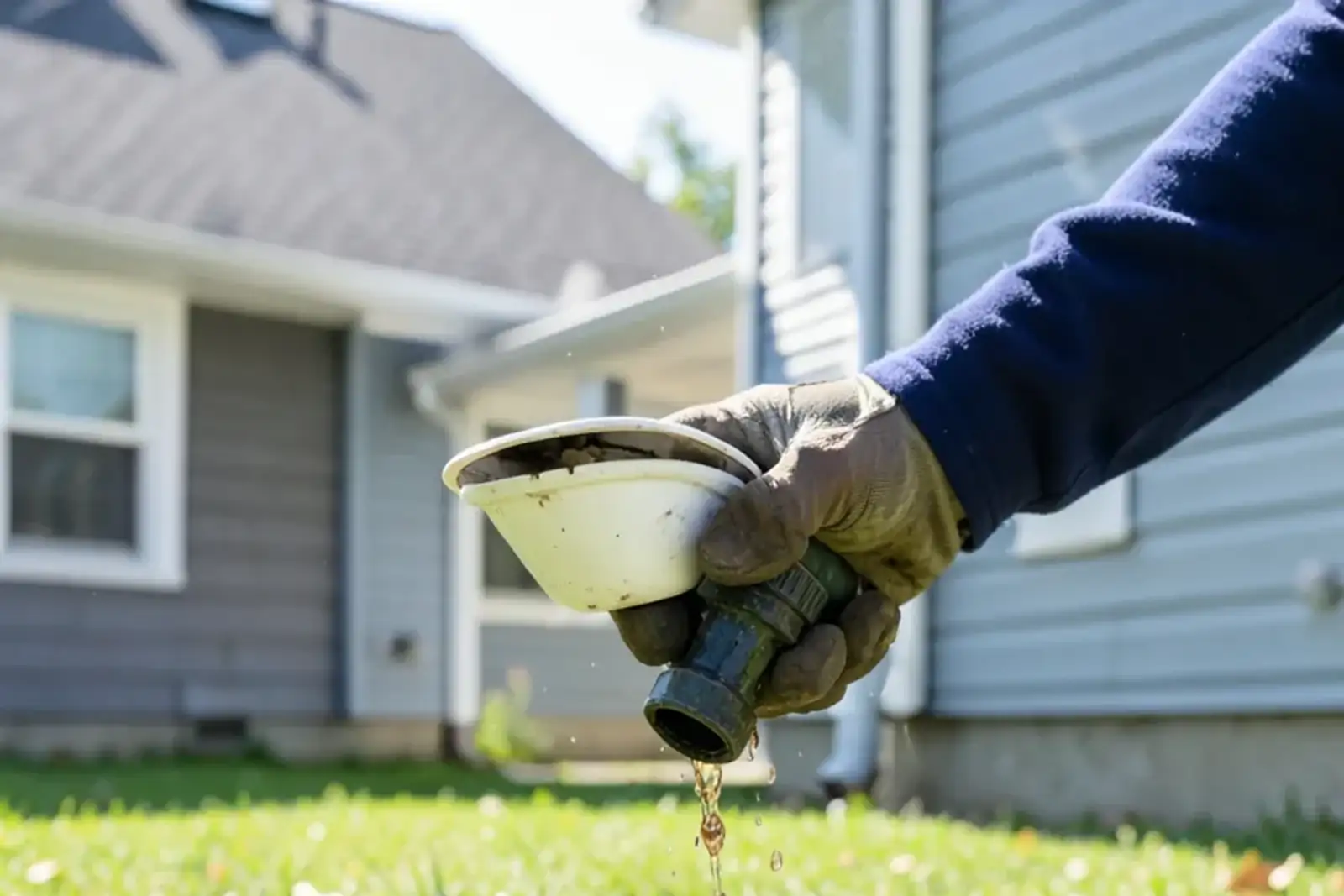
Hose, snake or jet: the trade-offs
A garden hose is the first tool, because it costs nothing and does no harm. It will not move a dense plug of packed needles, though. A flexible plumber's snake works from the bottom, but it can scratch the inside of the pipe or catch on a crimp. A pressure washer or jetting nozzle is fastest but carries the most risk. It can open a seam, and it can drive a plug deeper into a bend, where it is harder to reach.
On a buried line, the choice depends on the pipe. Plastic drain pipe takes a snake well. Older clay pipe can crack under hard snaking, and some are cracked already. Most guides suggest you disconnect the downspout from the buried line before you snake it, and find a cleanout, a capped fitting near the wall, to work from.
Why downspouts clog where they do
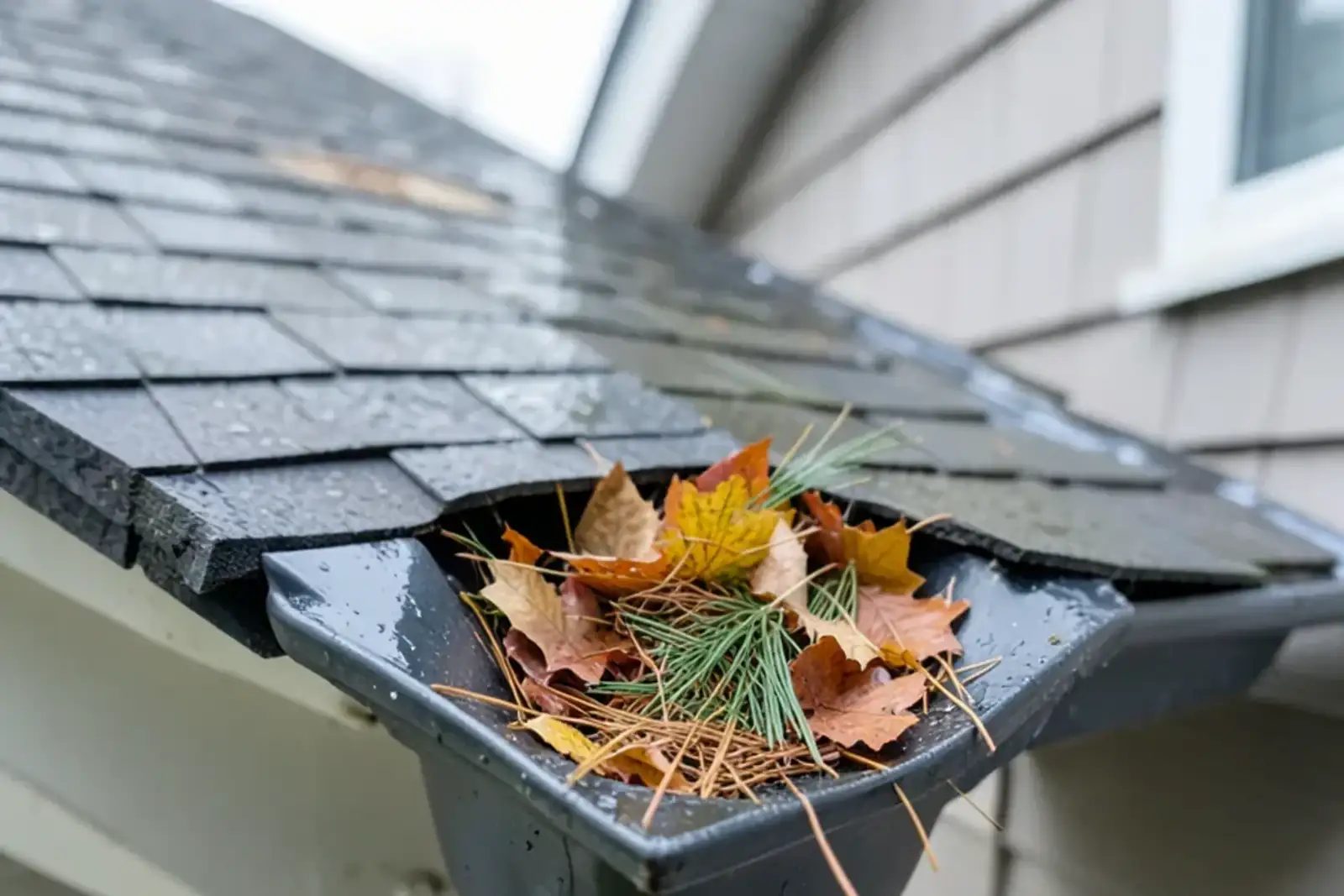
Here is what we would tell you about the pipe itself. A downspout clogs at its bends. The sharp turn at the top, where the gutter hands water to the pipe, catches leaves. The bend at the bottom catches grit that came off the shingles. Straight runs in between rarely stop up unless something large got in.
Seed pods, helicopters from maples and needles are the worst offenders, because they are light enough to travel and wide enough to wedge. A mesh strainer in the outlet keeps the big material out, but it needs cleaning too. Anything that sits in the outlet in fall comes back as a plug by November.
When the plug is underground
A downspout that ties into a buried pipe adds a hidden failure point. The giveaway is a clear pipe above ground, with water backing up at the bottom connection or pooling around the base. Roots, a crushed section or a pipe that has sagged and now holds silt are the usual causes.
You can learn a lot without digging. Run a hose into the downspout and watch the other end, the pop-up outlet or the pipe where it comes out in the yard. Little flow or none means a blockage between them. Where you do need to dig to find a joint, call Dig Safe first (811 is the number to dial). If the line is clay or you cannot find the end, a drain specialist with a camera is the right call, not a ladder crew.
What about a frozen downspout?
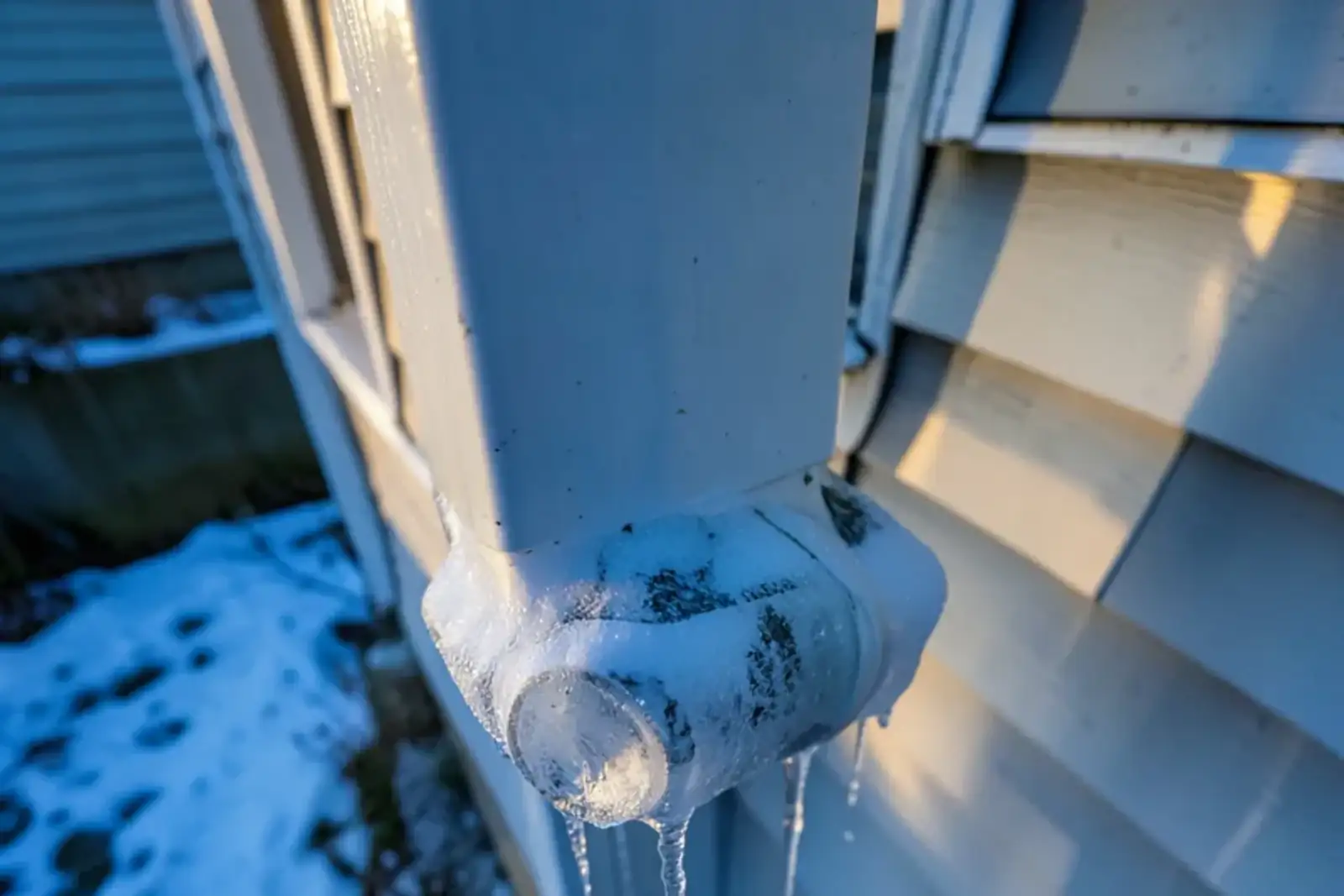
Winter clogs are ice, not leaves. Meltwater runs from the warm roof during the day and freezes in a shaded pipe overnight. The plug forms at the coldest point, usually the bottom elbow. Dwellics counts about 62 days of snow cover a year in Hampstead, so this is a long season.
Keep the area under the pipe clear of walking traffic, because overflow freezes into a slick patch. Do not chip at the ice or force it. If the same downspout freezes every winter, the water may be sitting where it should not, which is a drainage question as much as a pipe one.
When a repeat clog points to something bigger
One clog in a bad fall is normal. A downspout that plugs every season has a cause:
- Gutters above it are full of debris that keeps washing down
- The outlet or pipe is too small for the roof it serves
- A sag or a flat run lets debris settle at the outlet
- A buried line is crushed, full of roots or tied in badly
Fixing the cause costs more than a single flush, and it stops the weekly chore. Our downspout cleaning page covers how we approach it, and the gutter cleaning hub shows how it fits with a full cleaning.
How to stop the next clog
Prevention is cheaper than the flush. Clean the gutters after the leaves are down, since the debris that washes into the outlet is what blocks the pipe. Fit a strainer basket at the outlet if the gutter has no guard, and empty it. Make sure the downspout size matches the gutter and roof. Check the lowest elbow in late fall.
The honest limit is that no screen or strainer stops everything. Fine grit and pine needles get through, and a guard can hide a plug until the gutter overflows. A yearly look at the bottom elbow beats any gadget. For a second-story eave, our gutter cleaning crew can flush every downspout in the same visit.
Danville wooded lots and downspout clogs
Danville is about 6 miles from Hampstead, a drive of roughly 10 minutes by our estimate. Its homes tend to sit on wooded lots, where oak and pine litter does the clogging. The median home was built in 1993 (ACS 2020-24). Expect downspouts to need a look after leaf drop and again after the pine needles come down. We cover Danville and can sort out whether a clog is a pipe issue or a gutter one.
When a downspout needs a crew
Call if the plug is up on a second story, if the water backs out of a buried line, or if the same pipe has plugged three seasons running. Wear gloves, keep clear of wires at the roof edge and leave the ladder alone in rain or ice. Call (208) 464-4195, tell us which corner overflows, and we will set the earliest visit we can.
Quick answers
Why does my downspout clog at the bottom elbow?
Elbows make water turn, and debris carried by the flow drops out at the turn. Grit from shingles, seed pods and needles pile up there first. A clog in the bottom bend can look like a full downspout above it. Danville lots with oak and pine overhead fill an elbow quickly in fall.
Can I use a plumber's snake on a downspout?
Yes, a flexible one, pushed gently from the bottom. A stiff rod can crease the pipe or push a plug into a tight bend. Stop if it meets hard resistance, because that can be a collapsed section. Never run it into a buried drain line without knowing where the line goes.
What should I do about a frozen downspout?
Keep the walkway clear and wait for a thaw. Chipping with a hammer dents the metal and can split a seam. Warm water poured in may just refreeze lower down when the pipe is below freezing. If the same downspout plugs every winter, tell us. We would look at where the water lands and why it keeps sitting there.
How do I know if my Danville downspout drains into a buried pipe?
Look at the bottom. If the downspout ends at the ground in a collar or a pipe that goes into the soil, with no extension, it is probably tied to a buried line. Look for a cleanout, a capped fitting near the wall, and a pop-up outlet out in the yard. Call Dig Safe before any digging.
Is it safe to pressure wash or jet a clogged downspout?
Not as a first move. High pressure can split a seam, blow a joint apart or push a plug down into a tight bend. A garden hose with a steady flow clears most clogs, and a flexible snake handles the rest. On a Danville home with older clay drain pipe, avoid aggressive jetting entirely.
Sources
- Dwellics, Hampstead NH climate data
- American Community Survey 2020-24, Danville NH
- Published gutter-company and hardware guides on snaking and flushing buried downspout drains (cleanouts, clay pipe caution)
Questions about your gutters?
25 Glenwood North Rd #16, Hampstead, NH 03841
(208) 464-4195
Mon–Sat 8am–6pm · Sunday closed