
Gutter Installation
Why Vinyl Gutters Struggle in New Hampshire
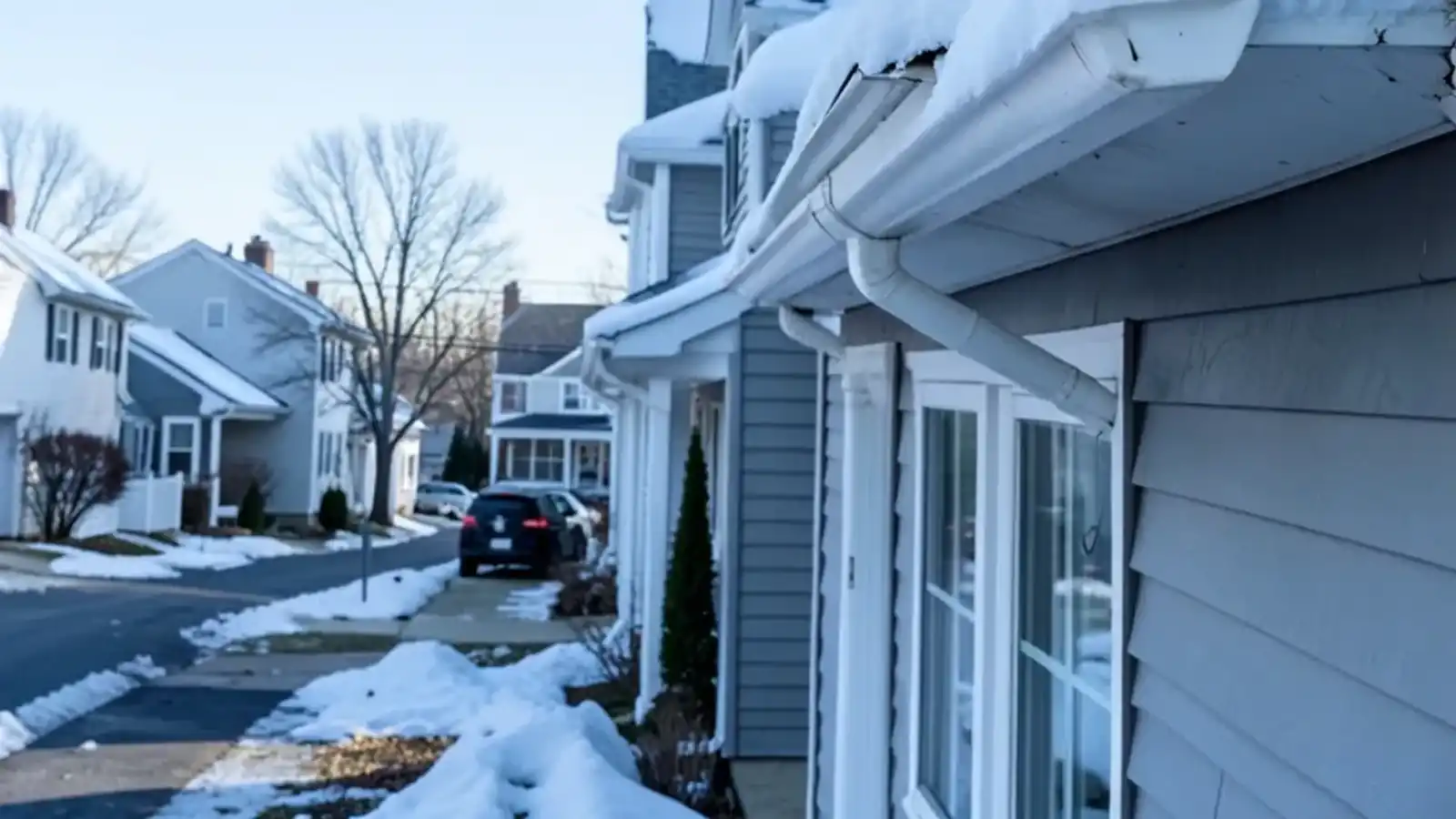
Vinyl gutters struggle in New Hampshire because plastic gets brittle in the cold, moves more than metal with temperature and sags under snow and ice. They are cheap and easy to hang, and that is the whole case for them. In a climate with 195 days a year below 50°F, the savings often disappear by the second or third winter.
- ★ 5.0 on Google · 29 reviews
- Serving since 2024
- Based in Hampstead, NH
Published and updated November 2, 2026 · By the Lanes Gutters crew, Hampstead, NH
On this page
- What January does to a vinyl run
- Why spring is when the joints give up
- Sun, sag and fading through the summer
- Vinyl vs aluminum, point by point
- Why the savings disappear
- What the trade says about replacing vinyl
- How a vinyl-to-seamless swap goes
- Deciding on your vinyl before the next freeze
- Common questions
Vinyl is not a bad material. It is the wrong material for a place that swings from well below zero to a sun-warmed roof in a few weeks. Here is what the plastic does through a New Hampshire year.
What January does to a vinyl run
Cold makes vinyl stiff and less able to absorb a hit. Falling ice, a sliding sheet of snow or a shovel left against a section can crack it, where aluminum would only dent.
Ice also adds weight. Ice runs about 57 to 60 pounds per cubic foot, and a gutter that fills during a thaw and freeze carries that load along its whole length. Vinyl bends under it, and the run develops a dip.
Hampstead gets about 53.8 inches of snow a year, with 17.1 inches in January (BestPlaces), so the load is a regular event rather than a rare one.
Standing water is what feeds the rest
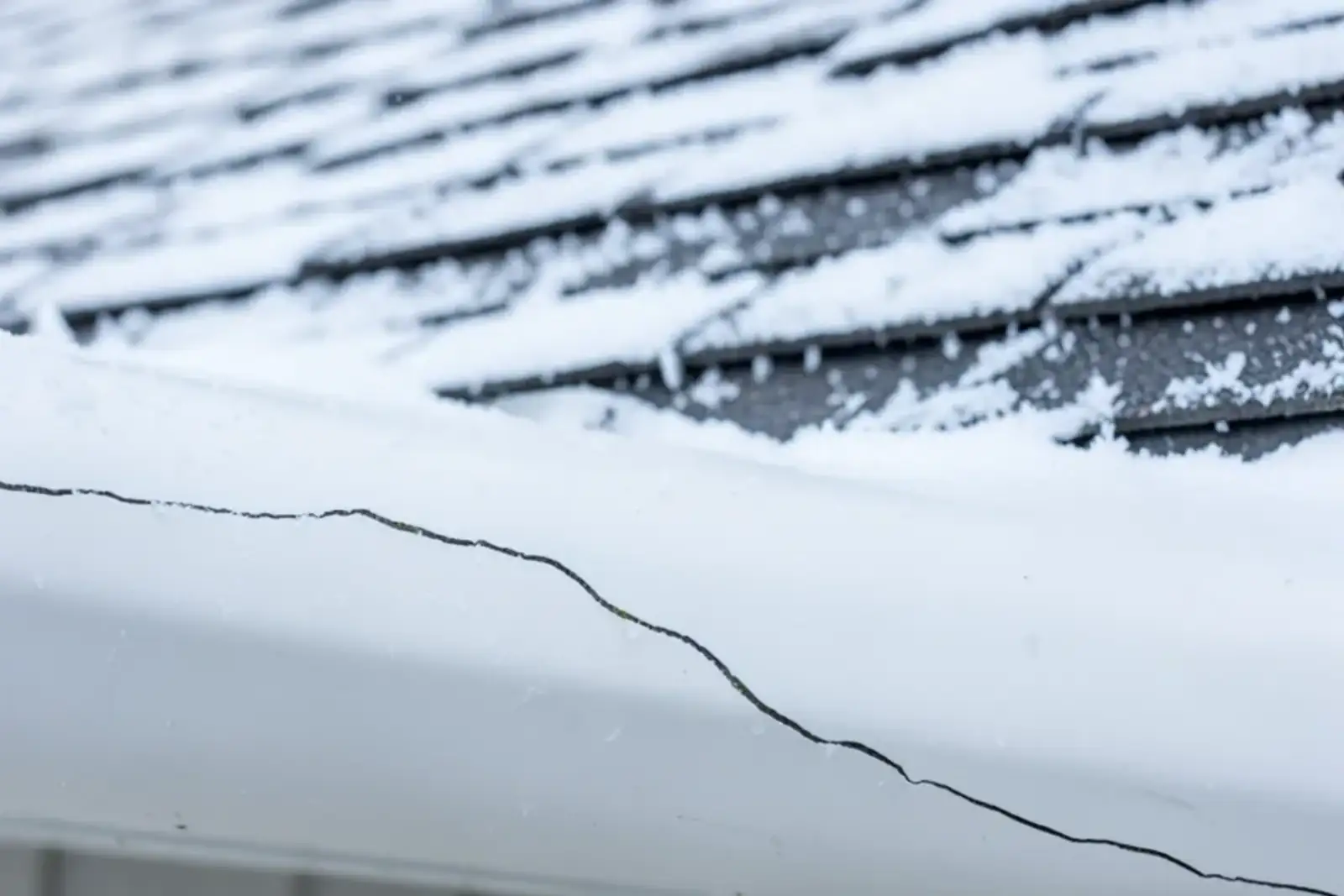
Water that sits in a low spot freezes, thaws and freezes again, and each cycle pushes on the joints and hanger holes. A clogged downspout does the same thing from the other end, because the trough stays full and freezes solid. On aluminum that is a drainage problem. On vinyl it is how a hairline crack becomes a split.
Pitch decides where the water sits. A run should fall slightly toward each downspout, commonly about a quarter inch per 10 feet. Vinyl that has dipped between hangers has lost that fall in the middle, so the dip holds water, the water adds weight, and the dip deepens.
Why spring is when the joints give up
Vinyl comes in sections that snap together with connectors, usually about every 10 feet. Plastic expands and contracts with temperature more than aluminum does, so every connector works a little more each day. Over several winters the gaskets harden, the connectors loosen and a joint starts to drip.
That is the familiar seam leak, made worse because the material moves more than metal does.
Sun, sag and fading through the summer
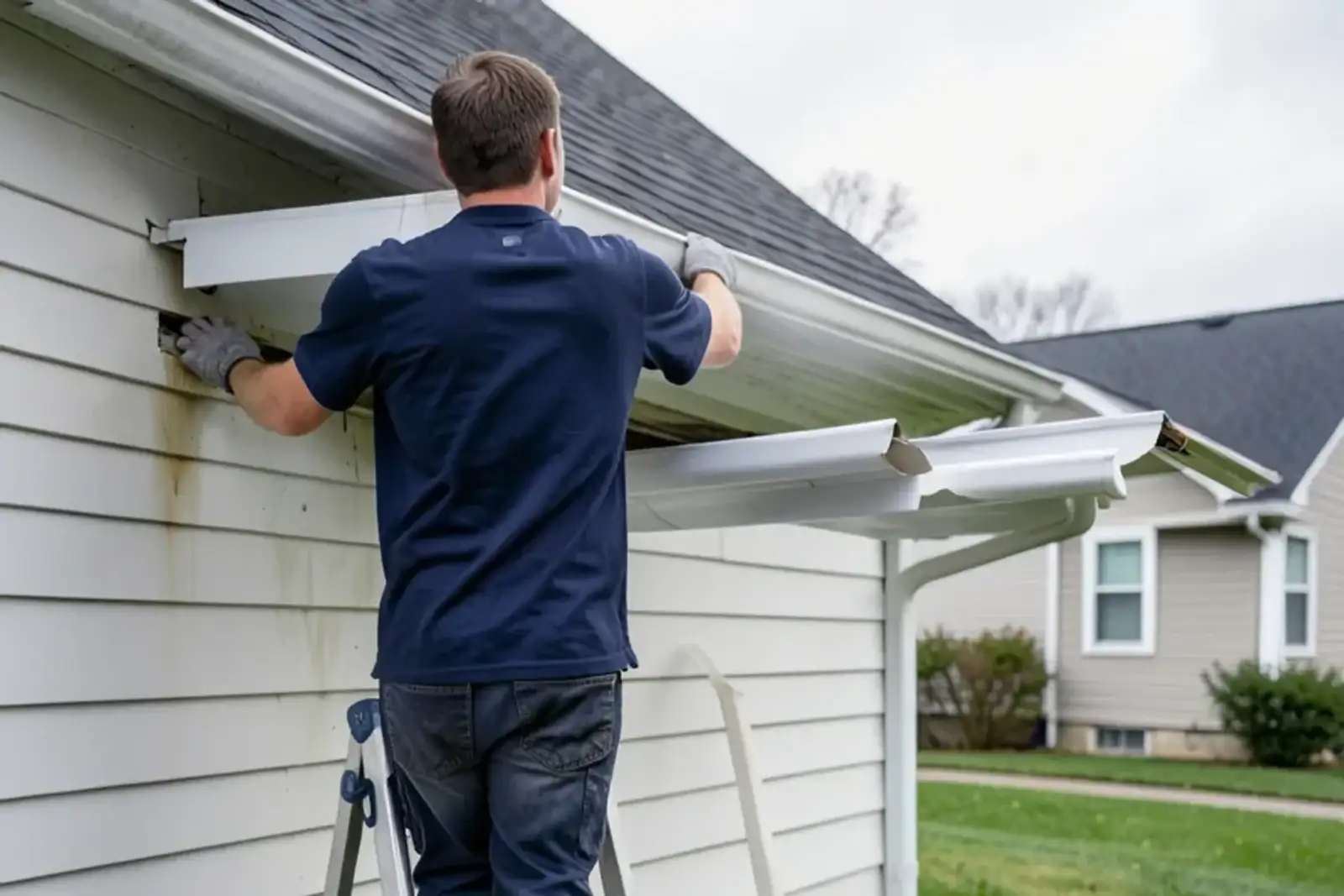
Sunlight breaks down plastic over time. Vinyl chalks and fades, and the surface gets rougher, which holds debris. Heat softens it slightly, so the sag that started under snow gets worse on a summer afternoon.
Hanger spacing matters here. The wider the gap between hangers, the sooner a vinyl run dips.
Vinyl vs aluminum, point by point
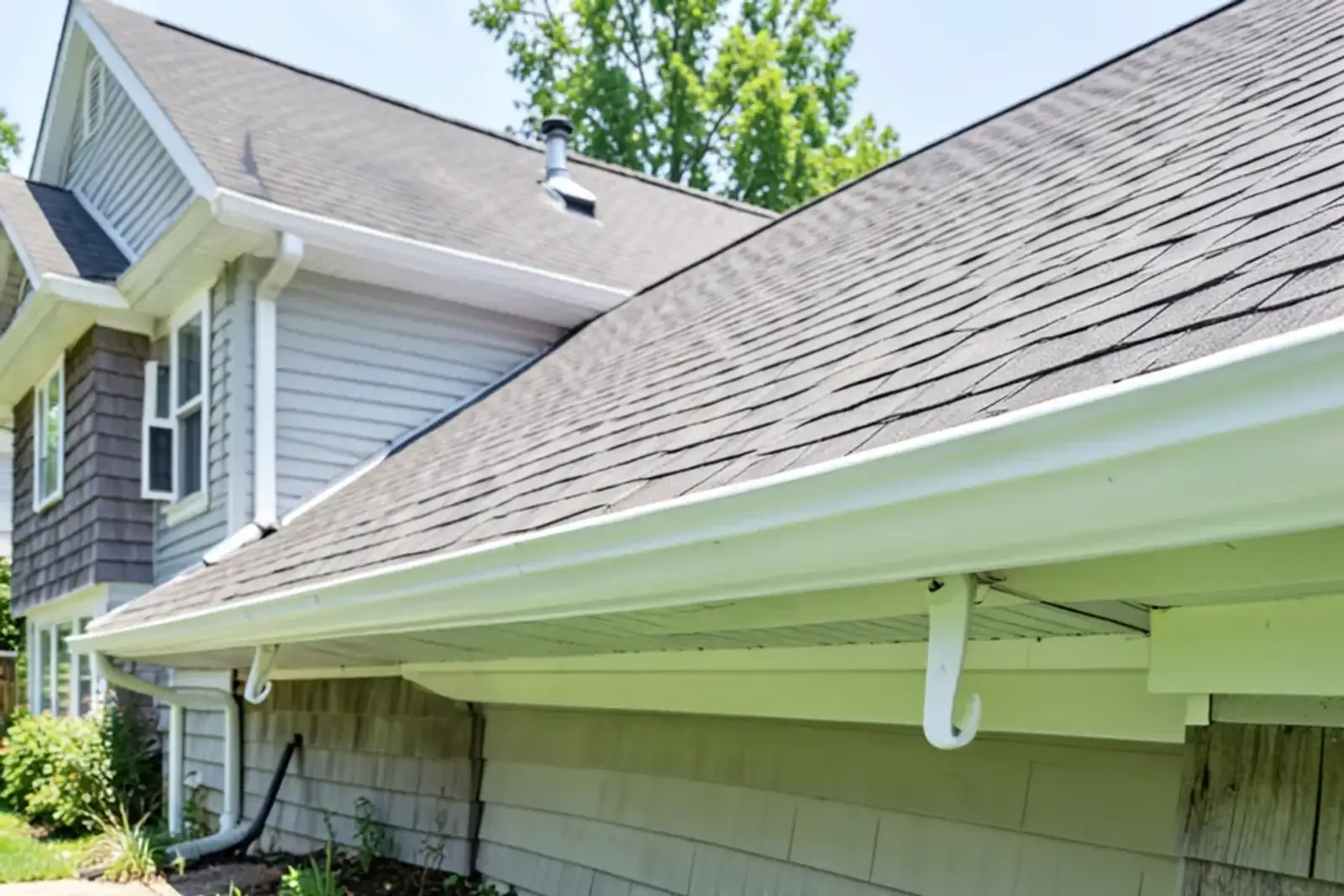
- Impact in cold. Vinyl cracks. Aluminum dents or bends.
- Joints. Vinyl is sectional, so a joint every 10 feet or so. A seamless run has joints only at corners and outlets.
- Weight of snow. Aluminum, especially a heavier gauge, holds its line better. Get the thickness written on the quote.
- Lifespan. Common .027-inch residential aluminum is listed at 20 to 30 years. Vinyl lasts shorter in a freeze-thaw climate.
- Color. Aluminum takes baked-on color in black and many shades. Vinyl color is limited and tends to fade.
How to tell vinyl is near the end
A walk around the house in November tells you most of it. Look for these:
- A dip between hangers that holds water after a rain
- Hairline cracks near corners, outlets and hanger holes
- Gaps or stains at the connectors
- A chalky, faded surface that leaves powder on your hand
- Sections that rattle or pull away from the fascia
Two cautions before you check anything yourself. Do not lean a ladder on the lip of a cold vinyl gutter, since that is one of the quickest ways to crack a section. And stay off the ladder in ice. Look from the ground with binoculars or a phone zoom, and photograph what you see.
Two or more of these on the same run means repair will be a short-term fix. Water that runs behind a sagging gutter also soaks the fascia, so the wood bill can pass the gutter bill.
Where vinyl is a fair choice
A small, sheltered roof, such as a shed or a covered porch with little snow slide, can do fine in vinyl. A budget-limited short-term fix on a rental can make sense too. The material costs less and a homeowner can hang it.
Vinyl is a poor match for the long open eave of a two-story house that takes wind, snow slide and ice. That is the roof most houses in Litchfield have, a town on the east bank of the Merrimack with open lots exposed to wind and a median build year of 1987 (ACS 2020-24). We cover Litchfield, about 25 minutes from Hampstead by our estimate (17 miles).
Why the savings disappear
A vinyl kit costs less on day one. Then a section cracks, a connector loosens, a run sags and gets re-hung, and a piece gets replaced after an ice slide. Each repair is small, but they come every year or two.
Meanwhile the fascia behind a leaking joint stays damp. Wood replacement and repainting cost more than the gutter did. Count those costs over ten years and the cheap option stops looking cheap, particularly on a long eave.
A worked example: a 120-foot house over ten winters
Take a colonial with about 120 feet of eave. In 10-foot vinyl sections that is roughly a dozen sections and a dozen connectors, and each connector has a gasket that hardens a little every winter. A seamless run of the same length has joints only at its corners and outlets, perhaps four to six on a simple house.
Now count the failure points. The vinyl run has about twice as many places to leak, and every one of them moves with temperature. Say the long back run dips after the third winter and two connectors weep after the fifth. The owner re-hangs the run, reseals the joints and replaces a cracked section, and meanwhile water has been running behind the gutter onto the fascia. The gutter bill was small each time. The wood and paint bill at the end was not.
Aluminum has its own limits. A thin gauge can dent or bend under heavy ice, which is why thickness and hanger spacing belong on the written quote. The difference is that a dent still drains and a crack does not. Ask any installer which thickness the quote uses and how far apart the hangers will be.
What the trade says about replacing vinyl
Vinyl comes down faster than most people expect, and the fascia behind it is the thing to inspect. Sagging runs often leave water behind the gutter, and that can mean damp wood.
Never lay a new gutter over a soft fascia. The new run will pull away the first time a load of snow lands on it. Replace the wood first.
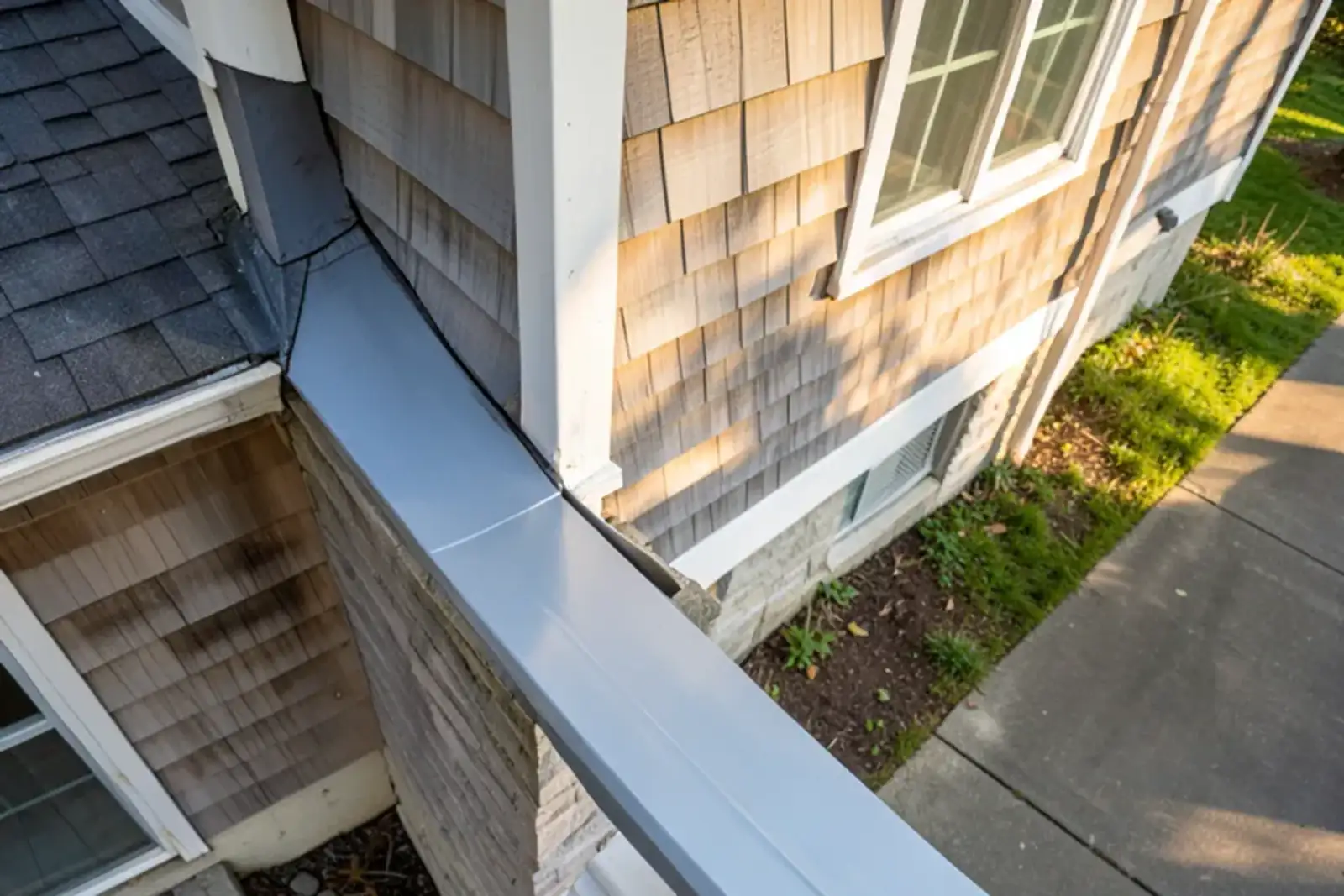
How a vinyl-to-seamless swap goes
- Walk the house and measure every run in linear feet, noting corners and downspouts.
- Remove the vinyl, hangers and downspouts.
- Check and repair the fascia and drip edge.
- Form the seamless runs to length and hang them at tight spacing.
- Connect downspouts and water-test the system.
Deciding on your vinyl before the next freeze
Walk the house in November, photograph what you find, and count the dips, cracks and loose connectors. One sound run with a single fault can be repaired. A run with two or more faults is a replacement waiting for the next heavy snow.
See our gutter replacement page for how we scope a swap, and our gutter installation overview for the wider options. Any price from us comes in writing after a look at the house. Call (208) 464-4195 and tell us what the vinyl is doing, and we will set the earliest visit we can.
Quick answers
Can vinyl gutters survive a New Hampshire winter?
Many do for a few seasons, then start cracking. Cold makes vinyl stiff, so an icicle drop, a snow slide or a ladder touch can crack it. Weight from ice makes long runs dip between hangers. A vinyl run on a sheltered porch roof lasts longer than one on a long open eave.
Should I replace vinyl gutters in Litchfield with seamless aluminum?
If the vinyl is cracked, sagging or leaking at several joints, replacing it usually makes more sense than repairing it piece by piece. Litchfield homes have a median build year of 1987, so many gutters there are old enough to be near the end anyway. Call us with a few details and we will tell you what we would quote.
Are vinyl gutters ever a good choice in New Hampshire?
On a small, sheltered roof such as a shed or short porch, yes. They cost less and a homeowner can hang them. On a long open eave that takes wind, snow slide and ice, they tend to crack, sag and pull apart at the joints within a few winters.
How long do vinyl gutters last in a New Hampshire climate?
Plan on fewer years than the box suggests. Some gutter companies put vinyl near 10 years in cold climates, though those sources sell the alternatives, so treat it as a rough figure. Sheltered runs last longer. Long open eaves in Hampstead take 195 days a year below 50°F, and the cracking and joint wear show up first there.
Can a cracked vinyl gutter be repaired instead of replaced in Litchfield?
Yes, for one hairline crack on a sound run. A sealed or replaced section can hold if the rest of the run keeps its pitch and the fascia is dry. If cracks, gaps or sags show up on more than one section, patching only buys a season or two. Call and we will tell you which side of that line you are on.
Sources
- Dwellics, Hampstead NH climate data
- BestPlaces, Hampstead NH weather and snowfall
Questions about your gutters?
25 Glenwood North Rd #16, Hampstead, NH 03841
(208) 464-4195
Mon–Sat 8am–6pm · Sunday closed