
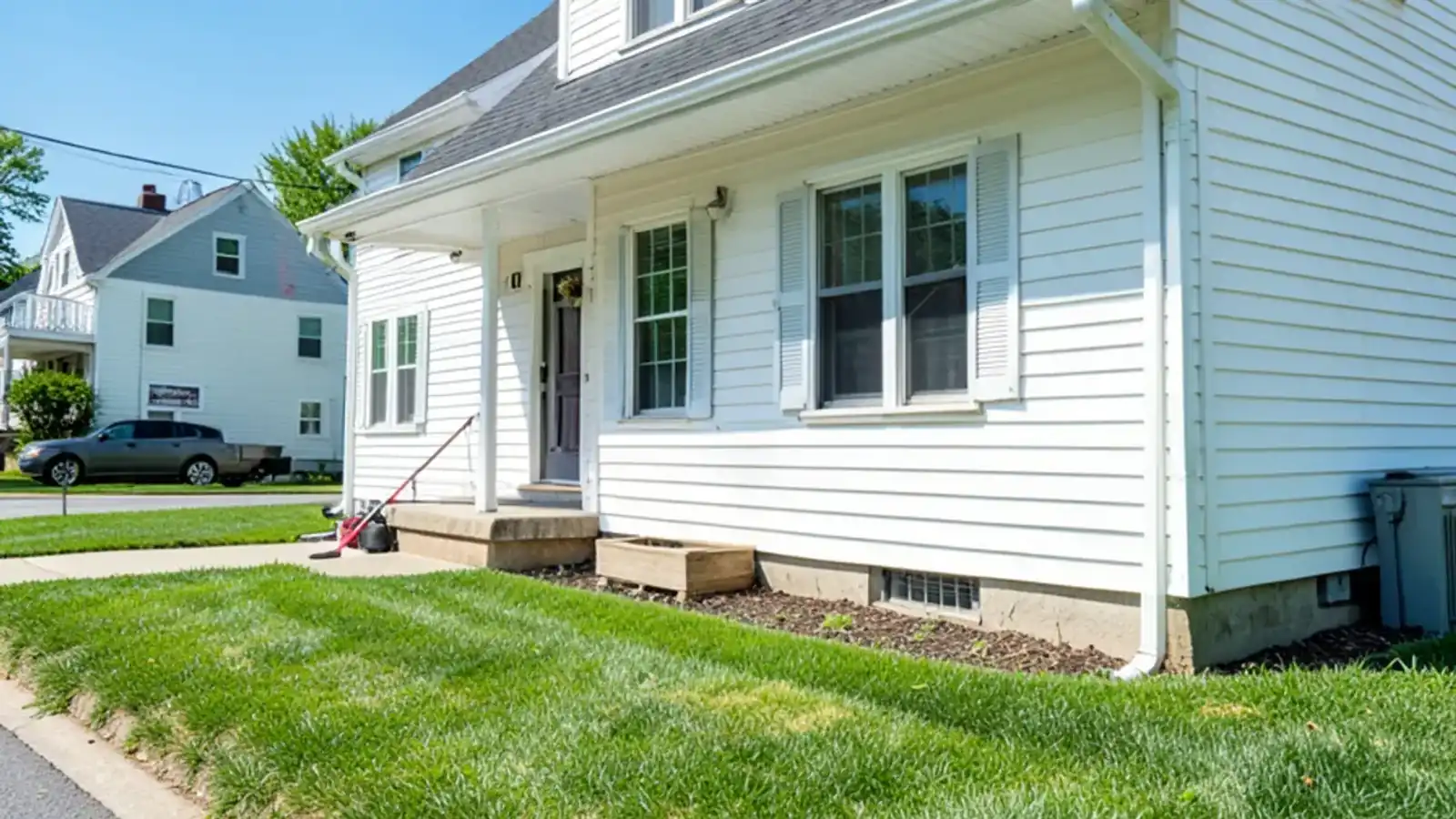
Seamless Gutters
How Much Do Seamless Gutters Cost in Hampstead, NH?
Seamless gutter cost in Hampstead, NH depends on how many linear feet you need, how high the eaves are, the gutter size and how many corners and downspouts the house has. Today's Homeowner reports Hampstead installs from $421 to $3,599. Treat that as an outside estimate, not a Lanes price. The gap shows how much depends on the house.
- ★ 5.0 on Google · 29 reviews
- Serving since 2024
- Based in Hampstead, NH
Published and updated November 2, 2026 · By the Lanes Gutters crew, Hampstead, NH
On this page
- The published range and what it means
- What moves a seamless gutter price
- Removal, color and material
- Five-inch or six-inch: what the larger size buys
- What we measure before we name a number
- Ways to keep the price honest
- How to compare two quotes
- Pricing a home in Hampstead or Derry
- What to have ready when you call
- Common questions
Seamless gutter cost in Hampstead, NH comes down to the house in front of us. A single published range can tell you the scale, but it cannot tell you your price. This guide explains what moves the number so you can read a quote with confidence. It supports our seamless gutters page.
The published range and what it means
Today's Homeowner gives $421 to $3,599 for Hampstead installs. Read that as a third-party figure, not a Lanes price, and the width of the range matters more than either end. The low end looks like a small job on a low roof. The high end looks like a larger home with more footage, height and trim.
Our prices come after a visit and are put in writing. A quote from one contractor says little about yours without the same footage and scope behind it.
What moves a seamless gutter price
Six things set the number, in rough order of effect:
- Linear feet. A linear foot is a foot of gutter measured along the eave. Total footage is the biggest driver, because the metal and the time both scale with it.
- Height. A second-story eave needs taller ladders or staging, and the work goes slower.
- Size. A 6-inch gutter uses more metal than a 5-inch and often a larger downspout.
- Corners and breaks. Every inside or outside corner is cut, mitered and sealed by hand. A house with bays and dormers costs more than a plain box.
- Downspouts. More downspouts, longer drops and drainage extensions all add parts and time.
- Fascia and trim. If the board behind the old gutter is soft, it needs repair before a new run goes up.
A worked example: how footage and corners add up
Footage is easier to see with a plain box house. Take a rectangular colonial, 40 feet by 28 feet. If the roof is a simple gable, only the two long eaves carry gutters, so the run is 80 feet with no corners at all, just end caps. Each 40-foot side is under the 50-foot practical maximum per downspout, so the minimum is two.
Now give the same footprint a hip roof. The gutter wraps all four sides, which is 136 feet, and it has four outside corners to cut, miter and seal. By the 50-foot rule, that run needs at least three downspouts. Same house, same size, more footage, more corners and more drops.
| Roof on a 40 x 28 ft footprint | Eave footage | Outside corners | Minimum downspouts |
|---|---|---|---|
| Gable, long sides only | 80 ft | 0 | 2 |
| Hip, all four sides | 136 ft | 4 | 3 |
A 200-foot roofline needs at least four downspouts on length alone, before the roof's valleys and dormers add outlets. The table has no dollar column on purpose, since your price comes from a written quote. It shows how the inputs stack up before anyone names a number.
Removal, color and material
Price also depends on what comes off and what goes on. Removing and disposing of an old sectional system adds labor. Color choices can change the material cost, so ask whether they do on your quote. Thicker aluminum costs more, and .027 inch is the usual residential gauge, and .032 inch is the step up for heavy or snow-load work.
Do not assume every quote uses the same thickness. Ask each installer to state the thickness behind the quote, and the hanger spacing.
Five-inch or six-inch: what the larger size buys
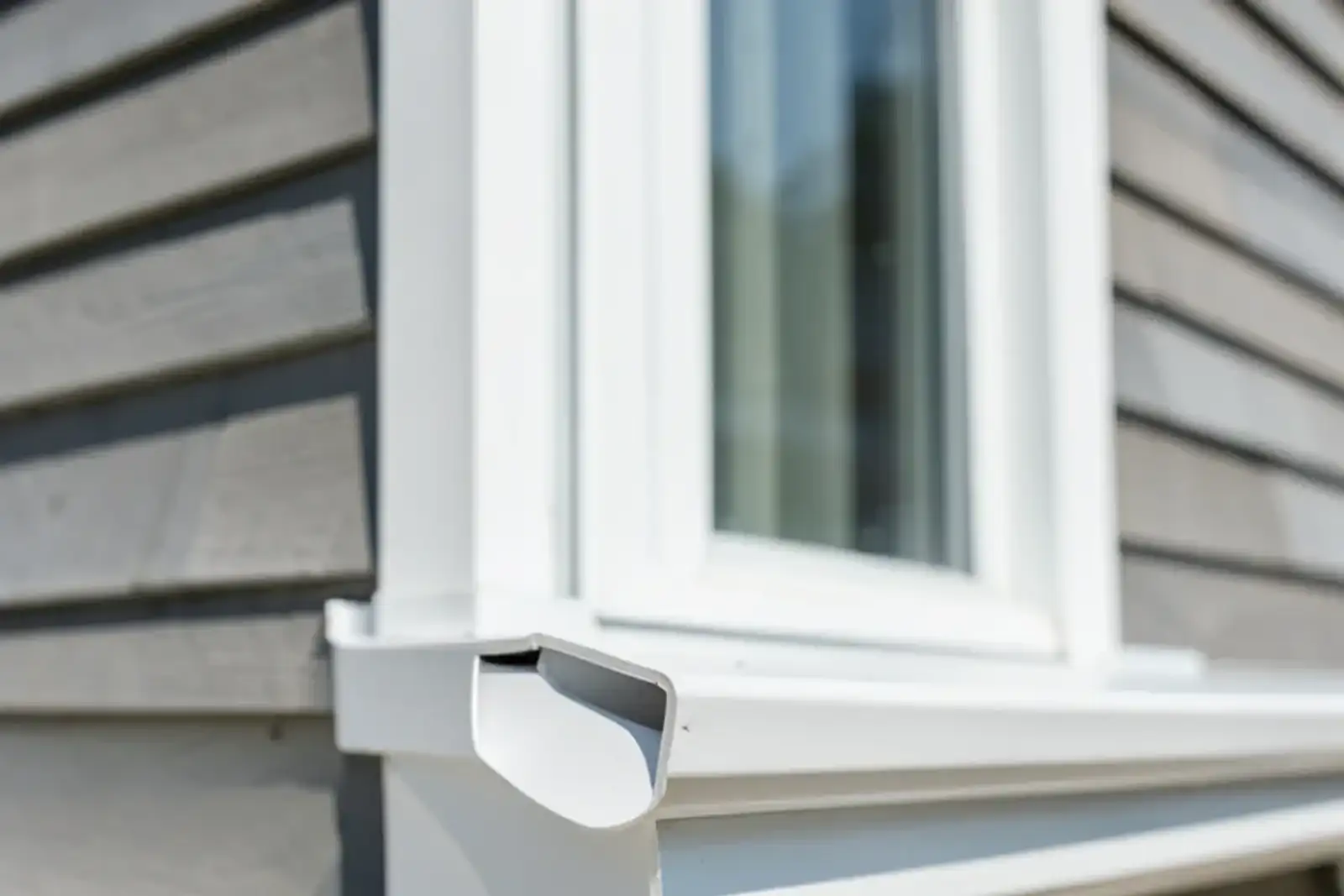
On a 1 inch per hour rain, a 5-inch K-style gutter is good for roughly 5,520 square feet of roof, while a 6-inch covers roughly 7,960. A steep roof or harder rain lowers both. In capacity terms, the 6-inch is about 44% larger.
| Factor | 5-inch | 6-inch |
|---|---|---|
| Roof area served (1 in/hr) | ~5,520 sq ft | ~7,960 sq ft |
| Metal and downspout size | Standard | Wider, usually larger downspout |
| Fits best | Modest roofs, gentle pitch | Large or steep roofs, valleys |
Mustafa J. wrote that Lanes installed "6 inch gutters on my entire home." Whether you need that size depends on the roof area and valleys above each run, and an installer should explain why they chose it.
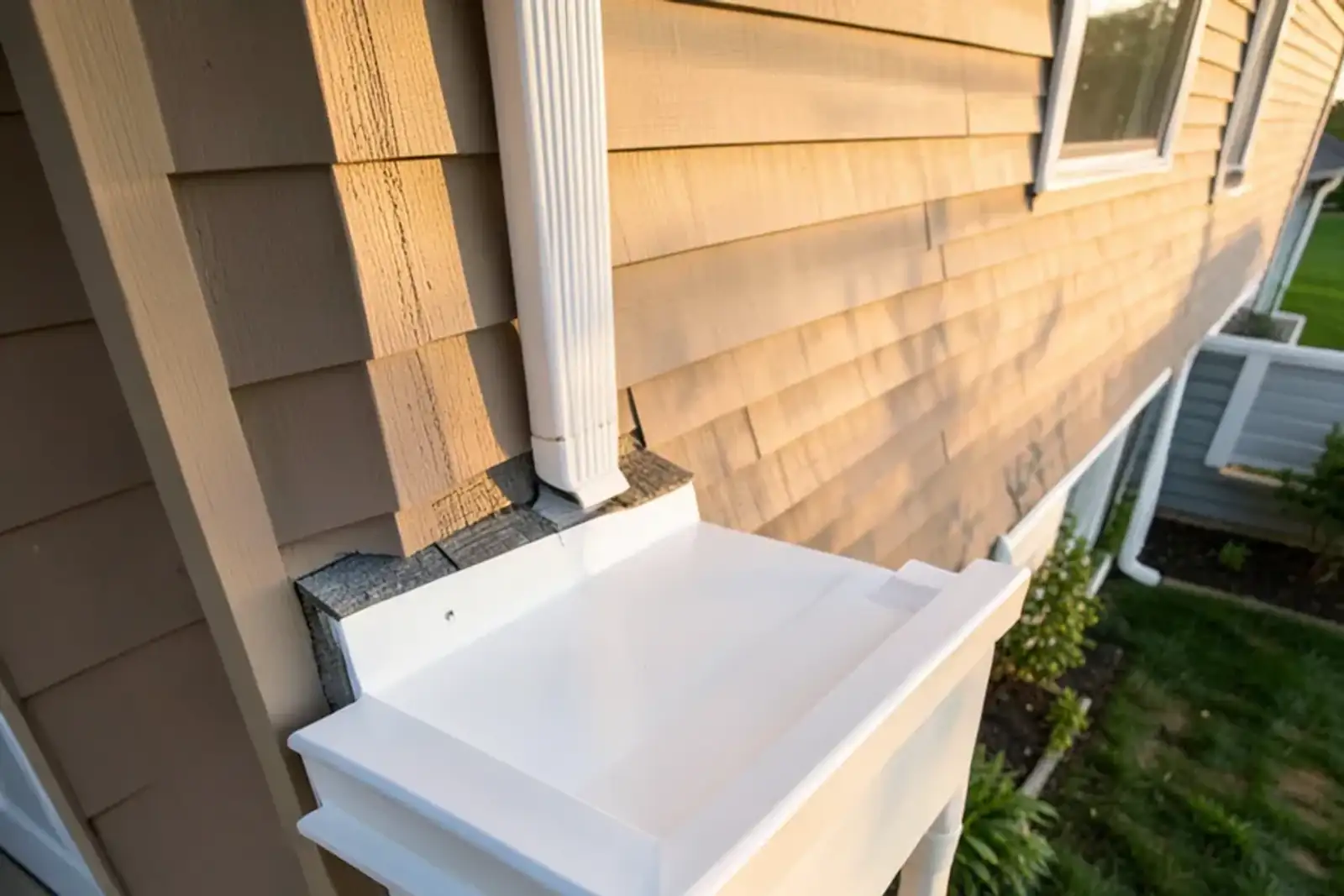
Bigger is not always better. A 6-inch gutter costs more, and on a small, gentle roof it adds capacity that never gets used. On a large roof plane, a steep pitch or a valley that sends a stream into one spot, the larger size can stop the overflow a smaller one never will. If the overflow happens only in the heaviest rain, an extra downspout is sometimes the cheaper fix than a bigger gutter. Our pages on 6-inch gutters and 5-inch gutters go through that choice, and the aluminum gutters page covers thickness.
What we measure before we name a number
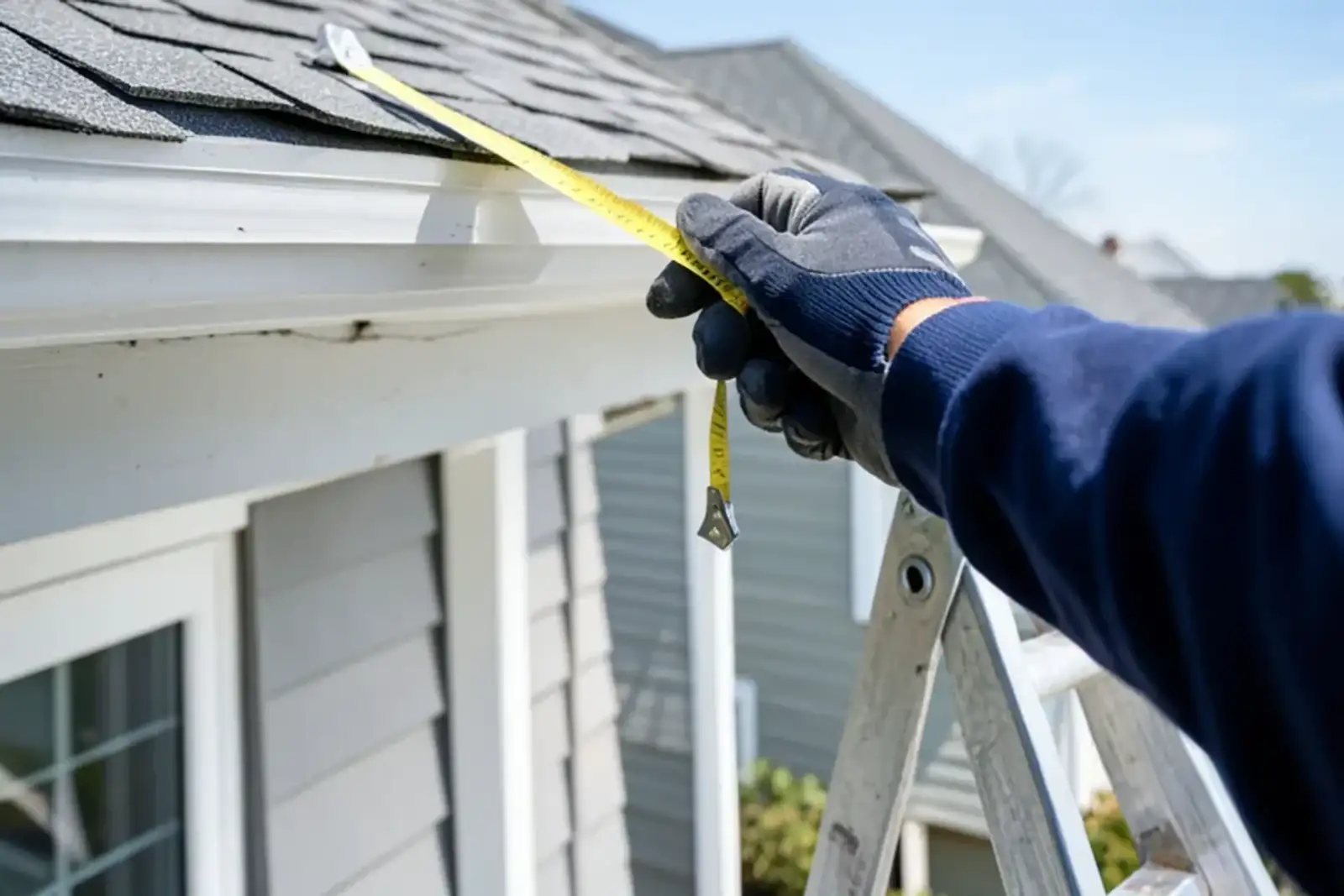
From our crew, we start on the ground with the footage, then the height of each eave. We count corners, note where downspouts can run and check the fascia behind the old gutter. We also look at the roof above each run, since a long valley may need a larger gutter or an extra outlet.
A good seamless run is made to length, so the measurement has to be right. SMACNA gives about 50 feet of run per downspout as the practical maximum, which sets the minimum number of drops before the price is even discussed.
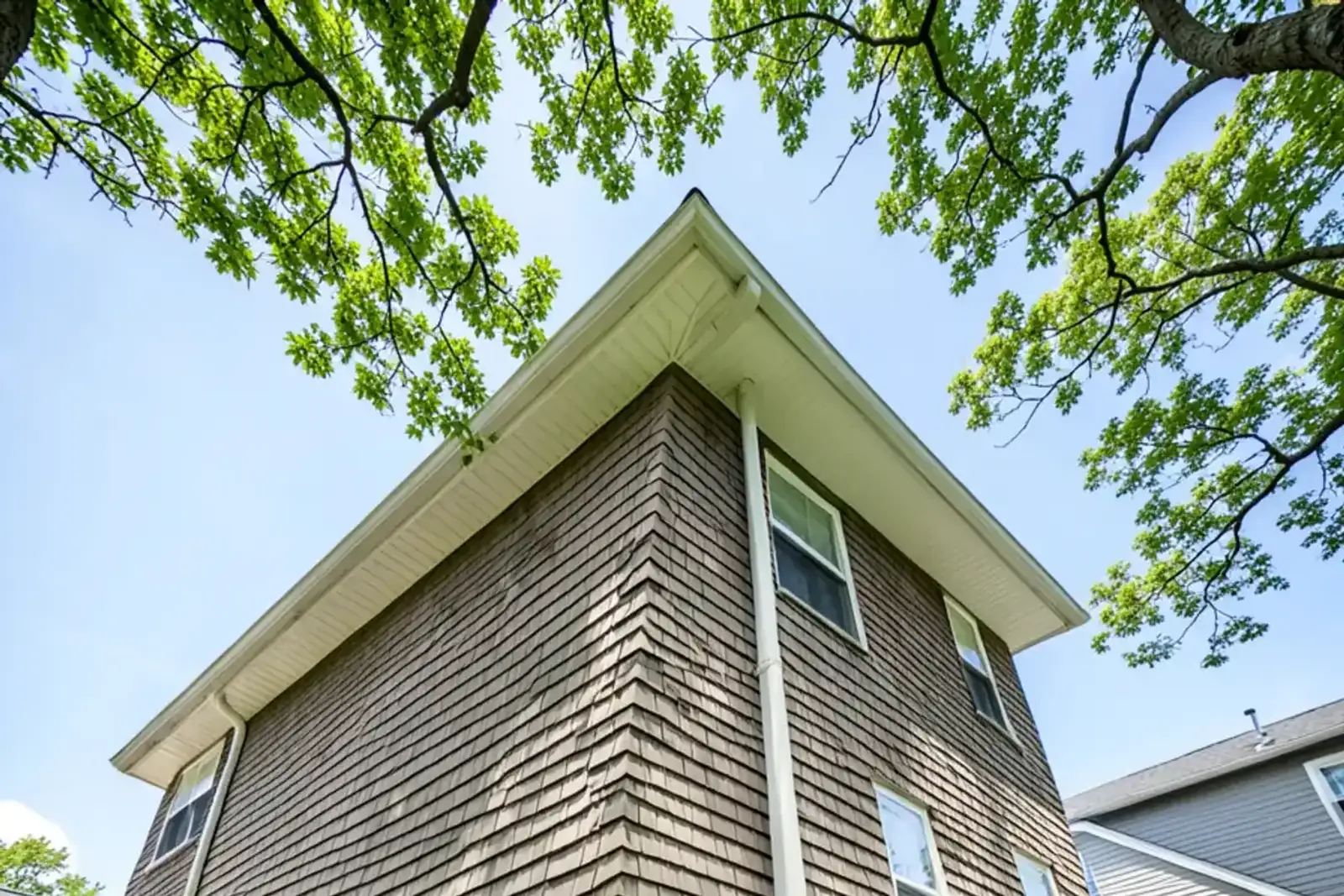
Ways to keep the price honest
You control a few of the inputs. Replace what has actually failed, since a sound run on one side of the house may not need to come down. Settle the size question early, with the roof area in front of you. Deal with soft fascia once, at the time of install, instead of hanging new metal on wood that will fail.
Waiting also has a cost. A gutter that overflows or leaks for another winter can soak the fascia and siding behind it, and that repair lands on top of the new gutters later.
Where a low quote can get low
A lower total is not always better pricing. It can also mean different work. These are the usual places quotes diverge:
- Thinner metal, or no stated thickness, so you cannot tell what you are comparing
- Hangers set farther apart, which saves parts and costs strength in snow
- Fewer downspouts than the roof needs, or old ones reused
- No fascia repair listed, which means no allowance for rot found behind the old run
- No removal or disposal of the old gutters and spikes
- Extensions and splash blocks left out
Neither a higher nor a lower price tells you which of these is in the number. Only the written scope does.
How to compare two quotes
Put them side by side and check these lines:
- Footage and corner count
- Size and metal thickness
- Downspout count and size
- Hanger type and spacing
- Fascia or trim repair, listed on its own line
- Removal and disposal of the old system
- What is not included
If a figure is missing from one quote, ask for it in writing. A lower price that leaves out fascia work or downspouts is not a lower price.
Reading two quotes side by side
Here is an invented comparison to show the method. Quote A lists 136 feet, 6-inch, a stated thickness, four downspouts, hangers every two feet, fascia as its own line and haul-away. Quote B lists 136 feet and a total. Quote B may be the same job, or it may be a 5-inch run with three downspouts, wide hanger spacing and no allowance for wood. You cannot know until Quote B says. Ask it to fill in the blank lines, then compare.
Also ask how surprises are handled. If soft fascia turns up behind the old run, the quote should say how it is priced and whether you approve it first. Getting that in writing before work starts is the cheapest protection you have.
Permits, buried lines and rebates
New Hampshire permits are handled town by town, and we could not confirm whether routine gutter replacement needs one, so ask Hampstead's building office. If the job involves a buried drain line, Dig Safe must be called before digging. Do not plan on a rebate. The federal 25C and 25D credits ended December 31, 2025, and for state programs, check with the New Hampshire Department of Energy.
Pricing a home in Hampstead or Derry
Derry is about 5 minutes from Hampstead by our estimate, and its median home dates to 1983. We cover the rest of Rockingham County too. Call for a written price on your house.
What to have ready when you call
A few facts make the first conversation useful. Know roughly how many stories the house has and whether any section is a bay, dormer or addition. Know whether the current gutters are 5-inch or 6-inch, and whether the fascia behind them looks sound from the ground. Photos of each side help.
Then ask for the price in writing, with the lines above filled in. Call us at (208) 464-4195 and we will measure the house and put the number on paper.
Quick answers
How much does a seamless gutter cost per foot?
We do not publish a per-foot price, because the number moves with size, height, corners and what is on the fascia today. The outside range Today's Homeowner reports for a whole Hampstead install is $421 to $3,599. Ask any installer for a written price that shows footage, size, downspout count and trim work, so two quotes can be compared.
Does a Derry colonial cost more to gutter than a ranch?
It depends on the house, not the town. A Derry colonial with many corners and tall eaves needs more labor than a one-story ranch, wherever either one sits. We cover Derry, about 5 minutes from Hampstead by our estimate, and price each house after seeing it.
Why do Hampstead seamless gutter quotes vary so much?
Quotes differ because the scope differs. One may include fascia repair, larger downspouts and removal of the old run, while another may not. Footage, eave height and corner count also change the labor. Line the quotes up item by item before you compare totals, and ask what each leaves out.
Does a 6-inch gutter cost more than a 5-inch in Hampstead?
Yes. A 6-inch run uses more metal and usually calls for a larger downspout, so both parts of the price move up. What you get back is capacity, about 44% more roof area at the sizing chart's one inch of rain per hour. Ask for both sizes priced on the same footage before you decide.
Should I replace all the gutters on a Hampstead house at once or one side at a time?
When the whole system is the same age, replace it together, because new metal beside tired metal rarely looks or drains the same. If only one side has failed and the rest is sound, replacing that side alone can make sense. Ask the installer how the new run will match the old color and profile.
Sources
- Today's Homeowner, gutter installation cost data
- SMACNA, residential gutter sizing guidance
- Homeowner cost guides and trade pages on what drives seamless gutter pricing, read for structure only (web search, November 2026)
- Dig Safe and New Hampshire town permit guidance, general advice
Questions about your gutters?
25 Glenwood North Rd #16, Hampstead, NH 03841
(208) 464-4195
Mon–Sat 8am–6pm · Sunday closed