

Gutter Cleaning
How Often Should You Clean Gutters in New Hampshire?
Twice a year is the baseline for how often to clean gutters in NH: once after the leaves drop in late October to mid-November, and once in late spring after the oak tassels fall. White pines or heavy oak cover add a third visit. A lot with no overhanging trees can stretch to once a year.
- ★ 5.0 on Google · 29 reviews
- Serving since 2024
- Based in Hampstead, NH
Published and updated November 2, 2026 · By the Lanes Gutters crew, Hampstead, NH
On this page
- How often to clean gutters in NH, by tree type
- Signs your gutters need cleaning now
- What shortens the interval
- Two houses, one street: what the schedule costs
- What moves the schedule: timing and guards
- What a crew checks besides the debris
- Cleaning it yourself or hiring it out
- A simple yearly rhythm
- Booking your cleaning schedule
- Common questions
Twice a year is the baseline, and your trees decide whether to move off it. One cleaning goes in after the leaves drop, usually late October to mid-November. The other goes in late spring, once the oak tassels and maple seeds have fallen.
How often to clean gutters in NH, by tree type
Three things set the pace: what grows over the roof, how steep the roof is, and what the gutters are fitted with. Start with the table, then adjust.
| Your situation | Cleaning schedule |
|---|---|
| Maples and oaks overhang the roof | Twice a year, fall and late spring |
| White pines within about 30 feet of the house | Three times a year, add a midsummer pass |
| No overhanging trees, gutters otherwise sound | Once a year, after leaf drop |
| Gutter guards installed | Once a year, plus a check after pollen and needle season |
| Low-slope or flat roof sections | Add a check in midsummer, since debris stays put |
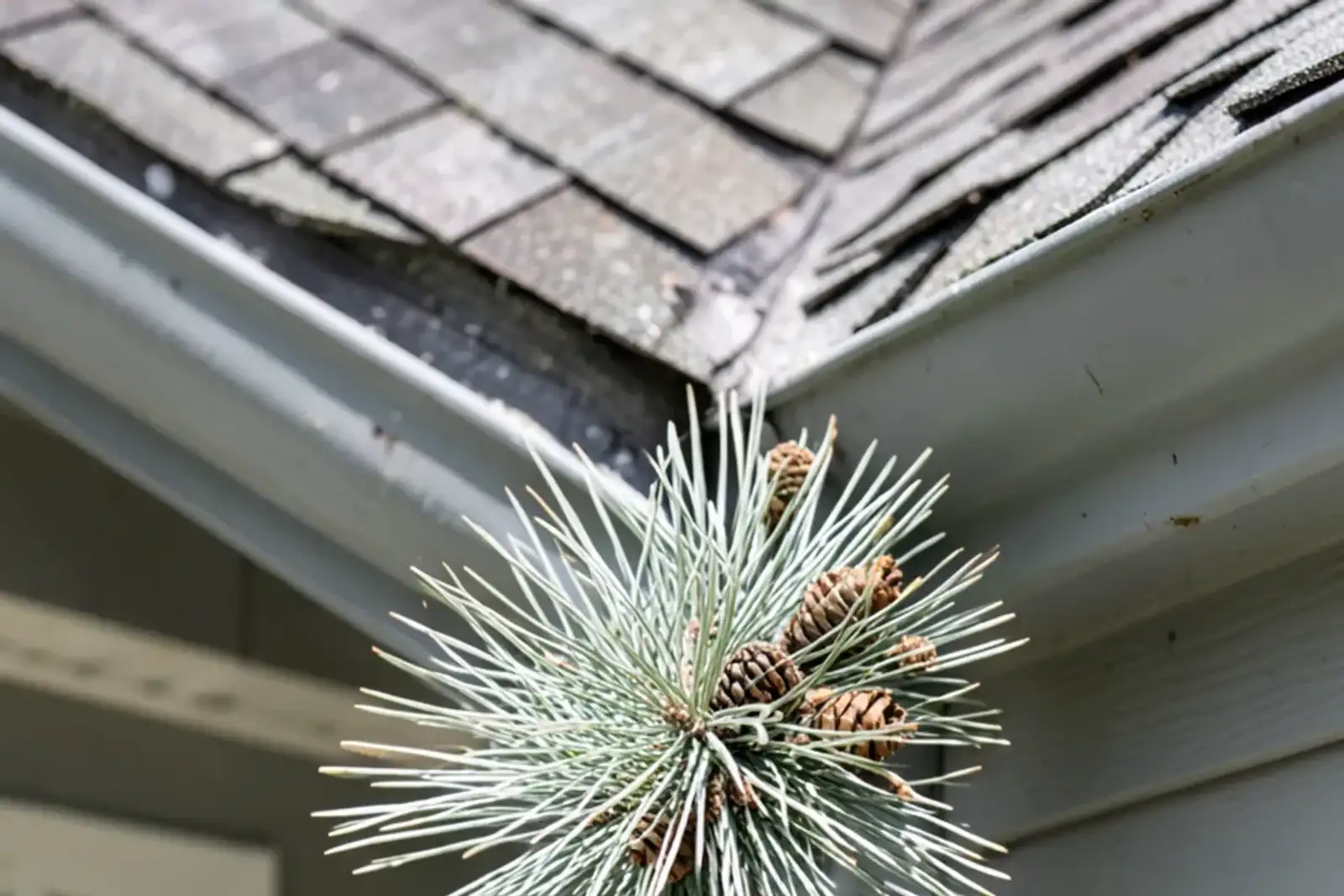
Pine needles are the reason many Hampstead-area homeowners clean more than twice. They are thin enough to pack into outlets and downspout elbows, and they hold water. Oak tassels fall in a short burst in late spring and turn to a wet paste after the first rain.
Signs your gutters need cleaning now
A schedule is a guess. These signs are facts:
- Water spilling over the front edge during a normal rain
- Green growth or small seedlings sprouting in the trough
- Sagging in the middle of a run, where debris and water add weight
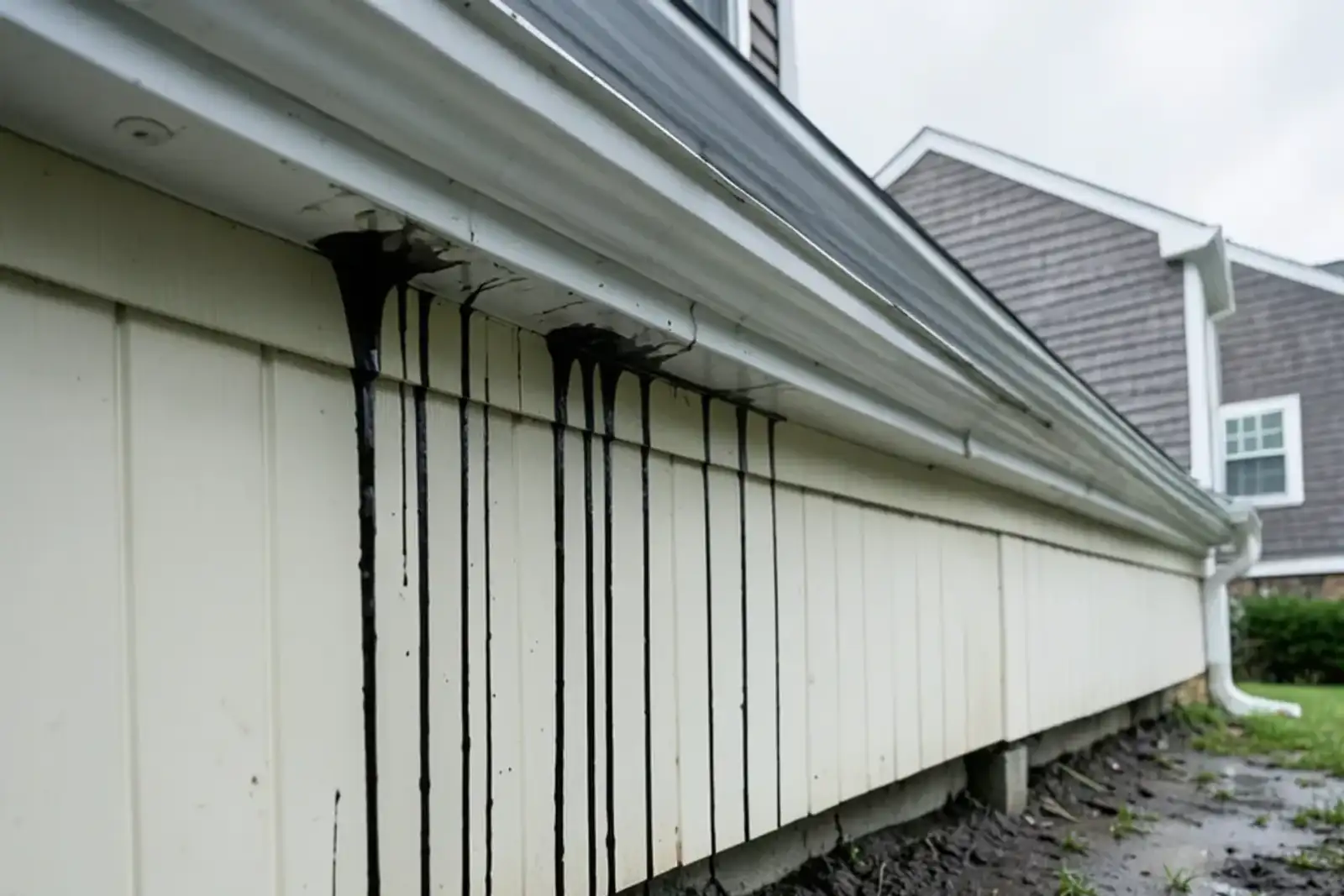
- Dark streaks down the siding below the gutter
- Downspouts that run dry during a storm, or gush then stop
- Birds or squirrels working at the gutter line
- Icicles hanging at the same spot every winter
Any one of these means the gutter is no longer moving water. Do not wait for the next calendar date.
What shortens the interval
Hampstead gets about 53.8 inches of snow a year and spends about 195 days below 50°F (BestPlaces, Dwellics). That matters because wet debris in a gutter freezes into a block. A frozen block holds water against the seams, and ice weighs about 57 to 60 pounds per cubic foot, so a full trough puts real load on the hangers.
Spring does its own damage. Debris left from fall is damp and heavy by April, and it rots into a sludge that stays wet all summer. That wet sludge corrodes sealant and fasteners sooner than a clean, dry trough would.
Two houses, one street: what the schedule costs
Picture two Windham-area colonials, each with about 200 feet of gutter. One sits under a mix of maples and oaks. The other has a row of white pines along the driveway side. These are illustrations, not customers, and the prices are third-party estimates.
At roughly $1.10 per linear foot (Today's Homeowner), a cleaning of 200 feet comes to about $220. The maple-and-oak house cleans twice a year, so about $440. The pine house needs the midsummer pass as well, so about $660. Prices go up with a second story or heavy debris, since labor is about 70% of a cleaning bill (This Old House, 2026).
Now the other side of the ledger. If the pine house skips the midsummer pass, needles pack the outlet on the driveway side. Rain then spills over the front edge onto the same strip of ground and the same section of fascia, every storm. That is the kind of slow damage a schedule is meant to prevent, and it costs more to fix than a cleaning does. We quote each job in writing after seeing it.
What moves the schedule: timing and guards
When is the right week to clean in fall?
Timing is a trade-off. Clean too early and the last leaves land on a clear trough, so you pay for a second visit. Clean too late and the ground is frozen or snow-covered, which is poor footing for a ladder and a bad time to flush a downspout.
In southern New Hampshire the practical window is the first three weeks of November for most yards. Maples drop early. Red oaks and beeches hold dead leaves well into December, so if you have them, plan the main cleaning for the end of that window and check again from the ground after the first windy storm. A second quick pass in December is cheaper than a frozen, packed trough in February.
For the spring visit, wait until the oak tassels are down, usually late May. A cleaning in April catches the winter's debris, but tassels land a few weeks later and fill the trough again.
Do gutter guards change how often you clean?
They change it, but they do not end it. Guards trade fewer ladder trips for a different set of chores.
- What they handle well: whole leaves, twigs and the bulk of seed pods, especially on a home with big maples.
- What they handle badly: white pine needles that lie flat on top, oak tassels that mat into a mulch, and fine shingle grit that settles underneath.
- What they cost you: a guard hides the trough, so a slow clog or a leaking seam goes unseen. That is why we suggest a hose test once a year even with guards fitted.
- Winter risk: a light guard can bend under heavy snow and ice, which creates a dam of its own at the eave.
The honest answer with guards is one cleaning a year, rather than none.
What a crew checks besides the debris
This is what the trade looks at on a cleaning visit, and what is worth checking if you do it yourself.
Water should run to the outlet. After the debris is out, a hose test shows whether the trough drains or holds a puddle, and a puddle means the pitch has shifted. The downspout should flush clear all the way to the bottom, because a clog low in the pipe backs water up into the trough.
Do the flush in a set order. Start the hose at the end of the run farthest from the downspout and work toward the outlet, so loose debris travels the way the water will. If the downspout backs up, run the hose up from the bottom outlet as well, and never force a stuck plug with a hard tool that can crush the pipe. Slow drainage after a flush usually means a clog at an elbow, and that is where pine needles pack first.
Pitch deserves its own check. A common rule of thumb is about a quarter inch of drop for every 10 feet of gutter toward the downspout. A level or a bucket of water poured into the far end tells you quickly: if water pools instead of traveling, the hangers have shifted or the fascia has moved. Cleaning does not fix that, and it is worth knowing before you pay for a second visit that gets the same result.
Then look at the hardware. Hangers spaced wider than the roof load allows will sag first, and seams that were hidden under leaves often show a weep once cleaned. Cleaning is the cheapest time to catch these, because the gutter is already open and clear.
Cleaning it yourself or hiring it out
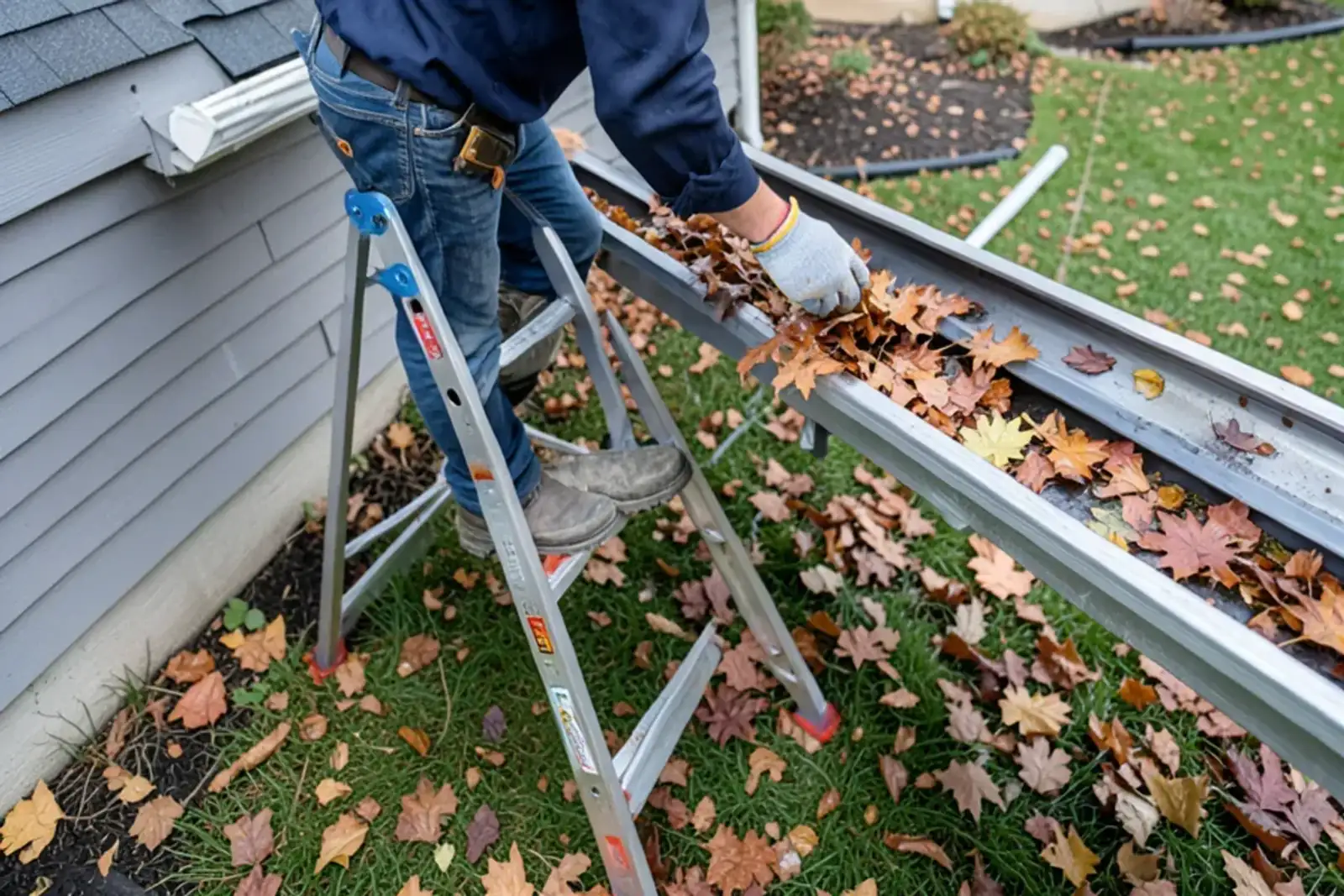
Ladders are the real risk here, so be honest about your roof height. A one-story ranch is a different job from a two-story colonial with a steep pitch. If the ladder would need to stand on soft ground, or a branch or a power line is close to the work, hire it out.
On cost, third-party figures put gutter cleaning around $1.10 per linear foot, which is roughly $220 for 200 feet (Today's Homeowner). Nationally, cleaning runs $100 to $450 with an average near $275, and labor is about 70% of that (This Old House, 2026). Those are estimates, not our prices. We price each job in writing after seeing it, and the number of stories and the amount of debris move it more than the footage does.
A simple yearly rhythm
If you want it written down, here is a year that works for most Windham-area homes:
- Early November: full clean after the last leaves, with a downspout flush.
- March thaw: look from the ground for ice damage and sagging.
- Late May: clean after oak tassels and seed pods.
- Midsummer: add a quick pass only if pines overhang the roof.
Windham has among the newest housing in the area, with a median build year of 1996 (ACS 2020-24), so many gutters there are in their middle years. Middle-aged gutters are the ones that gain most from steady cleaning, because debris is the main thing wearing them out. For the full set of fall tasks, see our fall gutter checklist. If you want the cleaning done for you, our gutter cleaning page covers how we handle it, and we cover Windham, roughly 10 minutes from our Hampstead base by our estimate.

Booking your cleaning schedule
Pick the row in the table that matches your trees, put the first visit in early November and the second in late May, and add a midsummer pass if pines overhang the roof. Adjust after one year, based on what you find in the trough. If a visit turns up more than debris, such as a sagging section or a leaking seam, that is the time to look at repair or replacement, covered in our repair versus replacement cost guide, rather than a fresh cleaning. Our seasonal cleaning page covers how a fall and spring pair works, and our write-up on white pines and oak tassels goes deeper on which trees fill gutters and when.
Call Lanes Gutters at (208) 464-4195 and tell us your tree cover, the number of stories and the footage if you know it, and we will give you a written price.
Quick answers
Is once a year enough for gutters in New Hampshire?
Only if few or no trees overhang the roof and you have a gutter guard that sheds debris. Otherwise a once-a-year cleaning leaves wet leaves sitting in the trough all winter, where they freeze and pull on the hangers. If you can only do one visit, make it after the leaves are down and before the ground freezes.
How often should I clean gutters in Windham, NH?
Twice a year for most Windham homes, with a third pass if white pines or oaks overhang the roof. Large homes with long roof valleys, common around Cobbetts Pond, funnel more water and debris to a few spots. Those spots can clog sooner than the rest of the run.
Should gutters be cleaned in winter?
Not as a routine. Frozen debris is stuck in place, and chipping at ice can bend the trough or break a seam. Wait for a thaw, and call us if an ice buildup is pulling the gutter away from the house.
Do gutter guards mean I can skip cleaning in Hampstead, NH?
No, but they cut the number of visits. A guard keeps oak leaves out, yet pine needles and oak tassels can still lie on top or work through, and shingle grit settles underneath. Plan on one cleaning a year plus a look from the ground after needle and pollen season. Check that the guard has not bent under winter snow.
What is the best month to clean gutters in southern New Hampshire?
Early to mid-November for the main cleaning, once the maples and most oaks are bare and before the ground freezes. Red oaks and beeches often hold dead leaves into December, so a late look from the ground is worth it. The second cleaning belongs in late May or early June, after tassels and seed pods have dropped.
Sources
- BestPlaces, Hampstead NH climate
- Dwellics, Hampstead NH climate data
- Today's Homeowner, gutter cleaning cost per linear foot
- This Old House, 2026 gutter cleaning cost guide
Questions about your gutters?
25 Glenwood North Rd #16, Hampstead, NH 03841
(208) 464-4195
Mon–Sat 8am–6pm · Sunday closed