
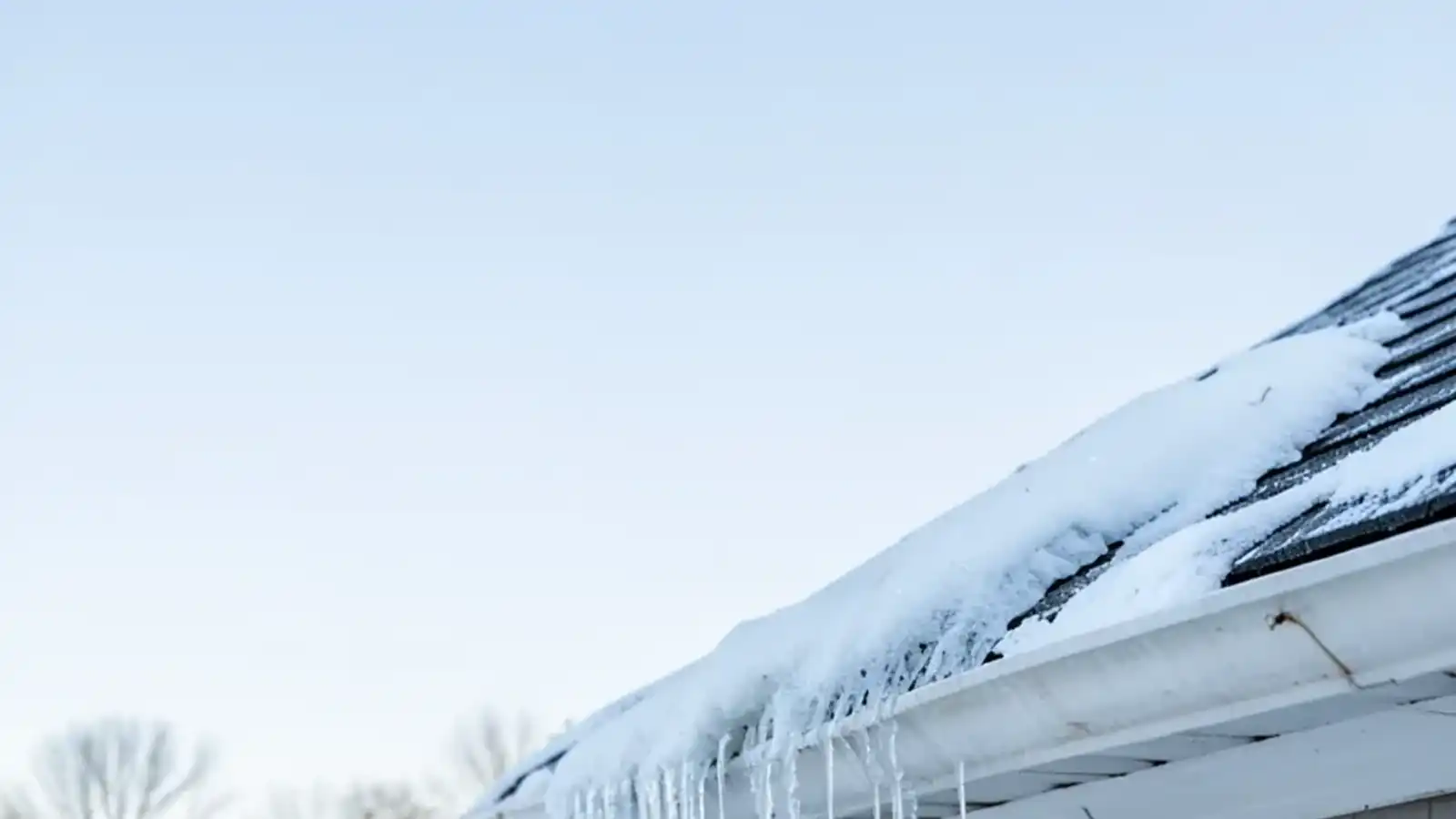
Winter Gutter Protection
How Heat Cables Help Stop Ice Dams
A gutter heat cable keeps a drainage path open through ice, but it does not stop an ice dam. The dam comes from attic heat, which a cable cannot touch. In the right spot, a cable gives meltwater a way off the roof. Alone on a leaky attic, it is an electric bill that only hides the cause.
- ★ 5.0 on Google · 29 reviews
- Serving since 2024
- Based in Hampstead, NH
Published and updated November 2, 2026 · By the Lanes Gutters crew, Hampstead, NH
On this page
- How does a gutter heat cable work against ice dams?
- What do heat cables not do?
- Cable or attic work: which should come first?
- Where does heat cable earn its keep?
- What does it cost to run?
- Who handles the wiring?
- How we would look at your roof before cable
- Deerfield farmhouses and snow
- Weighing cable against the cause
- Common questions
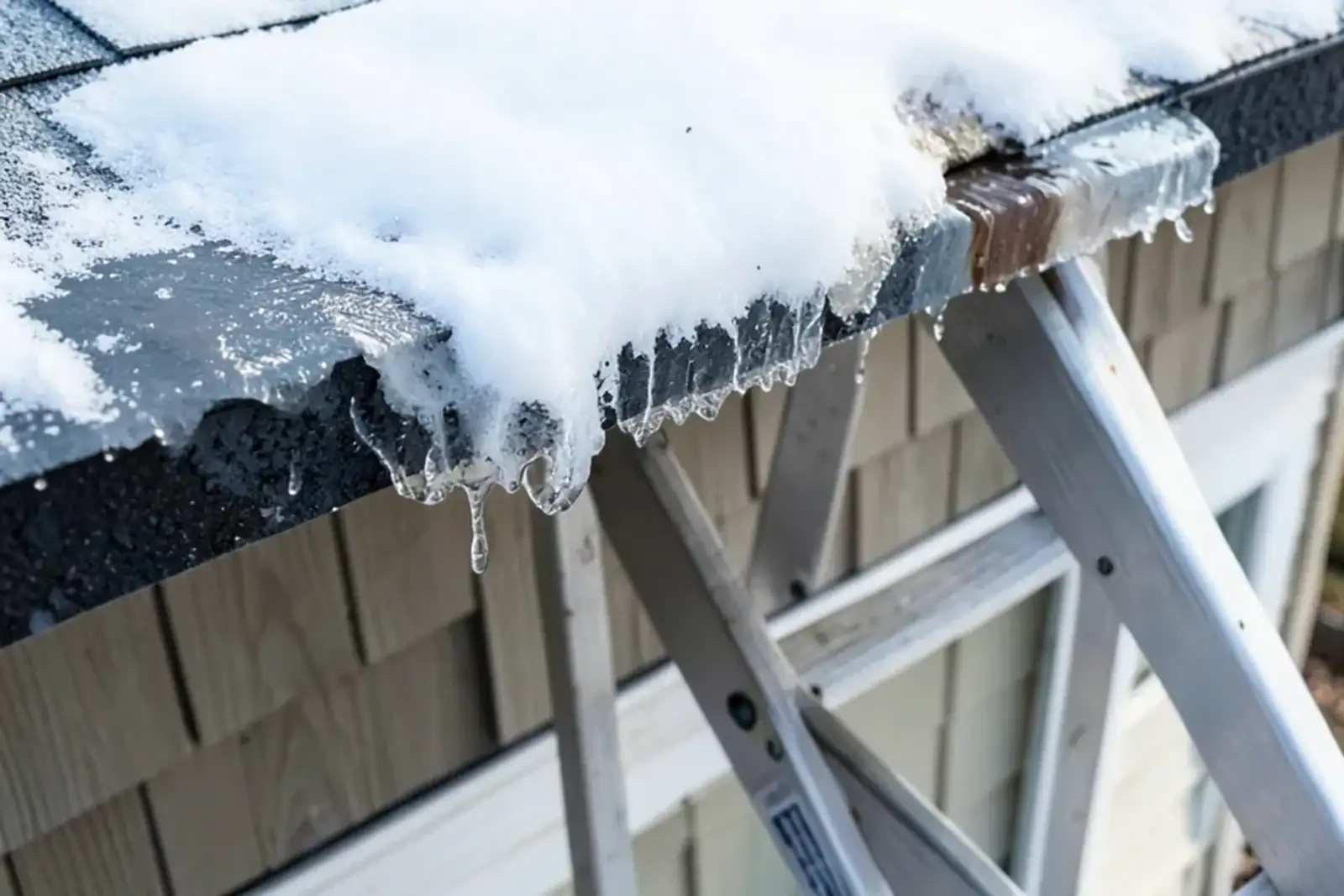
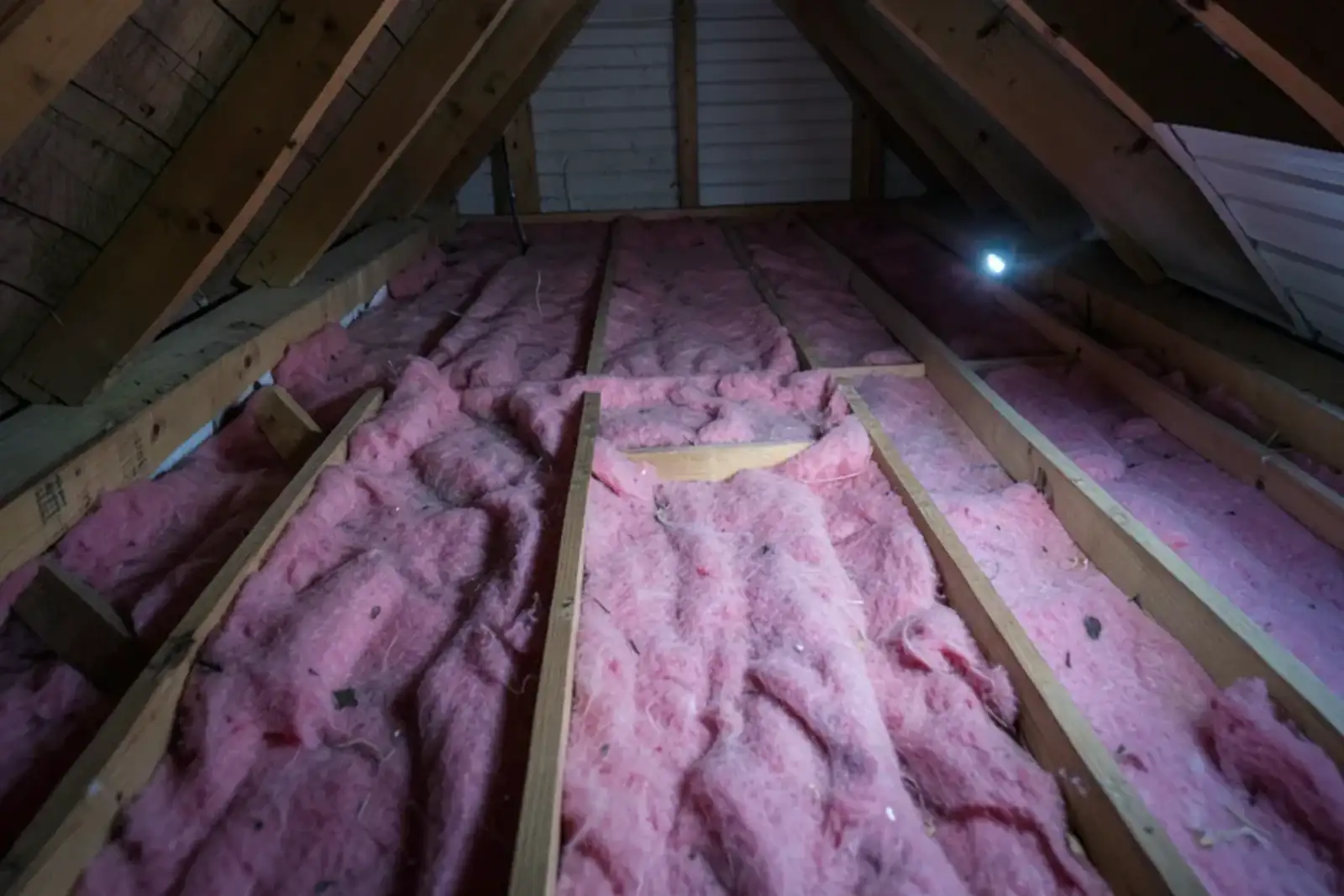
Ice dams come from heat leaking through the ceiling into the attic. That heat warms the roof deck, snow melts, and the water runs down until it reaches the cold eave and refreezes. The ridge of ice that builds there is the dam, and it can form with or without gutters. Cable is one tool within winter gutter protection, and a narrow one.
How does a gutter heat cable work against ice dams?
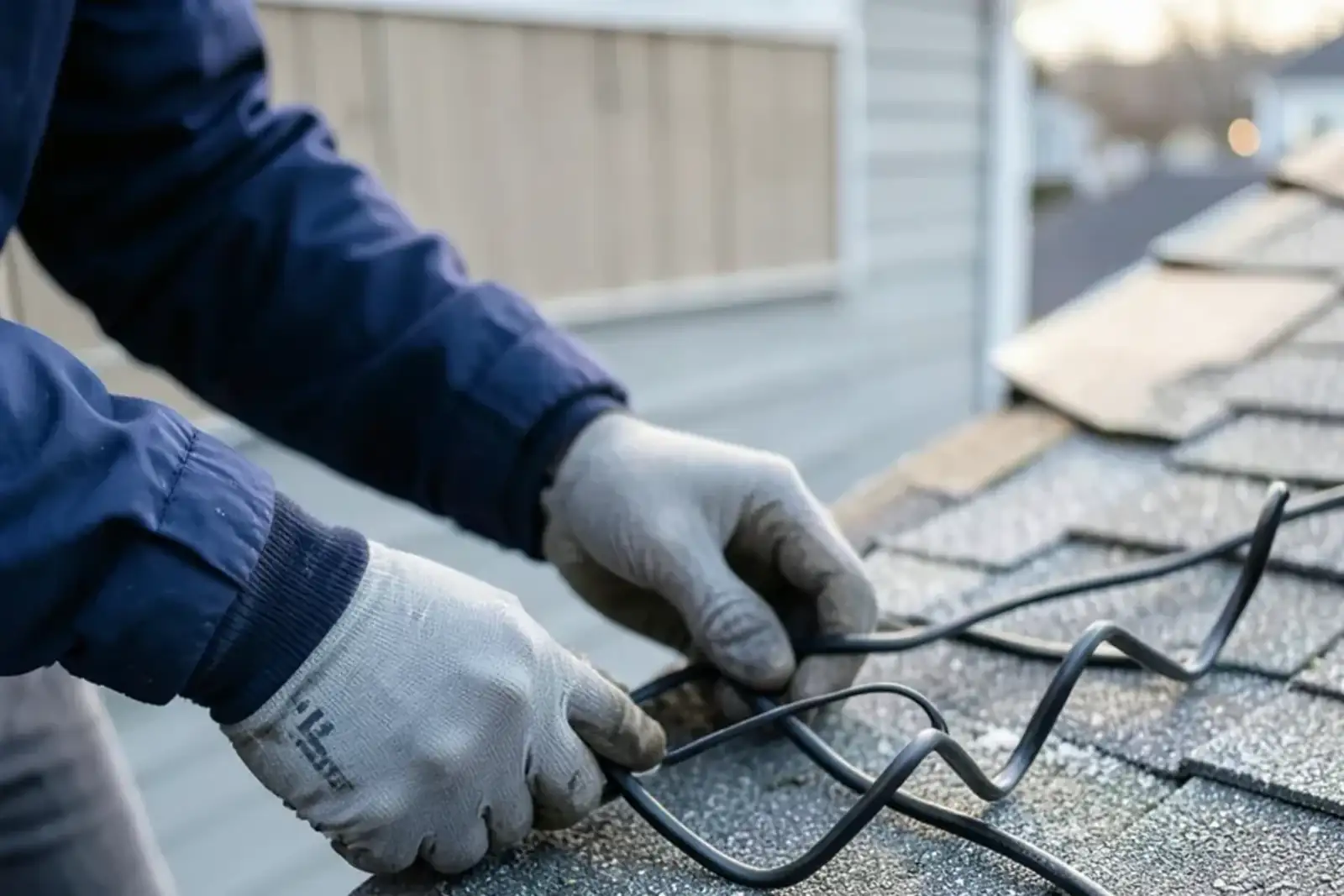
A cable is a heating element laid along the roof edge, through the gutter and down the downspout. It warms a narrow strip so water can run off. It does not melt the whole dam and it does not stop the cause.
Think of it as a drain made of heat. Water that would back up behind the ice follows the warm path out and away. That keeps meltwater from creeping under the shingles and into the ceiling below.
What do heat cables not do?
They do not seal the attic, add insulation or fix ventilation. They do not clear ice that has already built up thick, and they do not work if they are not switched on. Cable also adds weight and clutter to a roof edge that is already loaded with snow.
Falling ice can seriously hurt someone. A melt channel does not make it safe to stand under a heavy eave, so keep people and pets clear of the drip line.
Two kinds of cable and the trade-offs
Roof and gutter cable comes in two types, and the difference affects cost, safety and running expense.
- Constant-wattage cable puts out the same heat along its whole length. It costs less, but it must never cross or touch itself, and it keeps drawing full power whether the spot needs it or not.
- Self-regulating cable changes its output with temperature, drawing less where it is warmer. It costs more up front and is more forgiving at overlaps and in changing conditions.
Both usually come rated around 5 watts per foot, and both should be on a ground-fault protected outlet. Manufacturers also recommend a control that senses temperature and moisture, so the cable is on in snow and thaw and off in dry cold. Read the maker's listing: it will say which roofs, which length and which controls are covered, and a cable is not meant to melt a whole roof of snow.
Cable or attic work: which should come first?
| Approach | What it does | Best for |
|---|---|---|
| Air sealing and insulation | Stops heat reaching the roof deck | Whole-roof dams, the real fix |
| Ventilation at soffit and ridge | Keeps the roof surface cold and even | Houses with warm, stuffy attics |
| Roof raking after storms | Takes snow weight off the eave | Low roofs you can reach from the ground |
| Heat cable | Keeps a drain path open through ice | One trouble spot that returns each year |
If an entire eave dams up, start in the attic. Cable on a leaking roof runs for weeks every winter to fight a problem that insulation could end.
Where does heat cable earn its keep?
Cable fits where the cause is hard to fix. Good candidates are a valley that sends meltwater into a short stretch of gutter, a porch roof over an entry, a north-facing eave in shade, and a downspout that freezes while the rest works. Low-slope roofs over additions are another case, because attic work is not always possible.
A long, simple roof edge on a well-insulated house seldom needs it. Hampstead has about 195 days a year below 50°F (Dwellics), so a cable left running all season gets expensive.
What does it cost to run?
The hardware has a price, but running cost is the part people forget. Here is the arithmetic. A 60-foot run of cable rated at 5 watts per foot draws 300 watts. Left on for 8 hours, it uses 2.4 kilowatt-hours. Multiply by the rate on your electric bill and by the number of nights.
We do not have a reliable local price for installed cable, so we will not quote one. The factors are length of cable, how many downspouts need it, any controller and any electrical work.
A worked example: one trouble corner
Take a valley that dumps onto a short eave, where ice builds every year. The cable has to cover three things: the roof edge, the gutter beneath it and the downspout, or the meltwater will refreeze before it leaves. Cable laid in zigzag loops uses more length than the edge it covers. Suppose the maker's chart calls for about two feet of cable per foot of eave. That is hypothetical, and the real ratio is in the product's instructions.
On that assumption, 12 feet of eave takes 24 feet of cable. Add 12 feet along the gutter and 12 feet down the downspout, and the total is 48 feet. The next kit size up may be 60 feet, which draws 300 watts at 5 watts per foot, or about 2.5 amps at 120 volts. At the assumed 25 cents per kilowatt-hour, an 8-hour night costs about 60 cents. A month of such nights, at 30, is about $18. A cable left on for the whole season costs several times that, with the same result.
If the same house has ice along the whole eave, the arithmetic changes. The cable length multiplies, and so does the bill. Then the better money goes to the attic.
Who handles the wiring?
Cable needs power, and a circuit may need an electrician. A plug-in unit still wants an outdoor outlet with ground-fault protection, and many eaves have none nearby. Do not run it from an indoor extension cord. New Hampshire permits are handled town by town, so ask your town whether the work needs one.
Heat cable is not something we list as a service. If you want it on your roof, call and ask, because we will tell you plainly whether a particular layout is work we would take on.
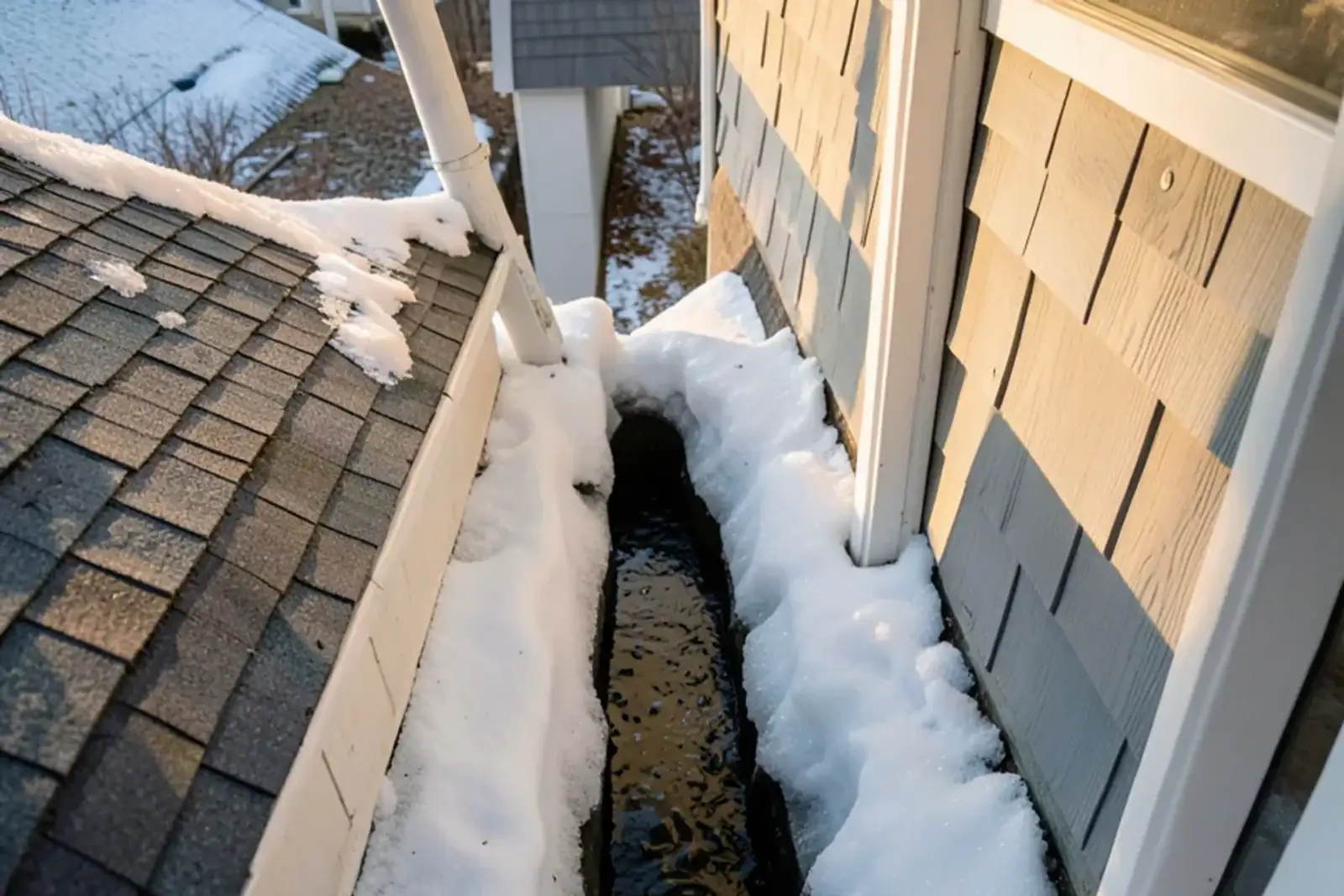
Roof edge hazards
Cable goes on at the roof edge, where a fall can hurt. Installation is a ladder job at height, in the season when ice and snow make ladders unsafe. A cable installed late is often installed in bad conditions, which is one reason to plan in the fall. Check each year that the clips are in place, the cable is intact and the outlet works.
How we would look at your roof before cable
Our approach would be to start with the ice and not the cable. We would ask where it forms and look at the gutters first. A sagging run, a clogged outlet or a downspout full of leaves can mimic a heat problem.
Then we would look at what feeds the water. A valley pouring onto a short eave is a different job from a whole edge of ice. If the cause sits in the attic, we would say so, and suggest an insulation or ventilation contractor. A gutter crew cannot fix a ceiling leak by clipping wire to shingles.
Deerfield farmhouses and snow
Deerfield is about 21 miles from Hampstead, roughly 30 minutes by our estimate. Its farmhouses and wooded lots get more snow than the border towns, and the median home was built in 1985 (ACS 2020-24). On farmhouses with later additions, porch and addition roofs are where a cable question tends to come up. We cover Deerfield, and trips are booked ahead. For more detail, see our heated gutter cables page and our ice dam prevention page.
Weighing cable against the cause
Put the pieces side by side. If ice builds along most of an eave, the attic is the cause, and insulation and air sealing come first. If ice builds at one valley, one entry roof or one downspout, a cable on that spot can earn its keep. Either way, keep people clear of the drip line and never chip at ice on a roof. Call (208) 464-4195, tell us where the ice forms, and ask whether it is work we would take on.
Quick answers
Do heat cables work on ice dams?
They work on the symptom. A cable melts a narrow channel so water can leave the roof instead of pooling behind the dam. It does not stop new ice from forming overnight. Insulation, air sealing and ventilation address the cause. In a snowy town like Deerfield, plan for both rather than counting on the cable alone.
Is heat tape the same as heat cable?
No. Heat tape is made for water pipes and is not rated for a roof edge or gutter. Gutter and roof cable is made for outdoor de-icing, with a jacket that handles the wet, cold and sun. Look for a listing that names roof and gutter use before you buy anything. A pipe product on a roof is a fire and shock risk.
Should a heat cable run all winter?
Usually not. Most people switch it on for snow and thaw cycles and off in dry cold. A controller with a temperature sensor can do this for you. Follow the maker's instructions, because rules vary by product. A cable that runs through weeks of dry weather uses power and does nothing useful.
What does it cost to run a heat cable on a Deerfield roof?
A 60-foot cable at 5 watts per foot draws 300 watts, or 2.4 kilowatt-hours over 8 hours. At an assumed 25 cents per kilowatt-hour, that is about 60 cents a night. Use your own rate from your bill. Running it only during snow and thaw, not all winter, is what keeps the total low. Installed prices vary, so get them in writing.
Can a heat cable damage shingles or gutters?
It can if the installation ignores the maker's instructions. Cable that crosses itself, runs on a roof material not on the maker's list or is held with the wrong clips can cause hot spots and wear. Follow the product's directions exactly, or hire someone who does this work. A cable also adds weight to an eave that already carries snow.
Sources
- Dwellics, Hampstead NH climate data
- American Community Survey 2020-24, Deerfield NH
- Manufacturer and retailer listings for roof and gutter de-icing cable (about 5 watts per foot, ground-fault protection, temperature and moisture controls, not a snow-melting system)
Questions about your gutters?
25 Glenwood North Rd #16, Hampstead, NH 03841
(208) 464-4195
Mon–Sat 8am–6pm · Sunday closed