
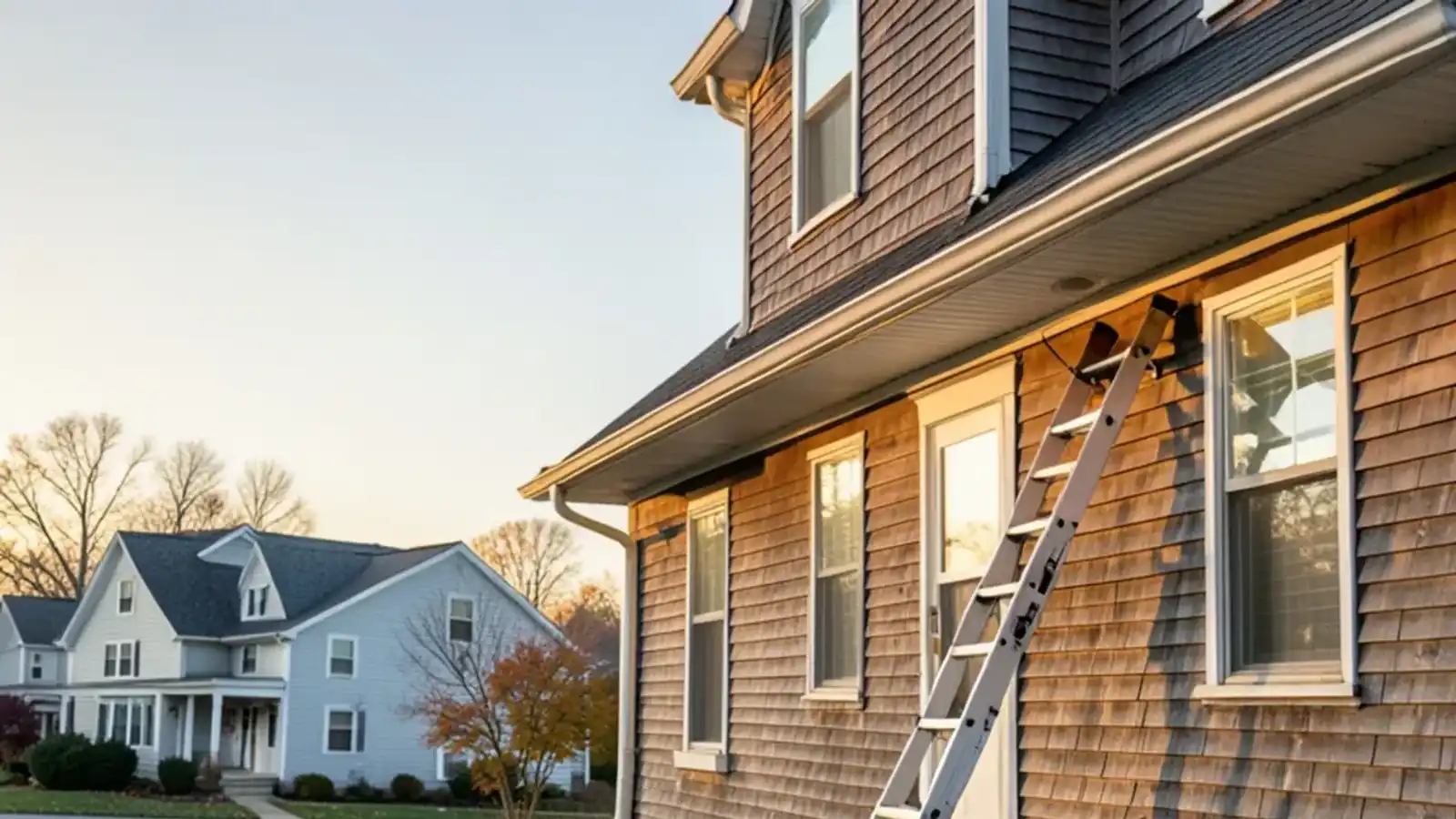
Gutter Cleaning
DIY vs. Professional Gutter Cleaning
DIY gutter cleaning is reasonable on a one-story house with level ground and a few free hours. Hire it out for a two-story, a steep roof, a long run or any job where the ladder worries you. The money is small next to the cost of a fall, and about 70% of a professional bill is labor.
- ★ 5.0 on Google · 29 reviews
- Serving since 2024
- Based in Hampstead, NH
Published and updated November 2, 2026 · By the Lanes Gutters crew, Hampstead, NH
On this page
The short answer is to do the low, easy runs yourself and hire the high, long ones. The price gap is small. The cost of a fall is not.
What does each route cost?
A hired cleaning runs about $1.10 per linear foot, roughly $220 for 200 feet, according to one third-party source. National figures run $100 to $450 with an average near $275, and about 70% of that is labor (This Old House, 2026). These are not our prices. We quote our own work in writing once we have seen the house.
Doing it yourself costs time and gear:
- A ladder with a stabilizer or standoff arms
- Gloves, a scoop, a bucket and a hose
- An afternoon, more on a long run
- Bags or a tarp for the debris
If you already own the ladder, DIY is almost free. If you would need to buy one, a few professional visits cost about the same.
A worked example: 200 feet, two cleanings a year
Take a colonial with 200 feet of gutter. At the roughly $1.10 per linear foot cited above, one cleaning is about $220, and two a year is about $440. That is a third-party figure, not our price.
A homeowner who already owns a tall ladder pays nothing but time. One who has to buy gear faces something like $150 to $400, going by one cleaning company's estimate for DIY equipment. At $300 that is a little over one visit at $220, so a ladder pays for itself quickly on paper. Paper leaves out two things. The second story still carries the fall risk, and no gear removes it. For a high run the honest answer is that the gear is not the cost. The risk is.
For a one-story ranch with 120 feet of gutter, the same arithmetic gives about $132 a visit. DIY from a short stepladder is a sensible way to save that money.
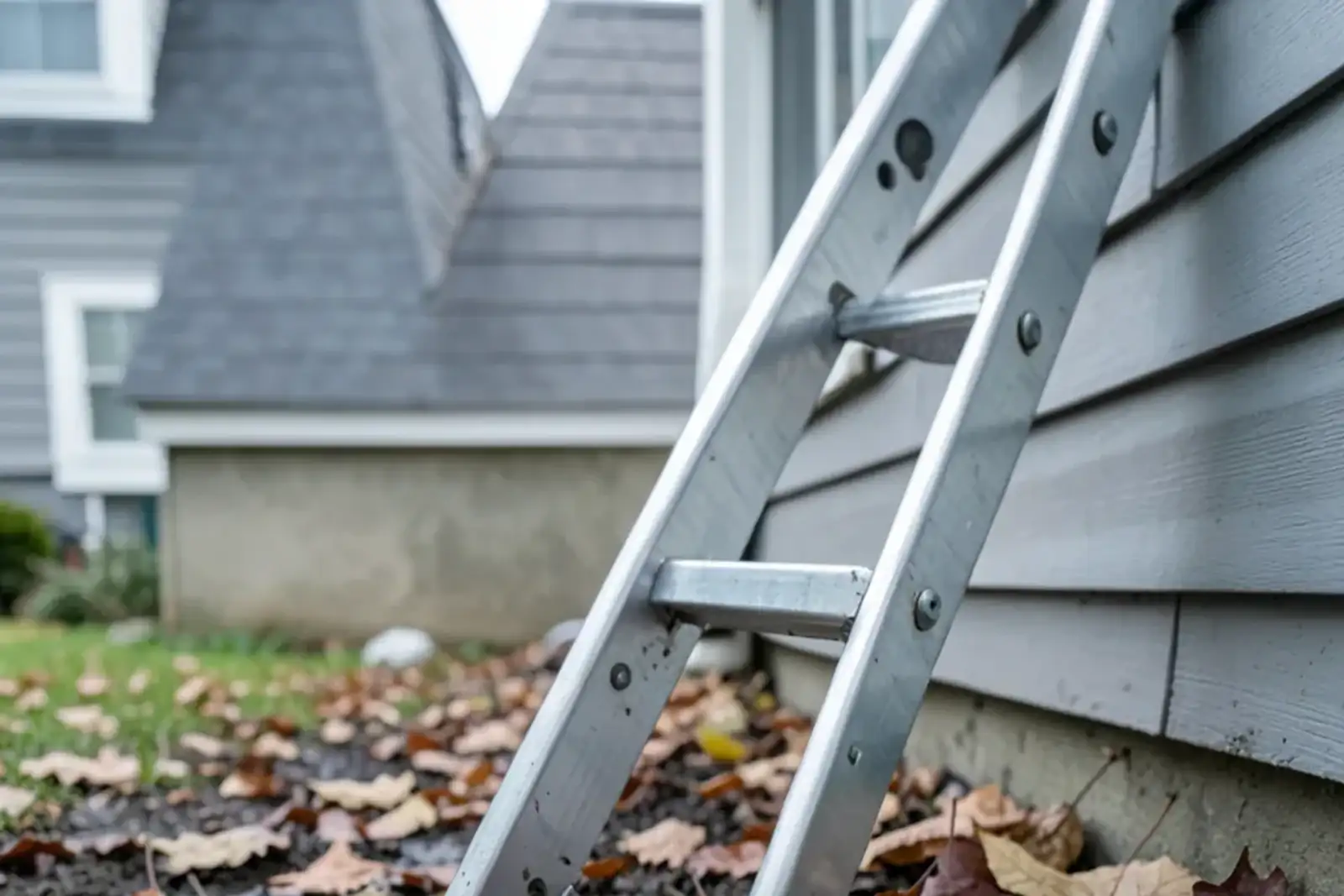
Where the ladder goes wrong
Most accidents come from a small set of mistakes. Soft or sloped ground lets a ladder foot slide. Wet leaves and mud make rungs slick. Leaning the ladder on the gutter itself can bend it, and reaching out sideways shifts your weight past the rails.
On a second story the stakes go up with every foot. A run at 20 feet or more is a different job from a porch roof. Ask whether you would be comfortable if the ladder moved an inch.
The service entrance is another hazard. Overhead power lines often drop to the house near a gutter run, and an aluminum ladder conducts. Look up before you set the ladder.
Setting a ladder properly
The usual rule is one foot out from the wall for every four feet of height, which sets a safe angle. The ladder should reach well past where you work, so you are never standing on the top rungs. Keep three points of contact, which means two hands and a foot or two feet and a hand, and carry the bucket on a hook instead of in your hand.
A stand-off arm or stabilizer keeps the ladder off the gutter itself, so it does not bend the lip, and it spreads the load across the wall. On soft ground, a wide board under each foot helps. If the ground is wet enough to take a footprint, wait for another day.
Sources disagree on how many people are hurt on ladders each year, so we will not quote a number. What they all agree on is that falls are the main risk, and that reaching sideways to scoop is when most happen. Move the ladder instead.
How to do it safely yourself
- Wait for a dry day and firm ground, and let someone know you are on a ladder.
- Set the ladder on level footing at the correct angle, with a stabilizer if you have one.
- Keep your belt buckle between the rails and move the ladder instead of reaching.
- Scoop debris into a bucket instead of dropping it, working toward the downspout.
- Flush the run with a hose and watch each downspout clear.
- Check that water flows instead of pooling.
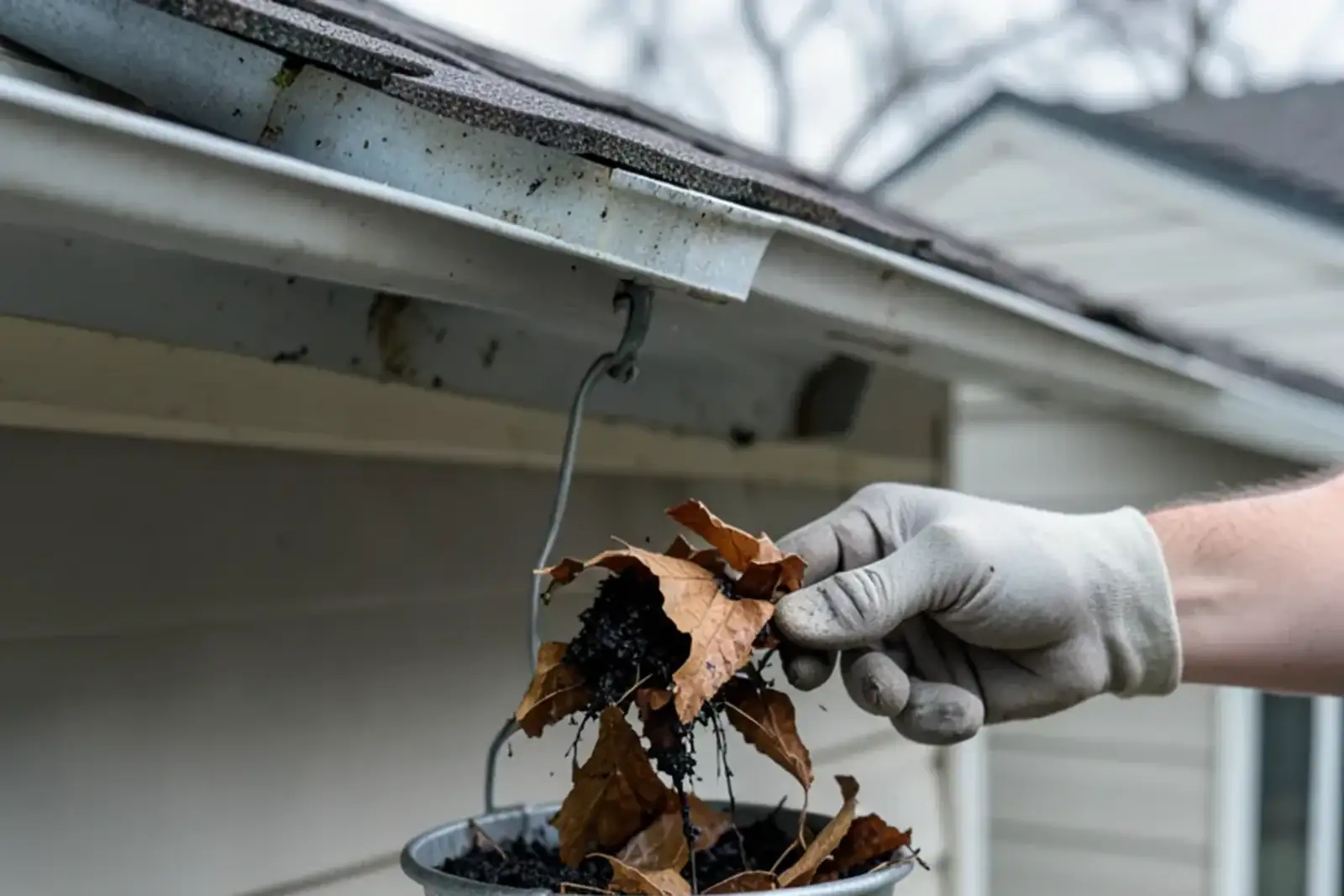
When to hand it over
- The house is two stories or the eaves sit over a steep slope.
- Your roof is steep, slick or has no safe place to land a ladder.
- Power lines come down near the gutter run.
- The run is long, or you have never done it.
- You have knee, back or balance problems.
- There are guards you do not want to disturb.
A hired visit is also a second set of eyes on the roof edge, which is the case for hiring even on easier jobs.
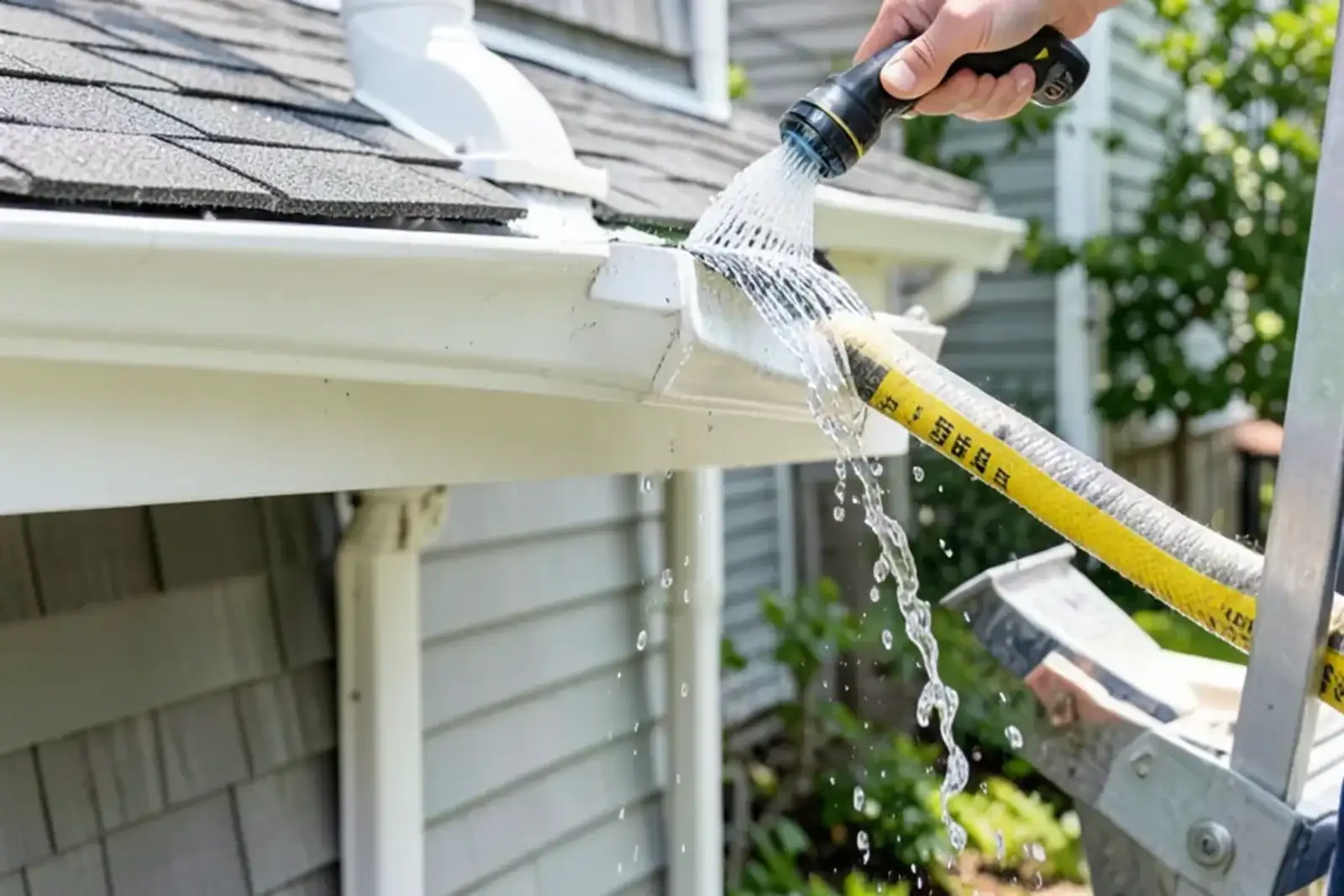
What a crew sees from the ladder
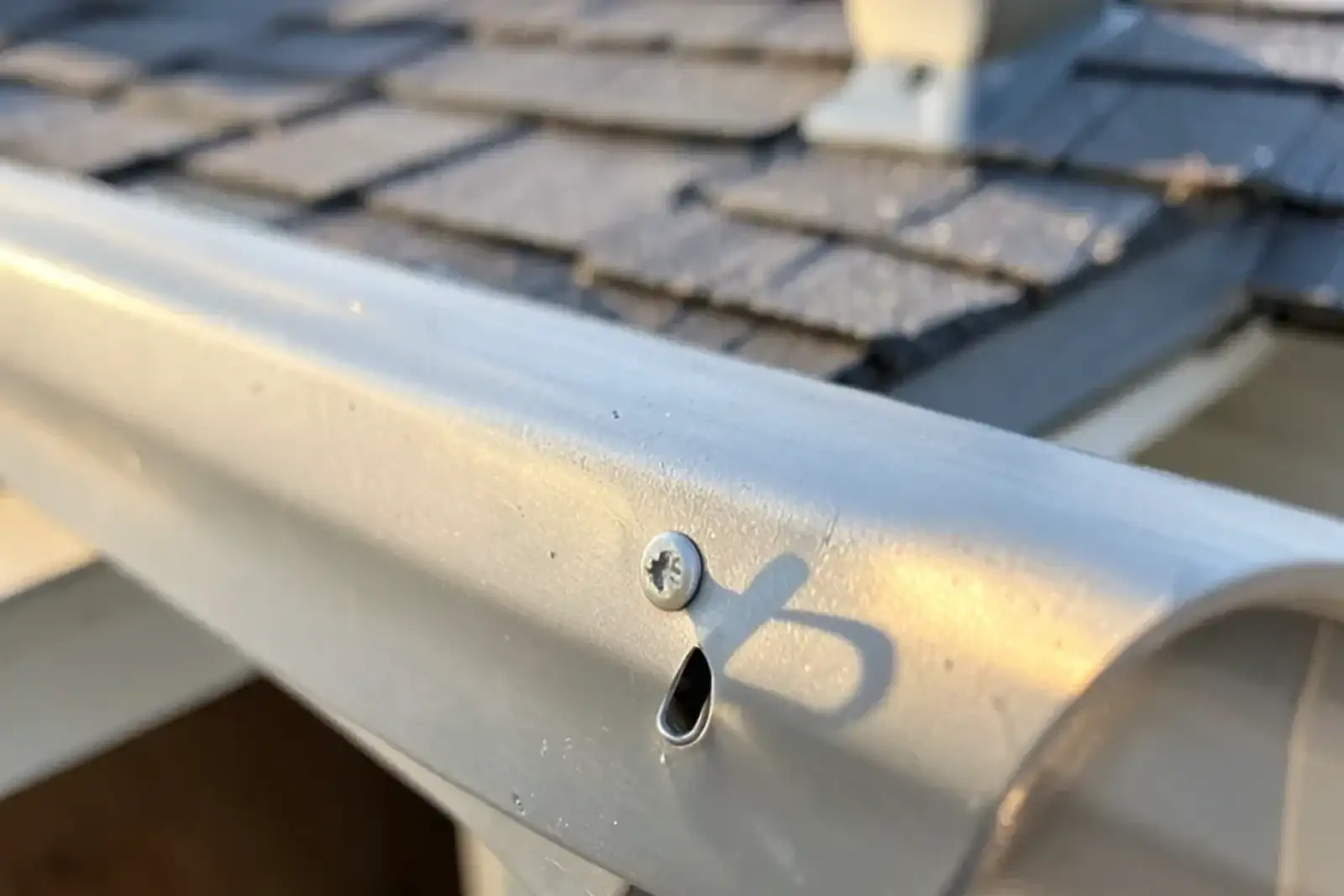
The cleaning is the reason for the visit, but the better use of it is the look at the gutter itself. Standing water means the run lost its pitch. A gap at a joint means sealant has failed. A hanger pulled away from the fascia means the next snow load will bend that section.
One Google reviewer, Steve K., wrote that Caio "spotted multiple things that were wrong with our gutters beyond what we knew about." That is the point of having someone look while the run is open.
One story or two: a rule of thumb
If you can reach the gutter from a short ladder, with your feet on level ground and your hips below the gutter line, DIY is a fair job. If you need a tall extension ladder, a spot to land it on a slope, or a second pair of hands, hire it out.
The ladder is the real cost. A quote of a couple hundred dollars is small next to an emergency-room bill, and a single bad step costs more than years of cleaning visits.
Doing both: a split that works
Many owners split it. Hire the main fall visit on the high runs, when the ladder risk and the debris are heaviest, and handle the low porch and garage runs yourself. Ground tools such as a telescoping wand reach a one-story gutter without a ladder, with a trade-off: you cannot see the sludge at the bottom, the joints or the hangers, so a pole is no substitute for a look.
After any cleaning, do a water test. Run the hose at the far end, watch the water travel toward each downspout and look for pools along the way. A pool means the pitch is off, which no amount of scooping fixes.
What a full cleaning covers
Pulling leaves off the top is half of it. A proper cleaning clears the whole run, including the sludge at the bottom, and then flushes every downspout. If the water backs up, the downspout is clogged, and that needs clearing from the bottom or with a hose or plumber's snake.
It should also include a look at the pitch, the hangers and the joints, and a check that the downspouts discharge away from the house. Whether you do it or someone else does, that second look is the part most people skip.
When should gutters be cleaned in New Hampshire?
Late fall, after the leaves have come down, is the main visit, and early November is about the right time. A second visit in spring clears seed pods, pollen and winter debris. Homes under pines or large oaks may need a third in summer.
Hampstead sees about 195 days a year below 50°F (Dwellics), so a gutter full of wet leaves into December freezes into a block that is much harder to clear.
Where the work happens
We cover Kingston, about 10 minutes from Hampstead by our estimate (9 miles). Its homes mix antique trim around the historic plains district with Great Pond cottages, and the median home was built in 1982 (ACS 2020-24). See our gutter cleaning overview and the two-story gutter cleaning page for how a visit is scoped.
Do the low, easy runs yourself on a dry day with firm ground, and hand over the high ones. If you want a second pair of eyes on the gutters, call (208) 464-4195 and we will set the earliest visit we can.
Quick answers
Is professional gutter cleaning worth the cost compared with DIY?
On a second story or a long run, usually yes. Cleaning runs about $1.10 per linear foot, roughly $220 for 200 feet, and the price mostly pays for labor and ladder risk. A one-story house with good footing is a fair DIY job if you are steady on a ladder.
Can I clean my own gutters in Kingston, NH, or should I hire it out?
A one-story house with firm ground is a fair DIY job. Kingston mixes older trim near its historic plains district with cottages near Great Pond, where ground can be soft, so check footing before every climb. Two-story runs are worth hiring out.
How do I know my gutters need cleaning before winter?
Look for water spilling over the front edge in a rain, plants growing in the gutter, sagging sections or stains below the run. In New Hampshire the main visit comes after the leaves drop in late fall, and a wet block of leaves that freezes in December is much harder to clear.
Is it safe to clean my own gutters in a New Hampshire winter when they are iced over?
No. Stay off the ladder in ice, snow or a hard freeze, because footing is poor and frozen debris will not scoop out. A block of wet leaves frozen in December is a spring job. Hampstead spends about 195 days a year below 50°F, so schedule the main clean after the leaves drop in November, before the cold sets in.
Does a professional gutter cleaning in Kingston include checking the gutters for damage?
It should. A good visit clears the run, flushes each downspout and looks at pitch, hangers and joints while the gutter is open. Ask any company what the visit covers before booking. Kingston's older trim and cottage lots can hide soft fascia, so a second look at the board behind the gutter is worth asking for.
Sources
- This Old House, gutter cleaning costs, 2026
- Dwellics, Hampstead NH climate data
Questions about your gutters?
25 Glenwood North Rd #16, Hampstead, NH 03841
(208) 464-4195
Mon–Sat 8am–6pm · Sunday closed