
Commercial Gutters
Annual Gutter Maintenance for NH Commercial Buildings
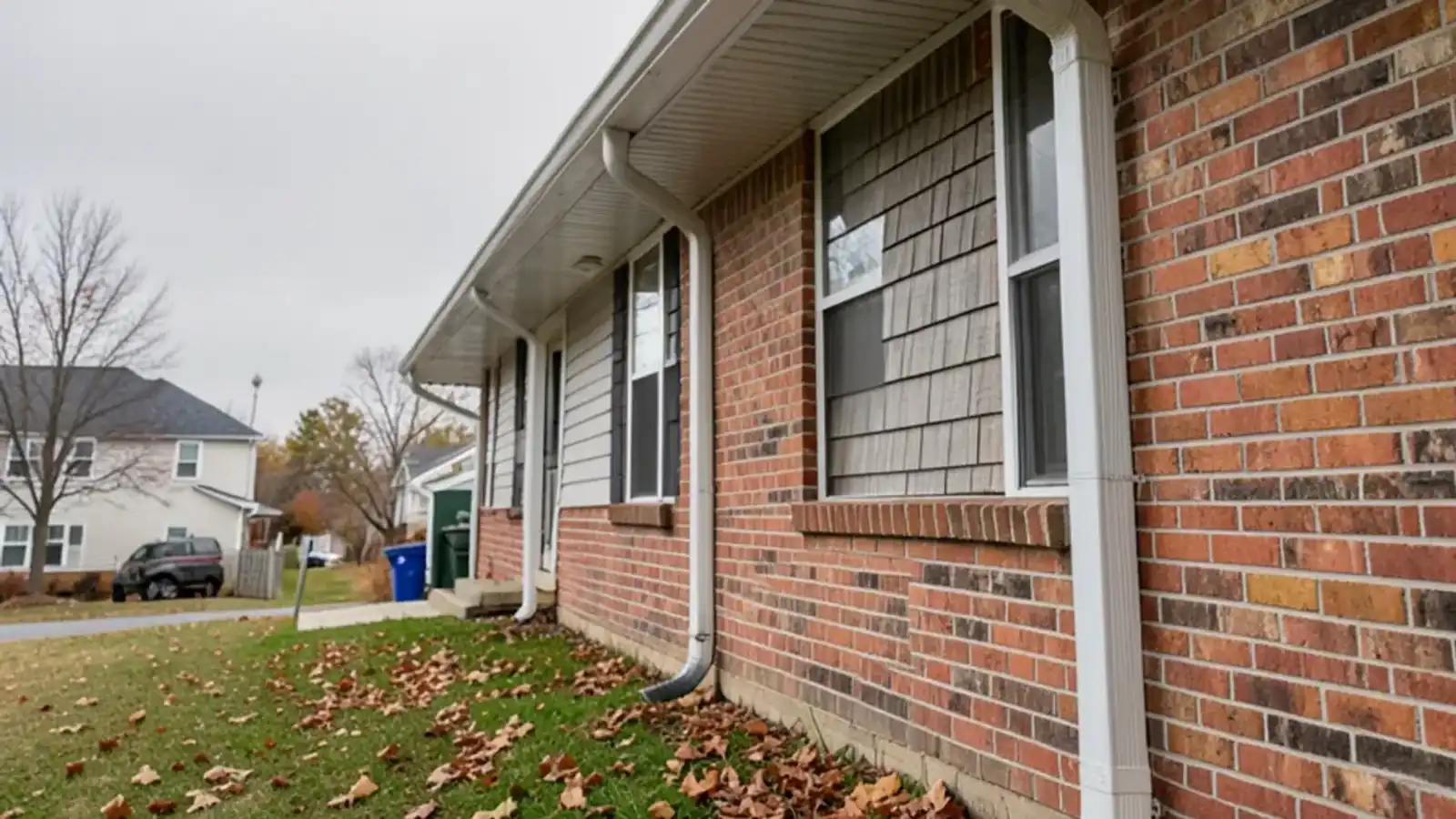
Commercial gutter maintenance in NH works best as a fixed yearly plan. Book one cleaning after leaf drop, check seams and hangers on the same visit, and add a spring look on buildings under trees. A large roof sends its water through a few high-volume outlets, so one clog does more harm than it would on a house.
- ★ 5.0 on Google · 29 reviews
- Serving since 2024
- Based in Hampstead, NH
Published and updated November 2, 2026 · By the Lanes Gutters crew, Hampstead, NH
On this page
- Commercial gutter maintenance in NH: the year on one calendar
- What each visit should cover
- What the Plaistow building shows
- Why a crew cleans before it repairs
- Writing the scope so quotes compare
- Worked examples: how many outlets, how many visits
- What a visit report should say
- Owner, manager or tenant: who books it?
- Starting your first year of gutter upkeep
- Common questions
The minimum for a commercial roof in New Hampshire is one cleaning a year, timed after the leaves are down and before snow loads the eaves. Add a seam and hanger check to that visit and a short spring look if trees overhang the roof. That is the whole plan, and the rest of this guide is about making it routine.
Commercial gutter maintenance in NH: the year on one calendar
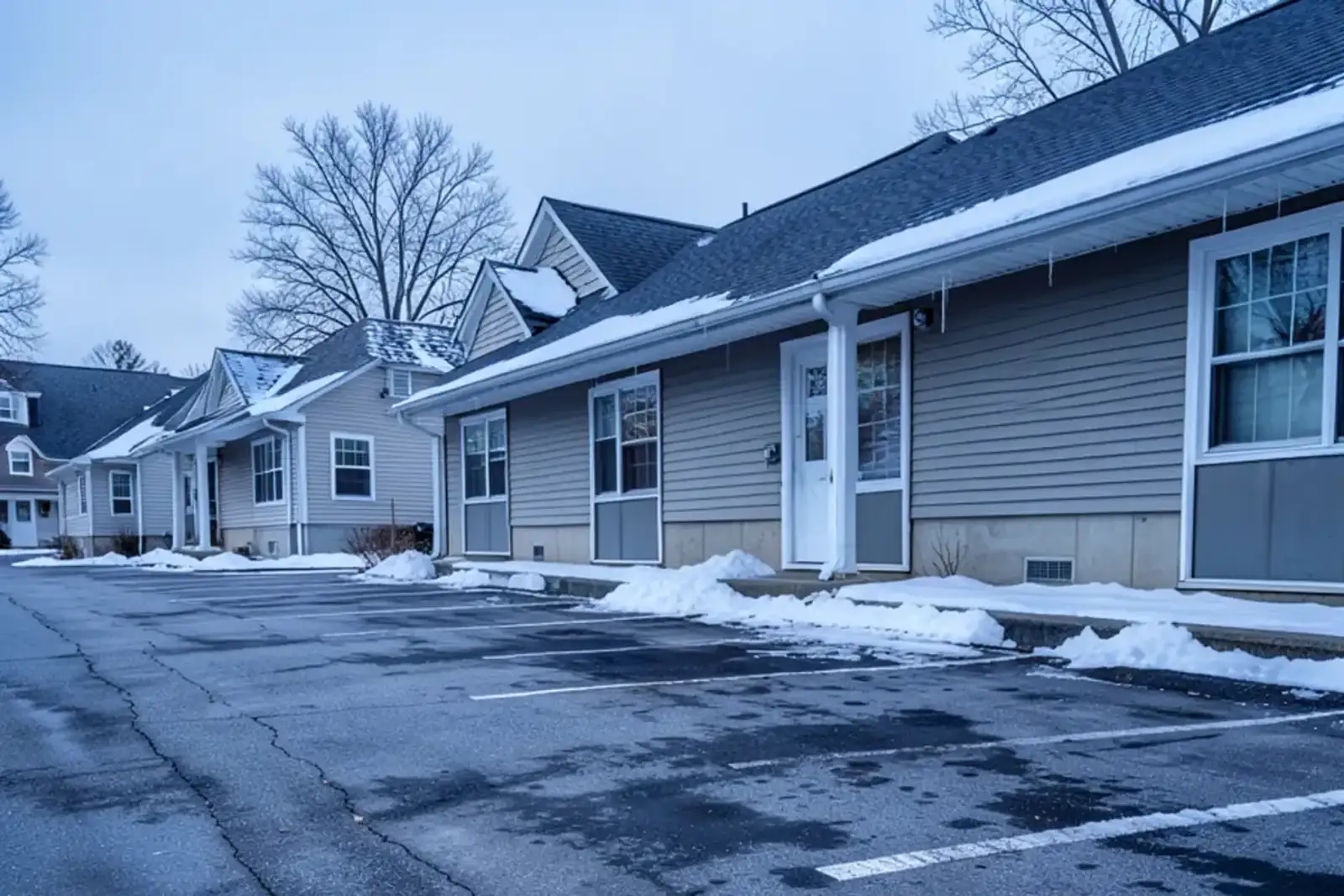
Hampstead gets about 53.8 inches of snow a year, with 17.1 inches in January (BestPlaces). It also spends about 195 days a year below 50°F (Dwellics). Large-roof gutters take repeated freezing and thawing, and the schedule follows that.
| Season | What happens | Who does it |
|---|---|---|
| Late fall, after leaf drop | Clean every run, flush each downspout, check outlets and end caps | Contractor |
| Winter | Watch for ice at outlets and water spilling onto walkways, report anything that looks wrong | Manager or on-site staff, from the ground |
| Early spring | Look for sagging, pulled hangers and split seams left by ice | Contractor or manager |
| Summer | Repair what the spring look found, while the metal is dry and warm | Contractor |
Nobody should climb an iced roof or lean a ladder on a frozen eave to check a drip. Take photos from the ground and call.
What each visit should cover
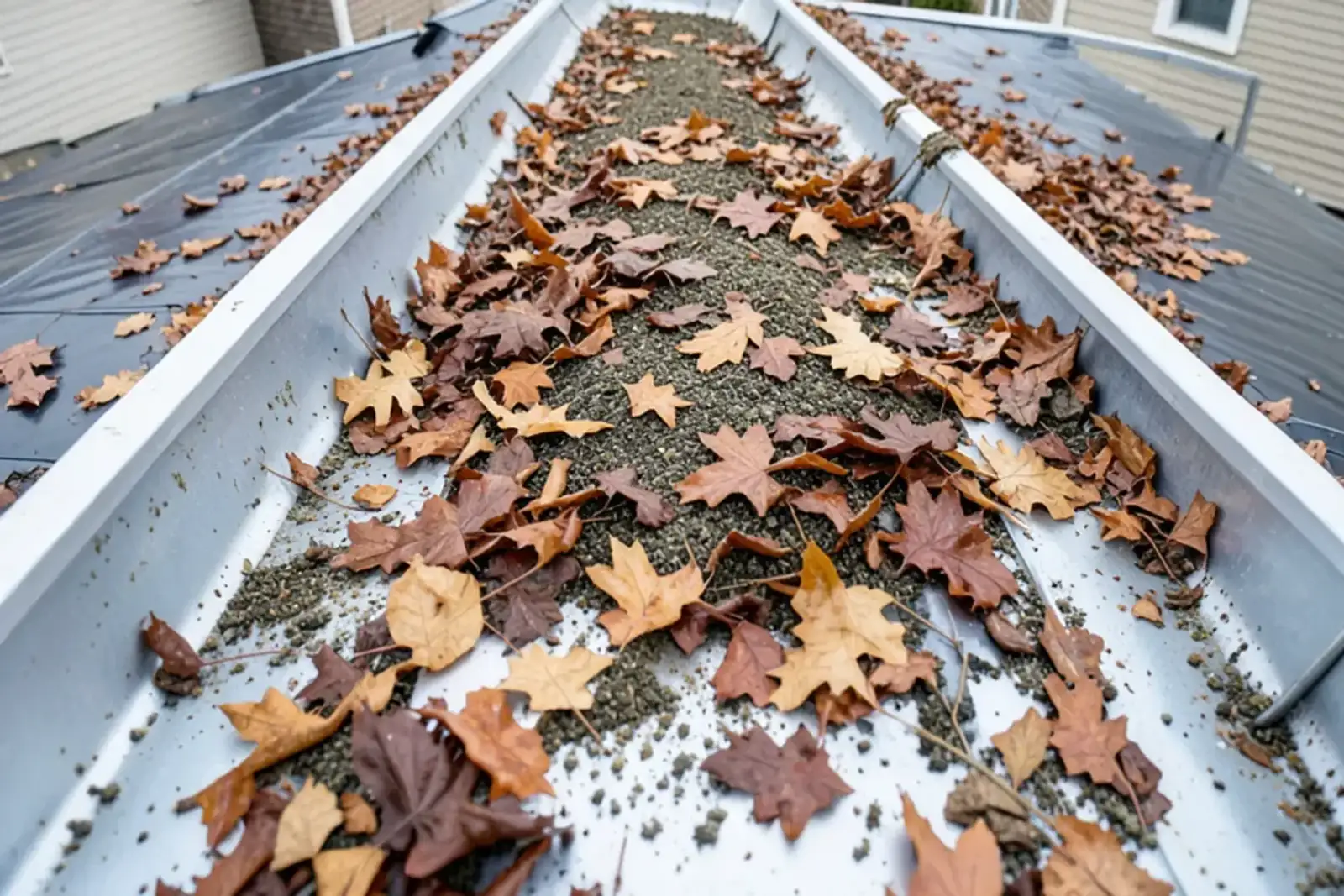
A cleaning visit is more than scooping debris. These are the items worth listing in the scope:
- Clear every gutter run, down to bare metal at the bottom
- Flush each downspout and confirm water leaves the bottom
- Check outlets, end caps and corners for gaps
- Note loose or missing hangers
- Look for ponding, which shows a run has lost its pitch
- Report what was found, with photos where possible

If you want to know what a cleaning visit costs and what changes the price, our post on commercial gutter cleaning cost covers the factors.
What the Plaistow building shows
Our one documented commercial job of size is a 30,000 sq ft building in Plaistow. Jaimie B. wrote that Caio "came out promptly" and gave an estimate "that evening". A week later we cleaned all the gutters. Jaimie B. then asked us to repair some seams, and that was done a couple of days after. The customer plans on annual service.
That is one building, and we will not stretch it into more than it is. What it shows is the order that works on a big roof. Cleaning comes first, repair follows, and a yearly visit keeps repairs small.
Why a crew cleans before it repairs
From our crew: you cannot judge a seam you cannot see. A run packed with wet leaves hides cracked sealant, and the weight of that debris is what strains the joints in the first place. Clean the run, flush it with water, and the leaks show themselves.
Outlet count matters on long buildings. SMACNA's practical maximum is about 50 feet of gutter draining to one downspout. A 200-foot eave with two outlets is working past that, and it will overflow in a heavy storm even when the gutter is clean. That is a design issue, not a maintenance issue, and a visit is the time to notice it.
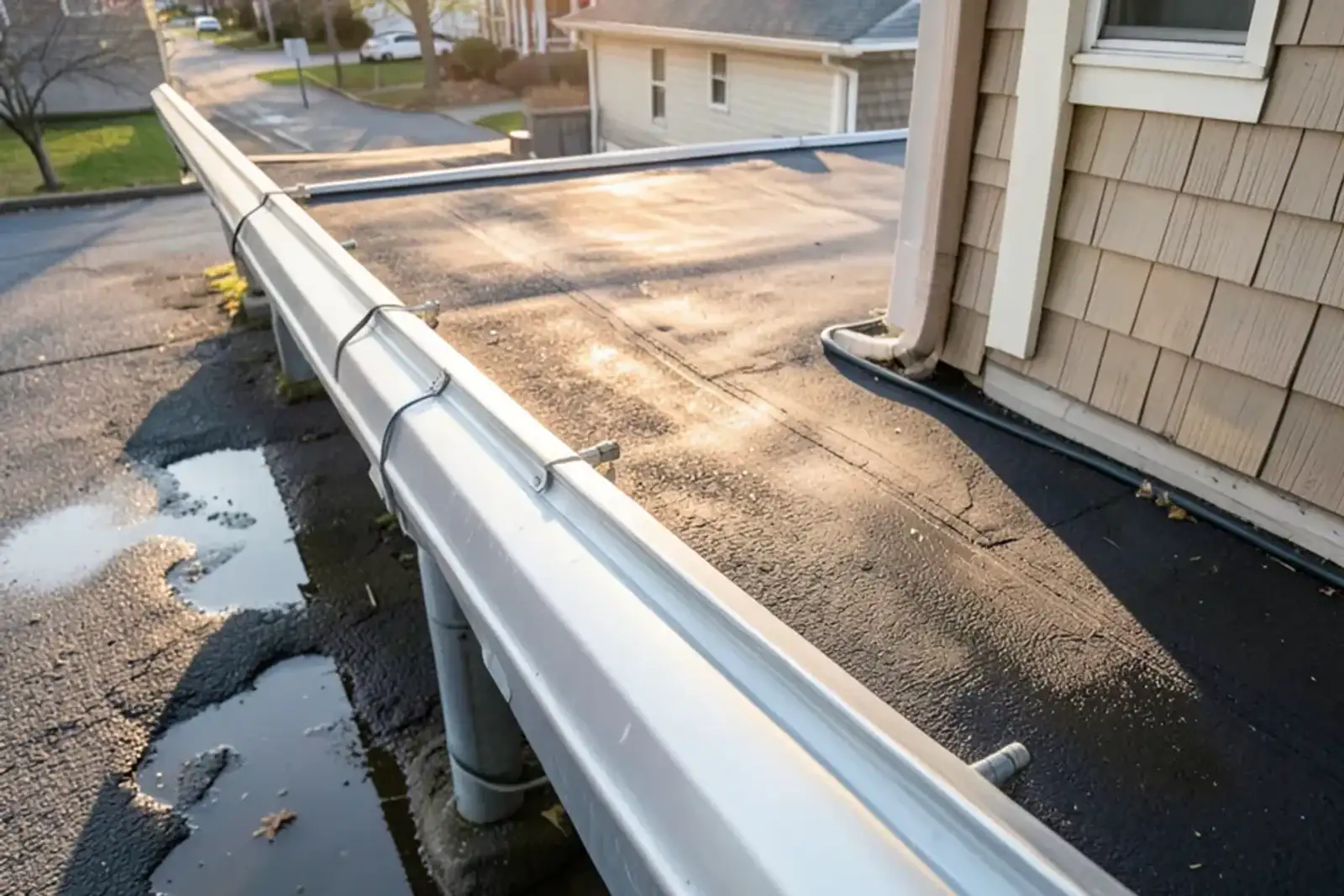
Pitch is the other thing to read. Water standing in a run after the rain stops means the run has settled, and that wets the seams all winter. A sagging run is a repair, and ignoring it shortens the life of everything around it.
Here is the order we would work a long eave, and why each step comes where it does:
- Scoop the heavy debris first, working toward the downspout so loose material is not pushed into the outlet.
- Bag it and keep it off the roof, the lot and the walkway. Wet leaves left on a lot end up back in the gutter.
- Run water down the empty trough from the far end. Water that pools tells you where the run has dropped.
- Flush each downspout and watch the bottom. A slow trickle means a clog lower down, often at an elbow.
- Look at every seam, end cap and outlet while the metal is wet. A leak shows as a bead of water on the outside.
- Write down what you saw and where, run by run, so the next visit starts from facts.
Where gutters end and the roof begins
Not every large building drains the same way. Some low-slope roofs shed to an outside gutter, and some push water to scuppers or internal roof drains. Gutters and downspouts are our side of that line. Internal drains and roof membranes belong to a roofer. Ask any contractor, us included, exactly what the visit covers, so a clogged roof drain is not assumed to be in the gutter price.
Hangers, thickness and heavy snow
Long commercial runs carry more water and more ice than a house run, so hanger spacing and metal thickness matter. When a run is replaced, ask which thickness the quote uses and how far apart the hangers sit. A thin run with wide hanger spacing is the one that dips by March.
Writing the scope so quotes compare
Send every contractor the same facts, and the quotes become comparable:
- Address and number of buildings
- Gutter height, or the number of stories
- Total length of gutter, or the roof footprint if you do not know it
- Number of downspouts and where they discharge
- Access limits such as fences, parking, tenants or locked roofs
- Visit timing around business hours
- How repairs are priced, which should be a written price before work starts
For your first year, ask for a written report after each visit. Within a year or two you will see which buildings need a second pass and which do not.
Worked examples: how many outlets, how many visits
Two quick calculations show what to look for before any quote arrives.
Outlets on a long eave. A strip plaza has a 240-foot eave. At SMACNA's practical maximum of 50 feet of gutter per downspout, 240 divided by 50 is 4.8, so five downspouts is the floor on length alone. If the building has three, each one serves 80 feet and a heavy storm will push water over the lip even on a clean day. That points to adding outlets, not to cleaning more often. A roof with big valleys or a tall wall dumping onto a lower roof may need more than the length math says.
Visits across several buildings. This is an illustration, not a real account. A manager has three buildings: a warehouse with no trees nearby, an office with white pines along one side, and a small plaza under oaks. The warehouse gets one fall visit. The office and the plaza get fall and a spring pass, because needles and tassels keep falling after October. Then the manager reads the first year of reports and moves the warehouse to a longer interval if its runs came back clean, or adds a visit to any building where debris was heavy again by spring.
What a visit report should say
A report is what turns a cleaning into a maintenance record. A useful one is short and the same every time:
- Date, building and run, so entries can be compared year to year
- What came out of the gutters: leaves, needles, grit or roof granules
- Which downspouts flowed freely and which were slow
- Seams, end caps or hangers that need repair, with a photo of each
- Any ponding or sag, noted by location along the eave
- What was done on the visit and what is quoted separately
Roof granules in the gutter are worth a mention. Heavy granule loss usually belongs to the shingle or membrane, and it is a good flag to pass to whoever maintains the roof. The record also helps with budgeting: three years of reports show which repairs repeat.
Public bids for gutter maintenance, which are easy to find online, tend to share the same bones: cleaning of gutters and downspouts, debris removal and disposal, an annual term with renewal options, and repairs handled separately. Borrow that structure for a private building.
Owner, manager or tenant: who books it?
Check the lease. Some tenants carry exterior maintenance, some owners do, and multi-tenant buildings often split it through common-area charges. Settle that before you book, because the invoice goes where the lease points. If you manage several properties, start with the building that has the most trees or the longest eaves, then add the others once you trust the report format.
To talk through a building, see our commercial gutters overview or go straight to commercial gutter cleaning.
Starting your first year of gutter upkeep
Pick the building with the most trees or the longest eave and start there. Photograph it from the ground, write the scope from the list above, and ask for a written price and a report format before you agree to anything. Add the other buildings after you have seen one report. Call (208) 464-4195 with the address, height and roof type, and we will set up a time to look.
Quick answers
Is one gutter cleaning a year enough for a commercial building in NH?
One visit after leaf drop is the usual minimum, and it is enough for a building with few trees nearby. Roofs under pines, oaks or maples need a second visit in spring, because needles and tassels keep coming down after fall. The trees and the roof decide the schedule, so we would walk the property first.
What belongs in an annual commercial gutter maintenance agreement?
Put the buildings and runs covered, the visit timing, what gets cleaned and checked, and how repairs are priced in writing. Repairs should get a written price before any work starts. Ask for a short report after each visit listing what was found, so you have a record for the next budget and for any claim.
Who pays for gutter maintenance on a leased commercial property?
It depends on the lease. Some leases put exterior maintenance on the tenant, others on the owner, and multi-tenant buildings often split it through common-area charges. Read the lease or ask the property manager before booking. A contractor can quote either way, but the invoice goes to whoever the lease names.
Should cleaning and repairs be separate line items in a commercial gutter agreement?
Yes. Cleaning is a known, repeatable visit you can budget once a year. Repairs are unknown until the run is clean and the seams can be seen. Public maintenance bids often carve repairs out of a cleaning contract for the same reason. Keep both on the paper, and require a written price for any repair before work starts.
What should a property manager photograph before the first gutter visit in NH?
Take ground-level photos of each eave, every downspout outlet, and any stains on walls, walkways or the paving below. Add one wide shot per building. Those photos show the starting condition, help a contractor quote without guessing, and give you a baseline when the post-visit report arrives. Stay off the roof and the ladder.
Sources
- BestPlaces, Hampstead NH snowfall climate data
- Dwellics, Hampstead NH climate data
- SMACNA, practical maximum gutter run per downspout
- Public-sector gutter cleaning and maintenance bid documents, scope and exclusion language reviewed November 2026
Questions about your gutters?
25 Glenwood North Rd #16, Hampstead, NH 03841
(208) 464-4195
Mon–Sat 8am–6pm · Sunday closed