
Seamless Gutters
.027 vs. .032 Aluminum Gutters: Does Thickness Matter?
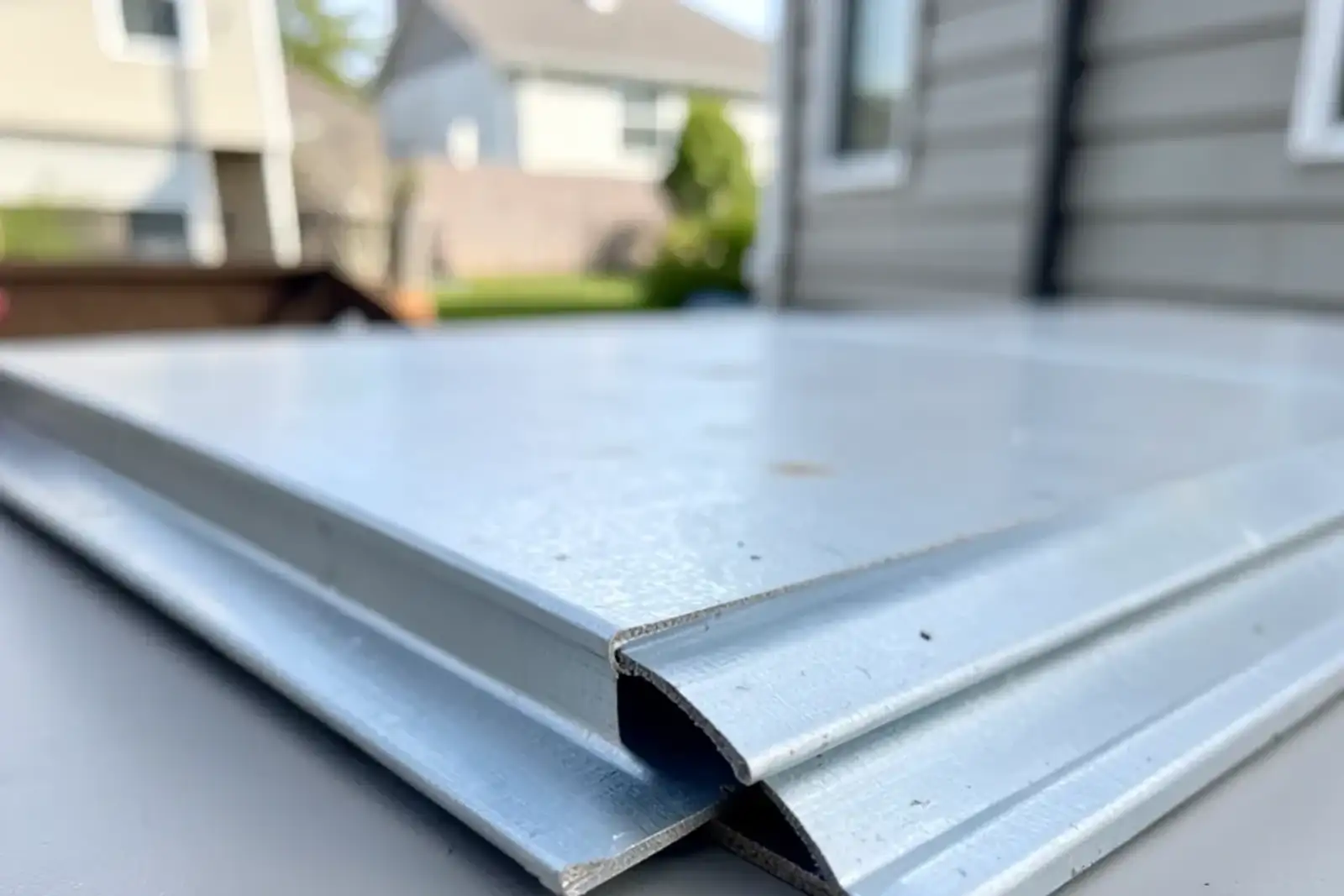
The numbers .027 and .032 are the thickness of aluminum gutter metal in inches. The .027 is the common residential thickness, and the .032 is about 19 percent thicker and is used where ladders, heavy snow or long runs call for more stiffness. Thickness matters, but a thicker wall does not replace good hangers or pitch.
- ★ 5.0 on Google · 29 reviews
- Serving since 2024
- Based in Hampstead, NH
Published and updated November 2, 2026 · By the Lanes Gutters crew, Hampstead, NH
On this page
- What the numbers actually mean
- Where thickness helps
- What thickness does not fix
- From the crew: how to read a quote
- Why quotes leave the thickness out
- Which house leans toward which thickness
- A short checklist for comparing bids
- Hooksett homes and the thickness question
- Putting the numbers to work
- Common questions
Thickness is a real difference, just a small one. The gap between .027 and .032 is five thousandths of an inch, about the thickness of one sheet of paper, and it shows up in a stiffer gutter that resists dents and holds its shape under load. It matters most when ladders, snow and long runs are all in play.
What the numbers actually mean
Aluminum gutter metal is sold by thickness in thousandths of an inch. A .027 gutter is 27 thousandths thick and a .032 is 32 thousandths, so the second is about 19 percent thicker. You may also hear "gauge", but gauge numbers are inconsistent between metals, so the thickness in thousandths is the figure to ask for.
| .027 aluminum | .032 aluminum | |
|---|---|---|
| Typical use | Common residential thickness | Heavy or snow-load use |
| Thickness | 27 thousandths of an inch | 32 thousandths of an inch |
| Listed life | 20 to 30 years | Ask the installer for the listing |
| Ladder dents | Dents more easily | Resists dents better |
| Stiffness in a long run | Needs closer hangers | Holds shape with more margin |
Where thickness helps
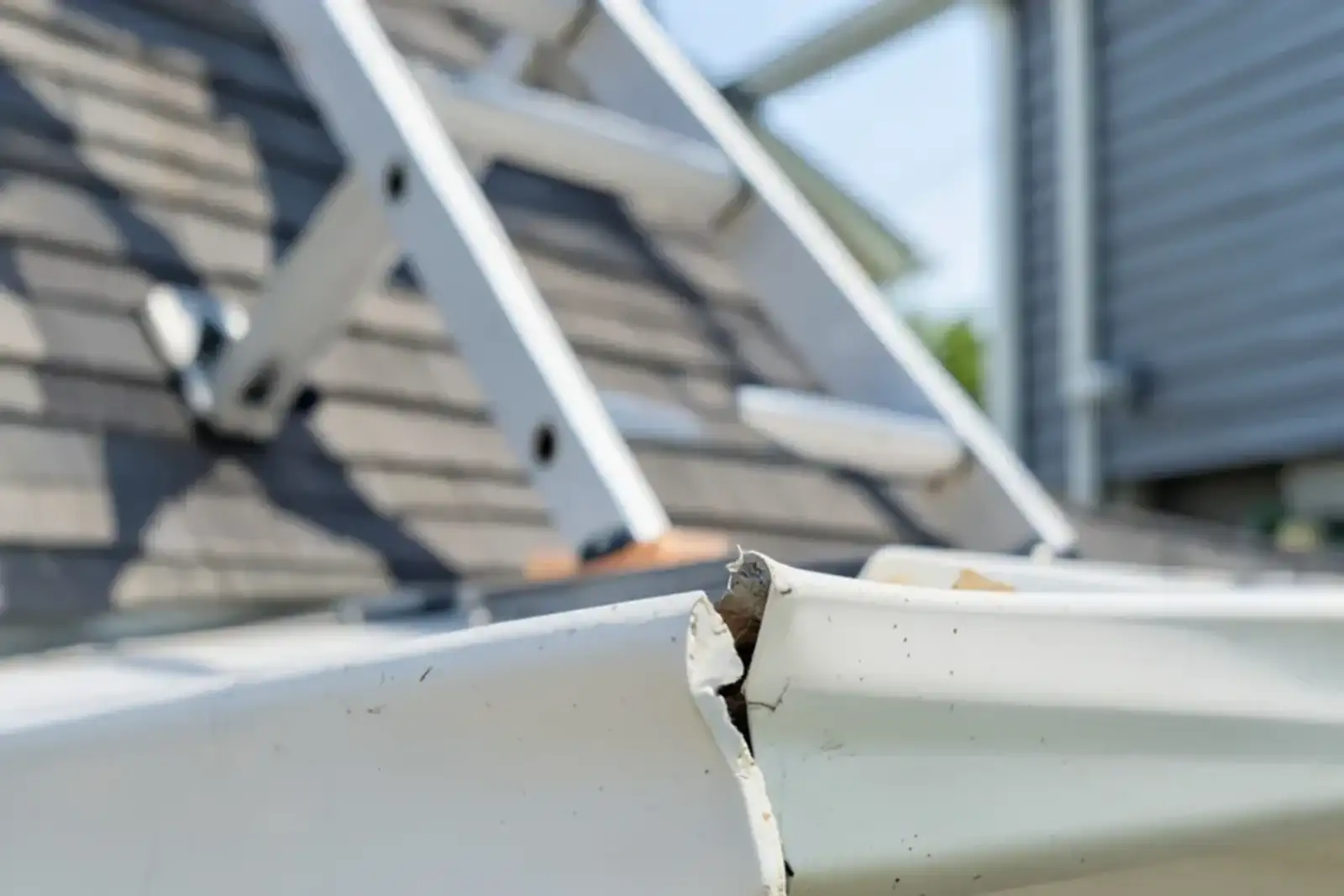
Ladder contact. Aluminum is soft, and the front edge is where a ladder usually leans. A thicker wall dents less, which matters if you clean or paint the house yourself or hire people who set ladders on the gutter.
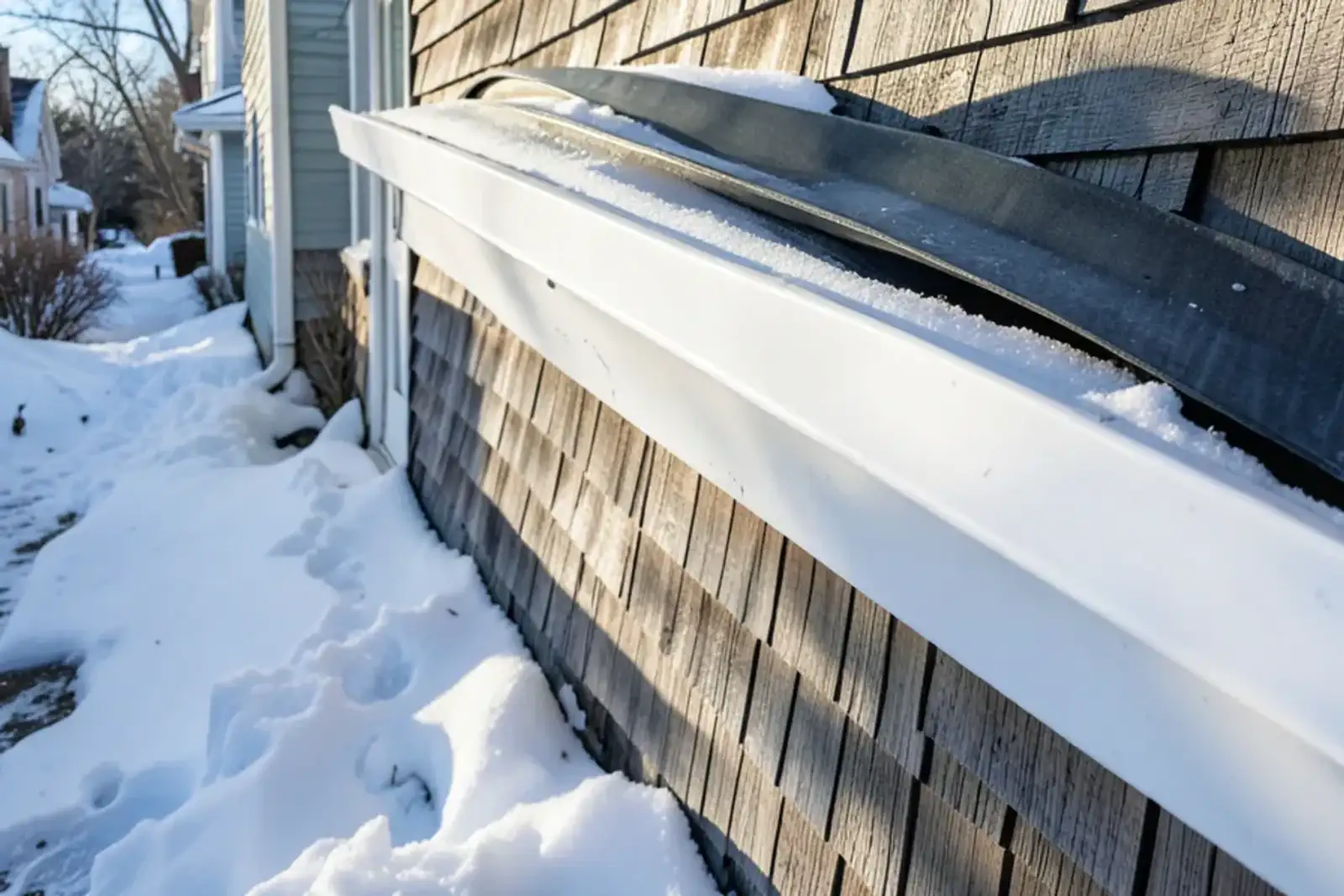
Snow and ice. Hampstead gets about 53.8 inches of snow a year (BestPlaces) and about 195 days below 50°F (Dwellics). Ice weighs about 57 to 60 pounds per cubic foot, and a stiffer wall bows less under it.
Long runs. A long unsupported span flexes more with thin metal. A heavier wall helps keep the line straight between hangers.
A worked example: what a run of ice weighs
Ice weighs about 57 to 60 pounds per cubic foot. Say a clogged gutter holds a block of ice 3 inches wide and 3 inches deep. That is 27 cubic inches per three inches of run, or about 108 cubic inches per foot, roughly 0.0625 cubic foot. At 57 to 60 pounds per cubic foot, that is 3.5 to 3.75 pounds per foot of gutter. On a 40-foot run, the ice weighs roughly 140 to 150 pounds, and the gutter hangs on its hangers the whole time. This is a back-of-envelope calculation and not a rating for any gutter, but it shows why a clogged run is a structural issue as well as a drainage one.
A second worked example: hangers on a 40-foot run
Spacing decides how many points share that weight. A 40-foot run is 480 inches. Hangers every 36 inches land at about 14 points, every 24 inches at about 21, and every 18 inches at about 27. Installer and manufacturer guides commonly describe roughly 18 to 24 inches, with the closer end used where snow is heavy, though they do not agree on one number and they have a stake in the answer. The point is the ratio: going from 36 to 18 inches doubles the points that carry the ice. A thicker wall adds stiffness between hangers. Closer hangers shorten the span so there is less to flex. Both help, and closer hangers cost far less than re-hanging a bowed run in March.
What thickness does not fix
Thicker metal cannot rescue a bad installation. A .032 gutter hung with widely spaced hangers sags like any other. A run with poor pitch holds water whatever its thickness. Undersized gutters overflow whatever they are made of. A good installer treats thickness as one decision among hanger spacing, pitch, size and downspout count.
From the crew: how to read a quote
General trade advice. A quote that says "aluminum gutters" and nothing else leaves the most important number blank. Ask any installer which thickness the quote uses and write down the answer. If the installer cannot say, take that as information.
The next question is the hanger. Hidden hangers spaced at close intervals carry snow better than a few widely spaced ones, and the spacing is easy to ask about. Ask too how the hanger is fastened. A hanger that screws into the fascia board holds better through freeze and thaw than an older spike that works loose over the years, and it only holds if the board behind it is solid.
Look at the metal itself on the day of the install. Some products on the market are thinner than .027, and thin stock can show waviness between hangers, a flexing that installers call oil-canning. If a quote seems low, the thickness is the first thing to check, because the price gap may simply be metal.
Finally, ask for the answers in writing, not on the phone. A line that reads ".027" or ".032" next to the footage can be compared. A promise of "heavy duty" cannot.
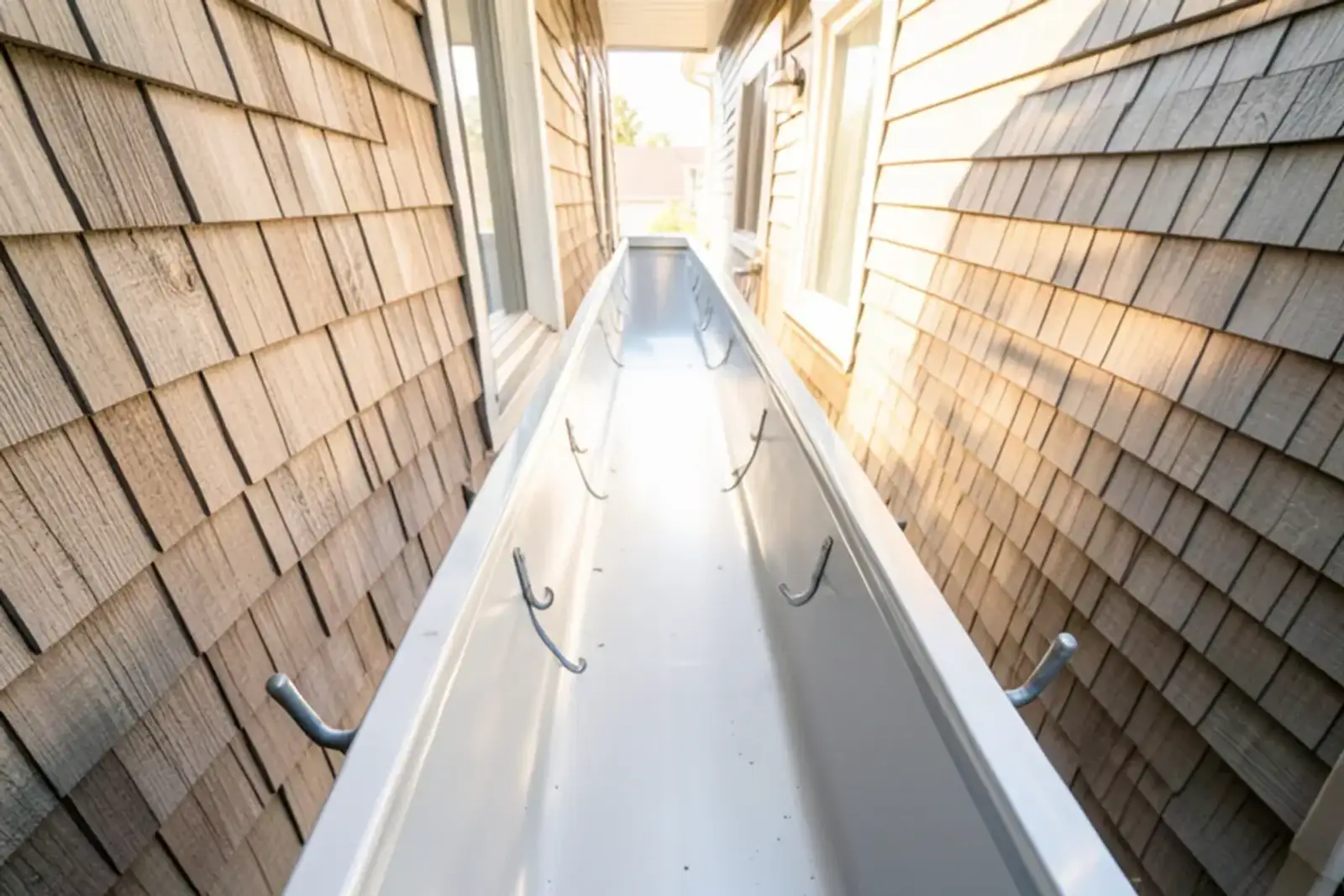
Why quotes leave the thickness out
Many written quotes list the footage, the color and the number of downspouts, and stop there. The thickness is easy to leave out because most homeowners do not know to ask, and because it is invisible once the gutter is hung. That makes it the cheapest place to cut a corner and the easiest to overlook.
A lifespan figure is only as good as the metal behind it. The 20 to 30 years listed for .027 assumes decent hangers, regular cleaning and a gutter that drains. Ice sitting in a clogged run shortens that, whatever the thickness. Treat the listing as a ceiling for a well-kept gutter, not a promise.
Which house leans toward which thickness
Match the thickness to how the gutter will be used, not to a rule.
| Situation | What it suggests |
|---|---|
| Short runs, mild exposure, few ladders | .027 is a sound residential choice |
| A roof that dumps snow onto a lower gutter | A stiffer wall is worth pricing |
| Long, unbroken eave with few outlets | Price both, and ask about hanger spacing |
| A house cleaned or painted with ladders often | The extra stiffness resists dents |
| Tall trees dropping branches | A heavier wall tolerates more abuse |
Get both thicknesses priced on the same run before you decide. The question is what the added stiffness costs on your house and whether it solves a problem you actually have. If your gutters have never bowed or dented, you may not need to step up.
A short checklist for comparing bids
- The thickness of the metal, in thousandths of an inch
- The gutter size, 5-inch or 6-inch
- The hanger type and spacing
- The number of downspouts
- Whether the fascia is checked before hanging
Size is a separate question from thickness, and our guide to 5-inch versus 6-inch gutters covers it. Put all five items in front of each bidder, and the price differences start to make sense.
Hooksett homes and the thickness question
Hooksett is around 30 minutes from us by our estimate. The town sits on the Merrimack River between Manchester and Concord, with newer retail near I-93 and growing subdivisions around the old village. Its median home was built in 1988 (ACS 2020-24), so a gutter original to a house of that age is close to 38 years old, past the 20 to 30 years listed for .027.
For the general picture of metals, see our page on aluminum gutters, and for the bigger picture read about seamless gutters. Call, and the written price will name the thickness.
Putting the numbers to work
Pick the three or four conditions that describe your house: how long the longest run is, how often a ladder touches it, whether a high roof drops snow onto a lower gutter, and whether trees hang over it. If none apply, .027 on close hangers is a sound residential choice. If two or more do, ask for both thicknesses on the same run and see what the stiffness costs. On a Hooksett house from around the 1988 median build year, a replacement is also the moment to move the hangers closer. Call (208) 464-4195 with the roof layout and any quote you have, and we will put the thickness, size, hangers and downspouts on one written price.
Quick answers
Is .032 aluminum better than .027 aluminum for gutters?
It is stiffer and resists dents and sagging better, so it suits heavy snow loads, long runs and homes where ladders get used often. For a typical roof, .027 aluminum on well-spaced hangers works fine. The right choice depends on your roof, trees and snow, so ask what each thickness costs on your own run.
How do I compare gutter quotes that differ in aluminum thickness?
Put the quotes side by side and ask each installer to state the thickness in thousandths of an inch, plus the hanger spacing and the gutter size. Quotes that leave thickness blank are not comparable. A Hooksett homeowner with three quotes can ask all three the same questions and decide from the written answers.
How can I check the thickness of the gutters already on my Hooksett house?
Measure the metal at a cut edge, such as at an end cap or an outlet, with a dial caliper that reads in thousandths of an inch. You cannot judge it by eye or by tapping, and gauge labels are inconsistent. If your paperwork from the install does not list it, that answer will help you spec a replacement. Stay off the ladder if it means leaning on the gutter.
Does thicker aluminum cost more than thinner aluminum for gutters?
Yes, there is more metal in it, and the price follows the run length and the thickness. The gap depends on your footage, so ask for both thicknesses written on the same run with the same size, hangers and downspouts. We did not find a third-party number we trust enough to print. A written price for your own house is the only figure that counts.
Will .032 gutters stop bending under ice in a New Hampshire winter?
No. A stiffer wall bows less, but full ice weighs about 57 to 60 pounds per cubic foot and a clogged run can carry it for weeks. Hanger spacing, a clean run, correct pitch and a sound fascia matter as much as the metal. Thickness gives margin, and it does not make up for ice that the gutter never got to drain.
Sources
- Dwellics, Hampstead NH climate data
- BestPlaces, Hampstead NH snowfall
- American Community Survey 2020-24, Hooksett NH median year built
- Installer and manufacturer gutter-gauge guides on dents, snow load and hanger spacing, reviewed November 2026 (sources have a commercial interest, so hanger spacing is given only as a range and price premiums are not quoted)
Questions about your gutters?
25 Glenwood North Rd #16, Hampstead, NH 03841
(208) 464-4195
Mon–Sat 8am–6pm · Sunday closed